

Description
- Brand: GE Multilin
- Full Model Number: UR6PH
- Lifecycle Status: Obsolete / Legacy
- Core Function: Digital I/O expansion module for UR Series Universal Relays
- Top 3 Technical Specs: 6 Form-A outputs; 4 digital inputs; 125–250 VDC / 100–240 VAC supply class
- Stock & Condition: Stock confirmation required; New Surplus / Tested Refurbished; Emergency shipping subject to warehouse cutoff
- Series: Multilin UR Universal Relay
- Module Type: Digital I/O Input/Output
- Output Type: Form-A contact outputs
- Published Weight: Approximately 1.36 kg / 3 lb
Module 3: Obsolescence & Supply Chain Deep Dive
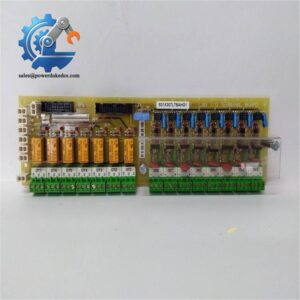
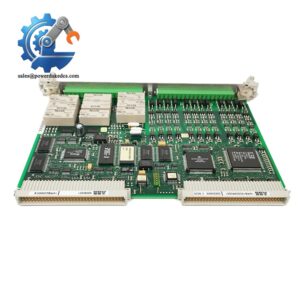
A failed UR6PH can remove required contact outputs or digital inputs from a GE Multilin UR relay while the main protection platform remains operational. UR6PH is a digital I/O module for the UR Series, providing six Form-A outputs plus four digital inputs, with optional output voltage and current metering capabilities reported for the module. GE’s UR platform uses modular hardware, so maintaining the correct I/O card can avoid a much broader relay replacement and associated protection-system engineering work.
From a TCO perspective, a verified spare is normally easier to justify than replacing an entire protection relay simply because an I/O module has failed. The economic exposure includes relay engineering, settings migration, panel modification, wiring changes, testing, outage coordination, and protection re-commissioning. UR6PH belongs to a modular architecture specifically intended to reduce spare-parts complexity, but exact module and relay compatibility still has to be checked before purchase. (Legacy availability can vary significantly; a physically verified spare staged before an outage reduces procurement risk.)
Module 4: Compatibility & Replacement Matrix
| Approval Item | Engineering Assessment |
|---|---|
| Replacement Classification | Drop-in Replacement when the existing UR relay is configured for the same UR6PH module |
| Software Compatibility | Configuration-dependent; relay hardware recognition and existing I/O assignment should be verified before energization |
| Hardware Modification | Normally not required for a correct same-type module replacement |
| Estimated Swap Time | 1–3 hours for qualified protection technicians, excluding isolation and functional testing |
| Estimated Engineering Cost | 250–1,000 planning allowance for verification, installation, and post-replacement testing |
| Potential Outage Impact | Low when a tested spare, relay settings backup, and wiring documentation are already available |
GE describes the UR family as a common modular platform with expandable I/O, while the UR6PH is specifically identified as a digital I/O module for UR Series Universal Relays. That supports a direct module-level replacement approach, provided the installed relay configuration matches.
⚠️ Field Traps — Watch Out
- Module Configuration Mismatch: Do not substitute another UR I/O module merely because the connector and physical format appear similar. UR-6RH, UR-6TH, UR-6UH, and other UR modules have different I/O functions. Confirm the exact designation and existing relay hardware configuration.
- Input/Output Voltage Configuration: Published third-party specifications associate with 125–250 VDC, 35 W and 100–240 VAC, 35 VA supply classes. Verify the actual relay configuration, control voltage, and terminal wiring against the applicable GE documentation before energizing the replacement.
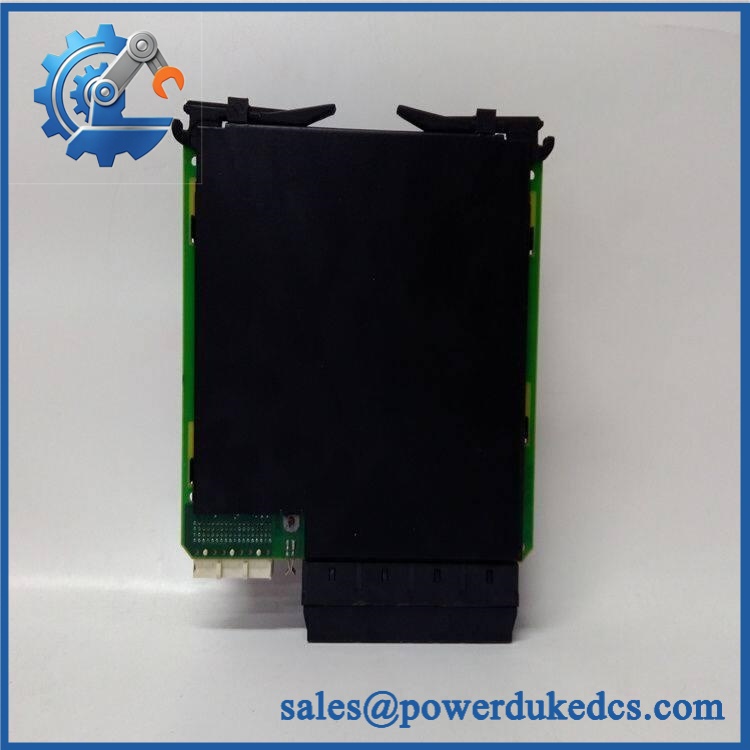
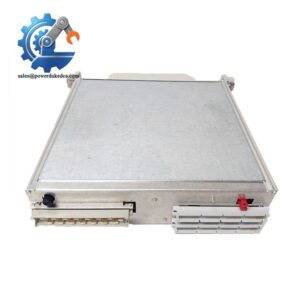
GE UR6PH
Module 5: Quality Assurance & Testing SOP
- OEM anti-counterfeit visual inspection — verify GE Multilin markings, identification, PCB condition, connectors, labels, component placement, and evidence of unauthorized rework.
- Part-number and revision verification — photograph the full module identification and record serial/traceability information before testing.
- Mechanical inspection — inspect the housing, connector interfaces, mounting points, terminals, and PCB for cracks, corrosion, contamination, bent contacts, or heat damage.
- Electrical pre-screening — check applicable supply-input resistance, isolation, continuity, and abnormal short-circuit conditions before applying power.
- Power-on self-test (POST) — install the module in an appropriate UR test environment and verify expected relay initialization and RUN/ERR/status indication.
- Digital input testing — apply controlled input states to all available digital-input channels and confirm correct recognition by the host relay.
- Form-A output testing — command each of the six output channels independently and verify pickup, release, continuity, and contact behavior.
- I/O load testing — exercise representative connected loads within the approved electrical limits and monitor contact stability, temperature rise, and abnormal behavior.
- Metering verification where applicable — confirm voltage/current feedback functions when the installed module configuration supports those measurements.
- Extended functional run — maintain the module under controlled operating conditions long enough to expose intermittent faults or thermal instability.
- Final QC release — record test results, photograph the final identification, apply QC status, package in ESD protection, and retain the inspection record with the shipment.
GE states that UR products use modular, expandable I/O, while third-party technical listings identify specifically as a six-Form-A-output/four-digital-input module. Functional I/O testing is therefore more meaningful than a simple power-on check.
Module 6: Procurement & Lifecycle FAQ
Q1. Is GE genuinely in stock, and what is the cutoff for emergency shipping?
Exact stock should be confirmed against the part number and requested quantity before the PO is released. For emergency requirements, provide the destination and required ship date so warehouse allocation and same-day carrier availability can be checked before the dispatch cutoff.
Q2. How do you verify the condition and authenticity of an obsolete ?
The unit should be subjected to OEM marking and PCB inspection, part-number verification, connector examination, electrical screening, powered functional testing, and channel-by-channel I/O testing where the appropriate UR test environment is available. A test record and identification photographs should accompany the released unit.
Q3. Are there firmware compatibility issues engineers should check before issuing the PO?
The main risk is not assuming that every UR-family I/O card is interchangeable. Confirm the host relay model, installed hardware configuration, I/O assignment, and applicable software/firmware requirements before substitution. GE’s current UR documentation confirms that the platform is modular and firmware capabilities vary by generation.
Q4. What are the warranty and return terms?
Require the quotation to state the warranty period, return authorization procedure, and conditions for DOA or functional-failure claims. Serial-number and part-number traceability should remain attached to the transaction so the supplied can be matched to the test record.
Q5. Why replace only the instead of upgrading the entire protection relay?
A module-level replacement can preserve the existing protection settings, panel wiring, engineering database, and commissioning procedures when the relay CPU and other modules remain serviceable. That can materially reduce engineering hours and outage duration compared with a complete protection-relay migration.


 Start Chat