

Description
- Brand: GE Fanuc
- Full Model Number: V7768-320000
- System/Series Family: GE VME Single Board Computer
- One-Sentence Core Function: 6U VME single-board computer providing x86 processing, local storage, Ethernet, serial, USB, SATA, and PMC expansion for industrial embedded systems
- Top 3 Hardcore Specs: Intel Core 2 Duo up to 2.16 GHz; Up to 2 GB DDR2 SDRAM; Up to 8 GB bootable CompactFlash
- VME Form Factor: 6U / 4HP single-slot Eurocard
- Ethernet: 2 × Gigabit Ethernet
- Serial: 2 × serial ports
- USB: 4 × USB 2.0
- Expansion: 1 × PCI-X PMC site
- Storage: 2 × SATA interfaces
- Operating Systems: Windows XP, VxWorks, Linux
- Identified OEM Assembly: 350-9301007768-320000A0/B variants reported in available documentation
- Stock Status: New Surplus / Fully Tested Refurbished subject to availability
Module 3: Commercial-Technical Deep Dive
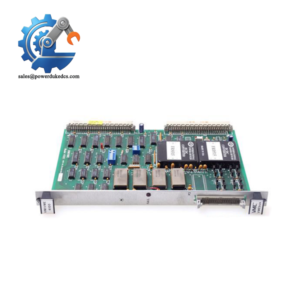
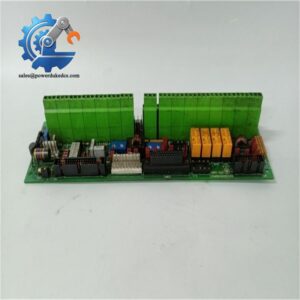
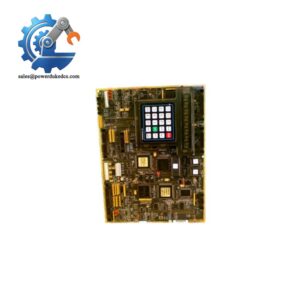
When a legacy VME control rack loses its processor board, the practical problem is rarely just CPU availability. The replacement must preserve the mechanical 6U VME footprint, local storage method, operating-system environment, I/O topology, and PMC expansion path. GE Fanuc’s V7768-320000 is a 6U VME single-board computer built around an Intel Core 2 Duo processor architecture, with versions supporting up to 2.16 GHz processing, up to 2 GB DDR2 SDRAM, and bootable CompactFlash storage. Its front-panel connectivity includes dual Gigabit Ethernet, two serial ports, four USB 2.0 ports, and a VGA interface, while a PCI-X PMC site permits system-specific expansion.
From an integration standpoint, the interface density is the important number—not simply processor frequency. Two Gigabit Ethernet ports can separate control traffic from service or data traffic; dual SATA channels provide another local-storage path; and the PMC position preserves an expansion architecture that a generic industrial PC may not mechanically or electrically reproduce. The documented platform supports Windows XP, VxWorks, and Linux, so the installed operating system can be as important as the board itself. Some market listings describe different processor, memory, or assembly revisions under the same V7768-320000 designation, so the safest procurement practice is to verify the physical label and full assembly number before substitution rather than treating every V7768-320000 listing as identical.
Module 4: Compatibility & Installation Traps
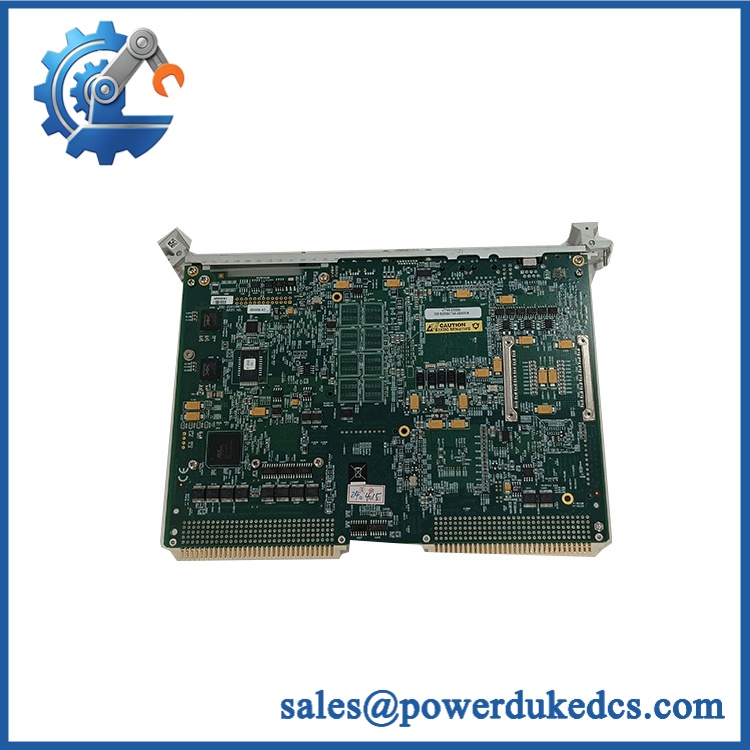
GE V7768-320000
Migration/Compatibility
- Platform: 6U VME single-board computer architecture.
- Mechanical fit: Confirm the rack provides the required 6U VME card envelope and appropriate slot/keying arrangement.
- Processor revision: V7768-320000 units may appear with Core 2 Duo configurations and different assembly-level revisions. Match the existing CPU and board revision where the application has strict software dependencies.
- Memory: Published listings identify configurations up to 2 GB DDR2 SDRAM through a single SODIMM. Do not assume the replacement has the same installed memory capacity as the failed board.
- Storage: Verify the CompactFlash media, image, and boot configuration before installation. A powered board without the correct boot image can appear defective when the actual problem is software media.
- Logic rewrite: Normally unnecessary when replacing a board with the same hardware revision and identical system image; however, operating-system drivers, PMC hardware, and application dependencies must be checked before commissioning.
⚠️ Field Traps (Watch Out)
1. VME backplane compatibility comes first.
This is a VME SBC, not a standalone DIN-rail controller. Confirm slot type, VME backplane wiring, board extraction hardware, and system-controller architecture before applying power. A physically compatible card can still fail to initialize if the VME system configuration is different.
2. Do not assume the CompactFlash image is transferable without verification.
The V7768 platform supports bootable CompactFlash, and the board can run Windows XP, VxWorks, or Linux. A replacement board with different processor, firmware, PMC, or I/O revision may require a different image or driver set.
3. Confirm the full assembly suffix.
Available technical listings associate -320000 with assembly numbers such as 350-9301007768-320000A0 and 350-9301007768-320000B. Those suffix differences should be treated as traceability data, not ignored as cosmetic labeling.
Module 5: Quality Assurance SOP
Every avail unit should be processed through a board-level inspection and functional verification sequence before shipment:
- OEM anti-counterfeit visual inspection: Verify GE identification marks, catalog number, assembly number, revision label, PCB layout, front-panel labeling, connector geometry, and component population.
- PCB condition inspection: Check for cracked packages, damaged edge contacts, corrosion, contamination, lifted components, bent connectors, and evidence of previous board repair.
- Assembly verification: Record the e assembly identifier and installed CPU/memory configuration.
- Power-rail inspection: Check for abnormal resistance or visible damage on the primary supply rails before energization.
- Power-on self-test (POST): Install the board in an approved VME test chassis and verify processor initialization, memory detection, storage detection, and expected board status behavior.
- VME bus handshake verification: Confirm that the board initializes correctly within the test VME backplane and responds under controlled bus-access conditions.
- Ethernet verification: Test both Gigabit Ethernet interfaces individually using controlled link establishment and packet communication.
- Serial-port verification: Confirm operation of both serial interfaces with a loopback or controlled serial test.
- USB verification: Verify all four USB 2.0 interfaces under the supported operating-system environment.
- Storage verification: Check CompactFlash boot/read behavior and verify SATA interface recognition where the test configuration supports it.
- PMC verification: Confirm PCI-X PMC detection when a compatible test mezzanine is available.
- Operating-system verification: Where the unit is sold with an installed software image, record the tested operating system and image revision. Do not represent an untested software image as validated.
- Final QC record: Record exact model, assembly suffix, serial/trace information where present, hardware revision, memory configuration, test results, and technician sign-off.
- ESD packaging: Protect the board in ESD-safe packaging with mechanical support around the front-panel connectors and PCB edges.
Module 6: CRO-Driven Buyer FAQ
Is th obsolete?
is a legacy GE Fanuc VME single-board computer rather than a current-generation industrial computer. It remains relevant where a deployed VME system depends on the existing mechanical form factor, software image, PMC hardware, or legacy I/O architecture. Current sourcing should therefore focus on exact hardware identification and tested compatibility, not simply the generic model number.
a PLC module or a computer board?
It is a 6U VME single-board computer. Its architecture is based on an x86-class processor platform and includes local memory, CompactFlash storage, Ethernet, serial, USB, SATA, and PMC expansion. It should not be specified as a conventional PLC CPU or discrete I/O module.
Can I install without changing my application software?
Not automatically. The hardware can support Windows XP, VxWorks, and Linux, but your application may depend on a specific OS image, processor revision, CompactFlash configuration, device driver, PMC card, or network interface arrangement. Preserve the existing system image and hardware configuration information before replacing the board.
How do I verify I am buying the cor revision?
Request photos of the front label, PCB identification, and complete assembly number. Available documentation and market records assoc with assembly identifiers including 350-9301007768-320000A0 and 350-9301007768-320000B. Because processor and configuration details can vary, the full label should be matched against the failed board before shipment.
What warranty and technical support should I expect?
Warranty should be stated for the exact unit condition and test status on the quotation. Technical support should cover model identification, assembly/revision matching, hardware compatibility review, installation guidance, and documented bench-test results. It should not be represented as OEM application engineering unless that service is explicitly included.


 Start Chat