

Description
- Brand: GE
- Full Model Number: VMIVME-7750 / VMIVME-7750-740001
- GE Part Number: 350-027750-740001 P
- System/Series Family: VMEbus Embedded Computing
- Core Function: VMEbus single-board computer for industrial and embedded control systems
- Top 3 Hardcore Specs: Intel Pentium III processor | Up to 1.26 GHz | 6U single-slot VMEbus architecture
- Cache: 512 KB
- Memory: Single SODIMM socket
- Expansion: 2 PCI mezzanine card (PMC) sites
- Stock Status: New surplus, factory sealed, or fully tested refurbished subject to exact inventory confirmation
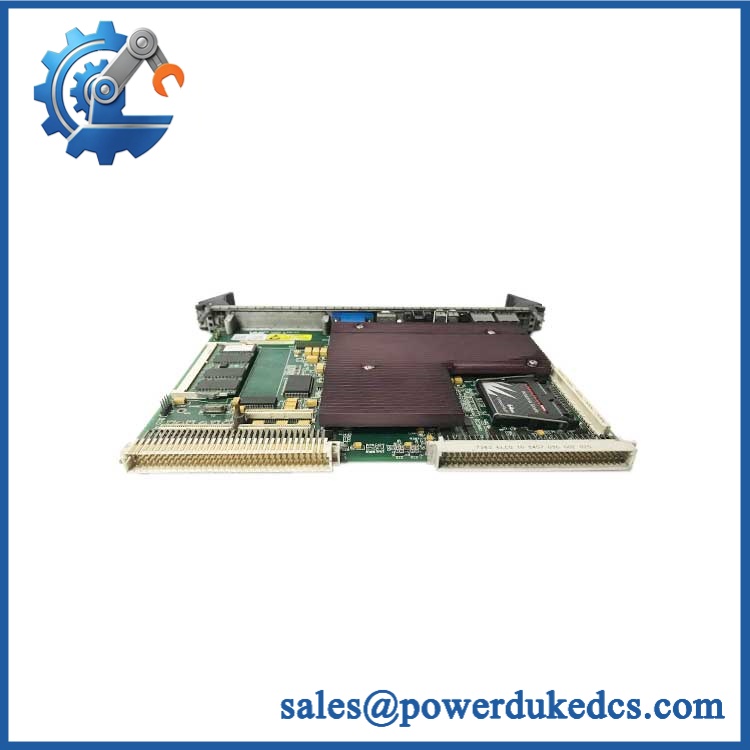
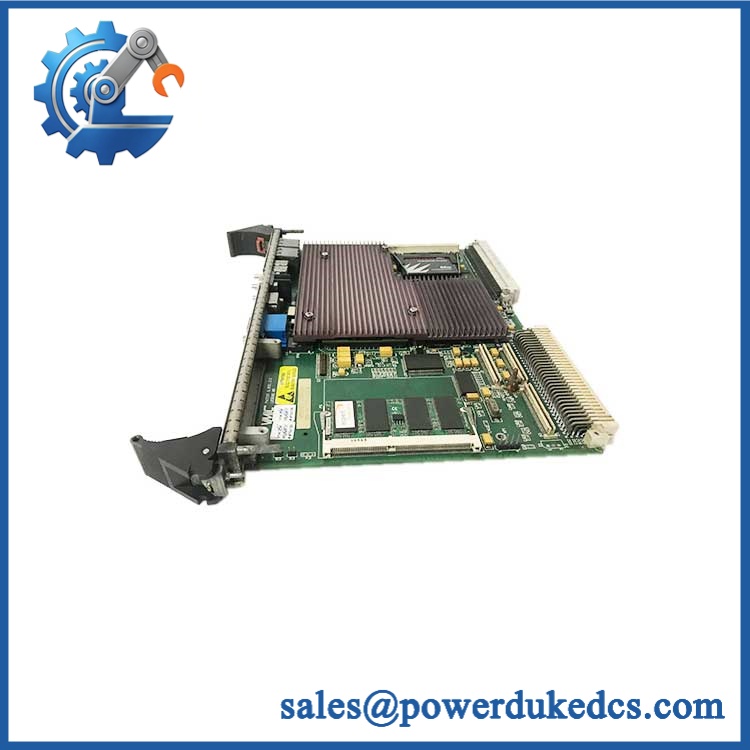
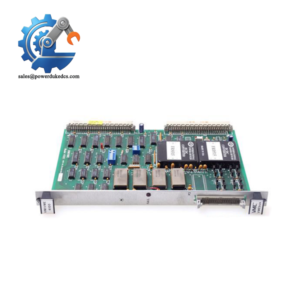
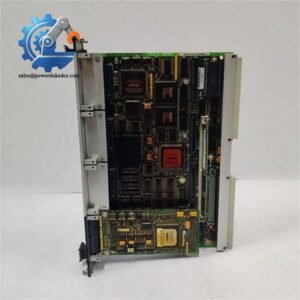
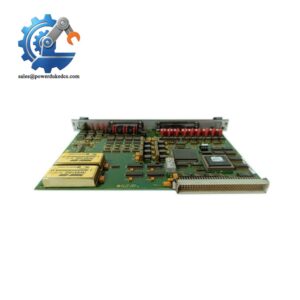
The GE VMIVME-7750-740001 is a VMEbus single-board computer associated with GE’s VMIVME-7750 platform. Available technical records identify the platform as an Intel Pentium III VME SBC, with processor speeds up to 1.26 GHz, 512 KB cache, a single SODIMM memory socket, and a single-slot Eurocard format.
Module 3: Technical Product Introduction
A failed VME CPU can take an entire legacy control chassis offline even when the installed I/O and peripheral boards remain operational. The GE VMIVME-7750-740001 is designed as a VMEbus single-board computer, providing the host processing function within a VME-based embedded system. The platform uses an Intel Pentium III processor and incorporates a PCI-to-VMEbus bridge for communication between the processor subsystem and VME backplane.
The reported processor configuration reaches 1.26 GHz, with 512 KB cache and memory expansion through a single SODIMM socket. The board also provides two PMC expansion sites and serial connectivity, giving it a useful combination of host-computing and VMEbus expansion capability. Its passive cooling design is worth noting in older cabinets—airflow condition still matters even when the board itself has no fan.
GE VMIVME-7750-740001
Module 4: Application Scenarios & Field Realities
- Inside legacy VME control racks, the VMIVME-7750 can function as the host processor while other VME cards handle data acquisition, motion, communications, or specialized processing. Record the existing slot arrangement before replacing the CPU board.
- For industrial embedded computers running legacy operating systems, hardware replacement should include an operating-environment check. A board can complete POST while the original application still fails because of missing VME drivers, storage configuration, or BIOS settings.
- When PMC expansion cards are installed, document both mezzanine modules before removal. The provides two PMC sites, but the installed PMC hardware and its associated software drivers determine whether the replacement board can restore the original application without further work.
- During emergency maintenance, preserve the original system image whenever possible. Capture BIOS settings, boot-device configuration, network parameters, VME address assignments, and application files before replacing a still-functional CPU.
Module 5: Migration, Compatibility & Installation Traps
Replacement Matrix
| Replacement Type | Assessment | Engineering Requirement |
|---|---|---|
| Drop-in Replacement | Potentially yes for an identical -740001 configuration | Match 350-027750-740001 P, board revision, memory, PMC configuration, and chassis requirements |
| Software Compatible | Configuration-dependent | Verify operating system, VME drivers, BIOS settings, application image, and PMC drivers |
| Hardware Modification Required | Not normally expected for an exact board replacement | Confirm VME chassis, backplane, cooling, storage, and peripheral configuration |
Field Traps — Watch Out
1. Do not confuse variants: The family has multiple ordering configurations. The exact -740001 / 350-027750-740001 P identification should be matched before ordering. A similar board is not automatically equivalent.
2. Processor and memory configuration: The platform uses a Pentium III processor and a single SODIMM memory socket. Confirm the installed memory configuration before replacement, particularly if the application depends on a specific memory capacity or module type.
3. PMC configuration: Two PMC expansion sites are available. If the original system uses PMC cards, verify their mechanical installation, I/O routing, drivers, and application dependencies before commissioning the replacement.
4. VMEbus configuration: Verify the original board’s VMEbus address assignments, interrupt configuration, and slot position. Do not assume that a board that powers up correctly will automatically communicate with every installed VME peripheral.
GE VMIVME-7750-740001
Module 6: Quality Assurance SOP
Before shipment, each GE -740001 / 350-027750-740001 P should undergo a documented board-level inspection sequence.
- Step 1 — Part-number verification: Record , -740001, 350-027750-740001 P, serial number, board revision, processor identification, and installed memory.
- Step 2 — OEM anti-counterfeit visual inspection: Inspect GE labels, PCB markings, processor identification, VMEbus connector, PMC connectors, memory socket, serial connectors, and manufacturing identifiers. Photograph all identification markings.
- Step 3 — Physical condition inspection: Check the PCB for corrosion, contamination, cracked components, damaged edge contacts, bent connector pins, loose hardware, and evidence of previous repair or rework.
- Step 4 — Power-rail verification: Install the board in a compatible VME test chassis and verify that the supply rails remain within the applicable specification during startup. Check for abnormal current draw.
- Step 5 — Power-on self-test (POST): Energize the board and record BIOS initialization, processor detection, memory recognition, diagnostic messages, and available status indications.
- Step 6 — Memory verification: Confirm that the installed SODIMM is correctly recognized and that the available memory matches the test configuration.
- Step 7 — VMEbus verification: Verify that the board initializes correctly on the VME backplane and perform representative VMEbus read/write transactions using appropriate test equipment.
- Step 8 — PMC verification: Where PMC modules are installed or test equipment is available, verify recognition and representative operation of the PMC interfaces.
- Step 9 — Communication handshake verification: Test applicable serial and network interfaces and confirm that representative communication can be established.
- Step 10 — Operating-environment verification: Where technically possible, boot the appropriate operating environment and verify basic system initialization without altering customer-specific application data.
- Step 11 — Final photographic record: Photograph the complete board, model label, GE part number, processor area, memory socket, PMC interfaces, VME connector, and final packaging.
QA release criterion: A successful POST establishes basic CPU-board initialization but does not prove compatibility with a customer’s VME application. A complete replacement assessment should also verify the 350-027750-740001 P hardware identity, memory configuration, PMC requirements, VMEbus configuration, operating environment, and application-specific drivers.



 Start Chat