

Description
- Brand: GE / VMIC
- Full Model Number: VMIVME-7750-746000
- Alternate Part Number: 350-027750-746000
- System/Series Family: VMIVME-7750 VMEbus Single Board Computer
- Core Function: 6U single-slot VMEbus Pentium III single-board computer for embedded industrial computing and control
- Top 3 Hardcore Specs: Intel Pentium III up to 1.26 GHz; up to 512 MB PC133 SDRAM; PCI-X 66 MHz PMC expansion
- VMEbus: VMEbus Rev. C.1
- Ethernet: 10BaseT / 100BaseTX
- Graphics: AGP SVGA controller with 4 MB display cache
- Stock Status: New Surplus / Factory-Sealed or Fully Tested Refurbished subject to actual inventory condition
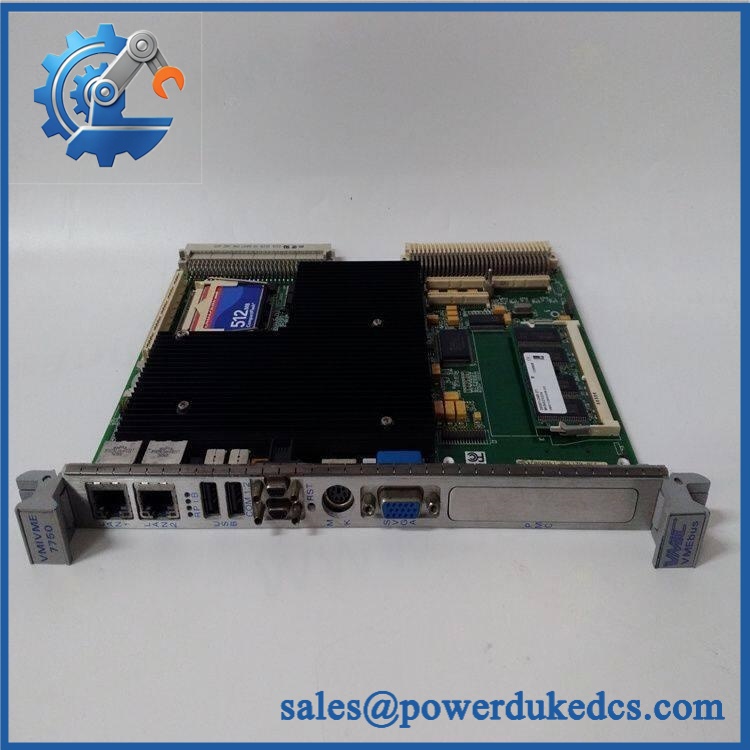
The VMIVME-7750 family is documented as a 6U single-slot VMEbus single-board computer using an Intel Pentium III processor, with configurations supporting up to 1.26 GHz, 512 MB PC133 SDRAM, dual Ethernet, and a PMC expansion site. The 746000 configuration is cross-referenced to 350-027750-746000.
GE VMIVME-7750-746000
Module 3: Technical Product Introduction
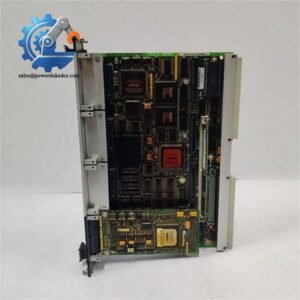
A failed VME CPU can take an entire legacy control or data-acquisition chassis offline even when the peripheral cards remain operational. The GE/VMIC VMIVME-7750-746000 is a 6U, single-slot VMEbus single-board computer built around the Pentium III platform. Published technical records identify the VMIVME-7750 family with processor speeds up to 1.26 GHz, up to 512 MB PC133 SDRAM, integrated SVGA graphics, Ethernet connectivity, and a PMC expansion interface. The associated GE/VMIC reference is 350-027750-746000.
For replacement work, the complete 746000 configuration should be preserved. The VMIVME-7750 platform provides VMEbus connectivity through a PCI-to-VME architecture and supports a PCI-X 66 MHz PMC expansion slot, while network interfaces support 10BaseT and 100BaseTX. Storage and boot configuration also require attention because the platform supports IDE-based storage and, depending on configuration, CompactFlash. The exact installed memory and storage configuration should be checked against the failed board before commissioning.
Module 4: Application Scenarios & Field Realities
- Inside a legacy VME control chassis, the -746000 can function as the main embedded computing board while other VME cards provide I/O or specialized processing. If the CPU fails to boot, inspect the VME backplane, +5 V supply, memory, and storage path before replacing peripheral cards.
- For industrial data-acquisition systems, the VMEbus architecture allows the CPU to exchange data with installed VME devices while the Pentium III processor handles application-level processing. The board supports VMEbus Rev. C.1 and PCI-to-VME bridging.
- Where network connectivity is part of the control architecture, the platform provides Ethernet interfaces supporting 10BaseT and 100BaseTX. A network failure should still be isolated between the physical Ethernet interface, operating system, application software, and upstream network equipment rather than automatically attributed to the CPU board.
- For systems using custom PMC hardware, the integrated PCI-X 66 MHz PMC expansion slot is a significant compatibility point. Before replacing the processor board, document the installed PMC card and its driver requirements; a replacement SBC with a different expansion architecture may require application changes.
Module 5: Migration, Compatibility & Installation Traps
Replacement Matrix
| Replacement Case | Classification | Engineering Requirement |
|---|---|---|
| -746000 → identical -746000 | Drop-in Replacement | Verify processor, RAM, storage, PMC card, BIOS, and operating environment |
| Same family with documented compatible configuration | Software Compatible | Confirm processor, memory, storage, BIOS, PMC, and OS requirements |
| Different configuration | Software Compatible | Recheck hardware configuration and boot environment |
| Different VMEbus CPU family | Hardware Modification Required | Validate VMEbus, software, PMC, mechanical, and electrical compatibility |
Field Traps — Watch Out
1. Do not confuse the family specification with the exact configuration.
The platform supports several processor, memory, and storage configurations. “Up to 1.26 GHz” and “up to 512 MB” describe the platform capability, not necessarily the exact configuration of every unit. Verify the physical board and installed components before publishing a unit-specific specification.
2. Check the PMC expansion card before replacement.
The provides a PCI-X 66 MHz PMC slot. A replacement CPU board must support the customer’s installed PMC hardware and its associated software environment.
Installation note: Confirm the chassis provides the required 6U VMEbus slot, compatible P1/P2 connections, adequate power, and appropriate cooling. Record the existing boot device, BIOS settings, PMC card, memory configuration, and operating system before removing the original SBC.
GE VMIVME-7750-746000
Module 6: Quality Assurance SOP
For GE/VMIC -746000 / 350-027750-746000, QA should test the actual SBC configuration rather than relying only on the generic family specification.
- Part-number verification: Confirm and 350-027750-746000 from the board identification labels.
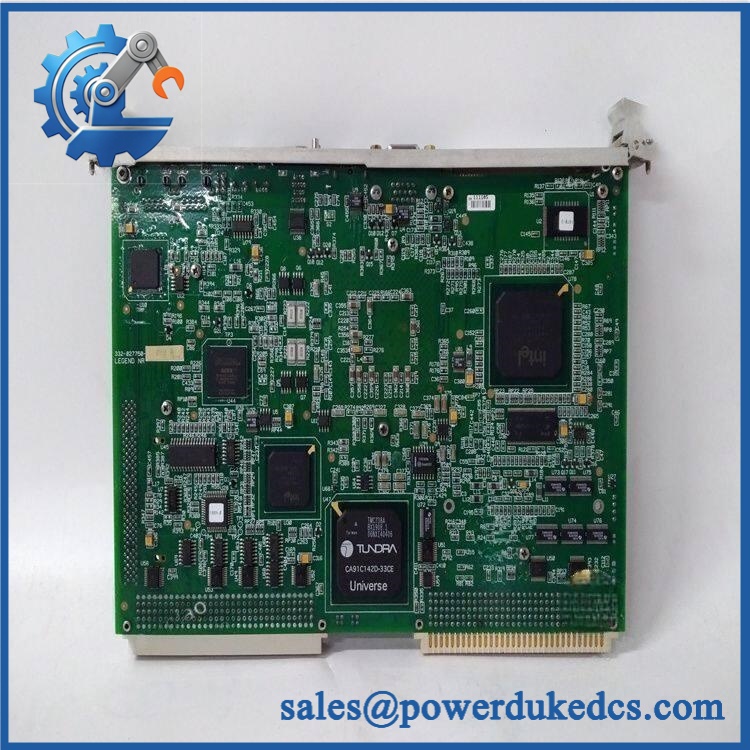
- OEM anti-counterfeit visual inspection: Check GE/VMIC markings, PCB identification, serial information, revision markings, processor, connectors, and manufacturing labels.
- Configuration verification: Record the installed processor, SDRAM capacity, storage configuration, PMC hardware, and visible board revision.
- Mechanical inspection: Examine the 6U PCB, VME P1/P2 connectors, front-panel interfaces, ejector handles, mounting points, and board edges.
- Power-rail verification: Install the board in an approved VME test chassis and verify the required supply rails before extended operation.
- Power-on self-test (POST): Confirm processor initialization, memory detection, BIOS startup, and available diagnostic indications.
- Memory verification: Run a controlled RAM test and record the detected memory capacity.
- VMEbus verification: Test communication with a compatible VME peripheral and verify normal bus transactions.
- Ethernet verification: Test the Ethernet interface at supported 10BaseT and 100BaseTX operating modes.
- PMC verification: Install an approved compatible PMC test card and confirm PCI-X/PMC enumeration where applicable.
- Video verification: Check the integrated SVGA output and display initialization.
- Serial-interface verification: Test the available serial ports using an appropriate loopback or diagnostic instrument.
- Storage/boot verification: Verify the installed boot device and confirm successful operating-system startup.
- Communication handshake verification: Confirm VMEbus and Ethernet communication with the approved test system.
- Final inspection: Recheck connectors, ejector hardware, labels, PCB condition, and packaging.
- Traceability: Record model number, alternate part number, processor, RAM, storage configuration, PMC configuration, serial number, test results, inspection date, and condition classification.
Procurement note: The correct purchasing description should retain both and 350-027750-746000. The 746000 suffix identifies a specific configuration within the family, while the 350-027750-746000 reference provides an additional hardware identification point.



 Start Chat