

Description
- Brand: GE General Electric
- Full Model Number: WES5120 5120-1106
- System/Series Family: GE WES5120 industrial communication platform
- Core Function: Industrial Ethernet communication and data acquisition interface
- Top 3 Hardcore Specs: 2.4–2.4835 GHz wireless band; up to 54 Mbps communication rate; up to 100 m transmission distance depending on site conditions
- Stock Status: New Surplus — subject to physical inspection and functional testing
Technical Product Introduction
Intermittent network faults in an installed GE control system are expensive to isolate, especially when the failed communications hardware is from an older generation and documentation is incomplete. The GE WES5120 5120-1106 is identified in available technical references as an industrial wireless Ethernet communication module used for data acquisition and communications within industrial automation architectures. Published references specify the 2.4–2.4835 GHz operating band, communication rates up to 54 Mbps, and transmission distance up to 100 m under suitable environmental conditions.
The important engineering point is that the 5120-1106 should be treated as a communication-path component rather than a generic PLC CPU. Its value during maintenance comes from restoring the intended data link without redesigning the complete control architecture. Temperature capability is reported as approximately -40°C to +75°C in available product references, though the actual allowable range depends on the installation, enclosure, antenna arrangement, and system documentation.
Application Scenarios & Field Realities
- Where a remote industrial panel cannot justify new cable runs, the wireless Ethernet function can provide a communications path between distributed equipment and the supervisory network. Site RF congestion must be checked first; a nominal 100 m range is not a guaranteed plant-floor distance.
- In maintenance of legacy GE automation equipment, the practical objective is often a like-for-like restoration rather than a wholesale controls migration. Matching the existing WES5120 identification is important because visually similar communication hardware may have different electrical or communications functions.
- For remote data acquisition points, bandwidth requirements should be calculated from the actual packet load, polling interval, and connected nodes. The published 54 Mbps figure is a maximum communication rate, not an expected application throughput under every RF condition.
- During a plant outage, pre-staging a verified replacement can reduce diagnostic time significantly. Confirm the connector arrangement, device addressing, network settings, and antenna configuration before removing the failed unit.
Migration, Compatibility & Installation Traps
Replacement Matrix
| Replacement Type | Assessment |
|---|---|
| Drop-in Replacement | Potentially applicable only for the same WES5120 5120-1106 configuration |
| Software Compatible | Configuration verification required before commissioning |
| Hardware Modification Required | Not normally expected for an identical part-number replacement; verify rack/interface and antenna arrangement first |
Field Traps — Watch Out
Part-number confusion: WES5120 appears across multiple product references with substantially different descriptions, including communication, power, and control-related claims. The exact 5120-1106 part number should therefore be matched against the installed hardware label, drawings, and system documentation before shipment.
RF installation conditions: The reported 2.4 GHz operating band is shared with many industrial and commercial wireless devices. Metal cabinets, reinforced structures, motors, and other RF sources can reduce practical range and packet reliability. Do not qualify a replacement solely from the headline 100 m figure.
Configuration trap: Record the existing communications parameters before removal. Network addressing, channel settings, security parameters, and external antenna arrangements may be installation-specific.
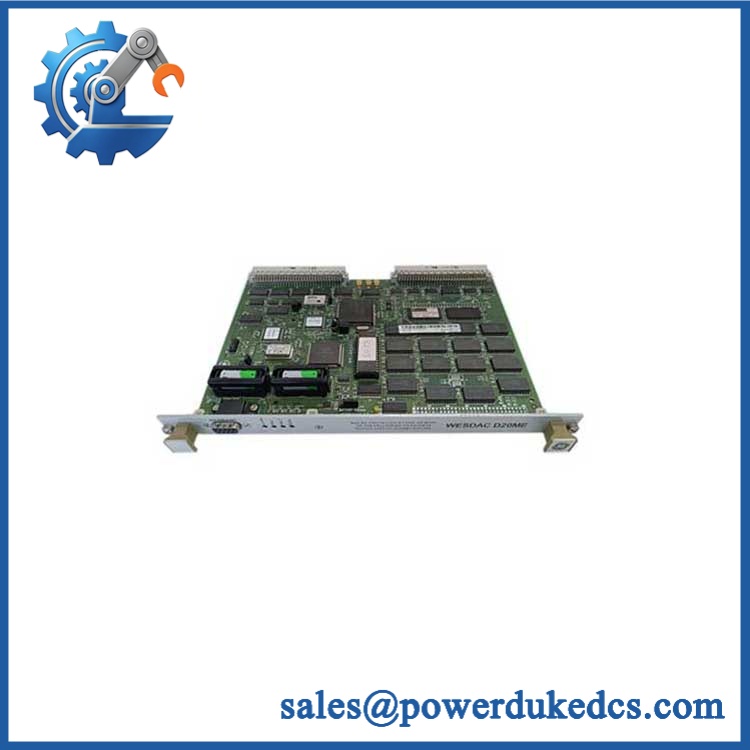
GE WES5120 5120-1106
Quality Assurance SOP
Our pre-shipment inspection should treat the GE 5120-1106 as an industrial electronics asset, not simply as a cosmetic spare.
- OEM anti-counterfeit visual inspection: Verify GE identification labels, part-number markings, PCB condition, connector construction, board revision markings where visible, and evidence of unauthorized rework.
- Mechanical inspection: Check enclosure condition, mounting points, connectors, terminals, and any visible antenna or RF interface for impact or corrosion.
- Power-on self-test (POST): Energize the unit under controlled test conditions and check available status indicators for expected RUN/ERR or communication-state behavior.
- Communication handshake verification: Connect the module to the appropriate test environment and verify expected network initialization and data communication behavior.
- Interface inspection: Confirm physical interfaces against the ordered 5120-1106 configuration before packing.
- Thermal observation: Monitor the unit during the functional test for abnormal temperature rise, resets, or unstable communications.
- Final documentation: Record part number, visible serial information where available, test result, inspection date, and packaging condition before shipment.
- Shipment control: Protect the PCB and connectors against ESD, mechanical impact, moisture, and contamination during transit.
Technical verification note: Publicly indexed references for 5120-1106 are inconsistent, with some sources describing it as an Ethernet communication module and others assigning unrelated power or control functions. For that reason, the communication specifications above are presented as reported reference data rather than as a substitute for the GE/OEM documentation for the installed system.




 Start Chat