

Description
- Brand: GE
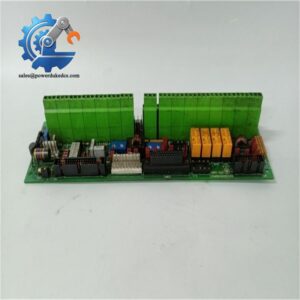
- Full Model Number: WESDAC D20ME
- Date Code / Marking: 18-MAR-13
- System/Series Family: GE D20 / D200 Substation Automation RTU
- One-Sentence Core Function: Main processor for the D20/D200 RTU, handling system control, I/O coordination, data processing, and SCADA communications
- Top 3 Hardcore Specs: Motorola 68030 CPU; up to 7 RS-232 serial channels at 38.4 kbaud; flash-based firmware storage
- Stock Status: New Surplus / Fully Tested Refurbished subject to actual inventory inspection
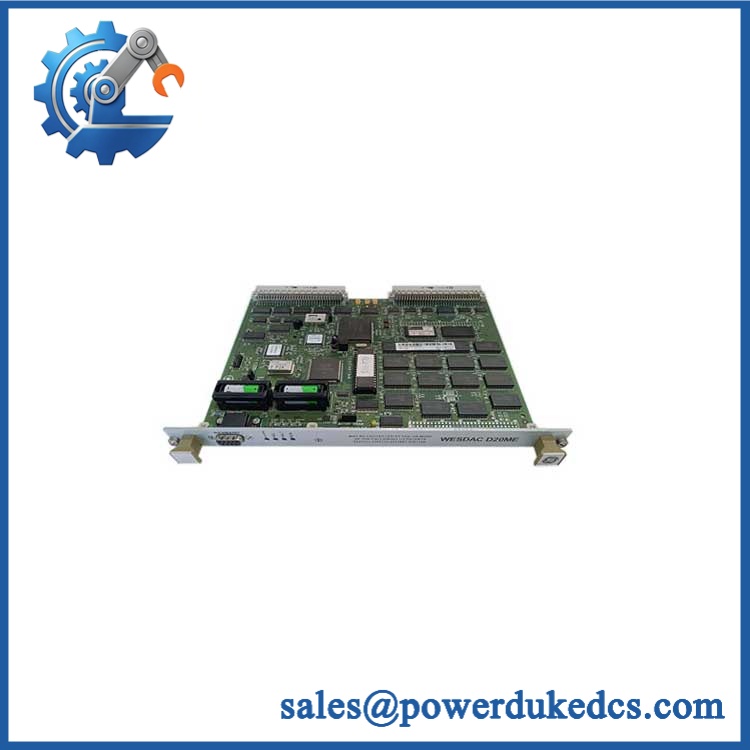
- GE WESDAC D20ME 18-MAR-13
Module 3: Commercial-Technical Deep Dive
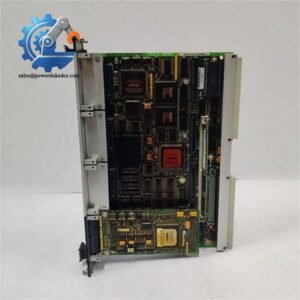
When a legacy D20 RTU loses its main processor, replacing the board is not simply a matter of restoring power. The GE WESDAC D20ME is the central processor used in the D20/D200 architecture, coordinating the intelligent peripheral I/O modules that operate as slaves to the main processor. GE documentation identifies a Motorola 68030 processor, seven RS-232 serial channels capable of operating at 38.4 kbaud, a dedicated WESMAINT maintenance interface, and flash memory for firmware storage. The D20ME was also designed with backward compatibility for legacy D20M++ installations.
The practical ROI comes from preserving the existing RTU architecture rather than replacing an entire substation communications platform. Firmware is stored in reprogrammable flash, and GE documentation states that firmware can be downloaded through the WESMAINT serial connection at rates up to 115200 baud. The board also provides configurable VMEbus functions, watchdog control, clock-source selection, and node/address settings through onboard jumpers. The 18-MAR-13 marking should be treated as a unit-identification or date/revision marker unless the original nameplate or configuration record specifically identifies it as a firmware revision; do not infer firmware solely from that date code.
Module 4: Compatibility & Installation Traps
Migration/Compatibility
- Replacement status: Configuration-specific D20/D200 main processor board.
- Logic rewrite: Usually not required for a direct replacement when the existing D20 application, database, communications configuration, and firmware environment are retained.
- Firmware flash: Configuration dependent. The D20ME uses flash-based firmware and supports firmware downloading through the WESMAINT interface. Verify the installed firmware before overwriting anything.
- Legacy compatibility: GE documentation identifies the D20ME as backward compatible with the legacy D20M++ platform.
- Node configuration: In multi-node D200 systems, board address and master/slave behavior are significant. GE documentation specifies jumper-controlled VME control and board address functions.
⚠️ Field Traps (Watch Out)
- Jumper configuration mismatch: Do not install a replacement board without recording the original SYSCon/master-slave, VME address, RTC, watchdog, and related jumper settings. A processor can boot correctly while participating incorrectly in the D200 architecture.
- Battery and firmware handling: The includes battery-backed functions and flash firmware. GE documentation specifically notes that batteries can be replaced individually without requiring a firmware redownload; preserve the correct procedure rather than removing all power sources indiscriminately.
- Serial-port assumptions: The and II are not identical. The II adds per-channel selection between RS-232 and RS-485/RS-422, whereas the does not provide that same per-channel selection. Do not substitute a II simply because the board appears similar.
Module 5: Quality Assurance SOP
Before shipment, the GE WESDAC should undergo a processor-board-specific inspection sequence:
- OEM anti-counterfeit visual inspection — verify GE/WESDAC markings, identification, board labeling, date/revision markings, CPU package, memory devices, and connector arrangement.
- PCB condition inspection — check for corrosion, cracked solder joints, contamination, damaged components, battery leakage, bent pins, and unauthorized rework.
- Jumper/configuration verification — photograph and record configurable jumper positions before any bench modification.
- Power-on self-test (POST) — install the board in a compatible D20/ test chassis and verify expected startup behavior and RUN/FAIL/HALT/alarm indications.
- Processor and memory verification — confirm successful processor initialization and expected memory operation.
- VMEbus communication handshake — where applicable, verify proper master/slave behavior and board addressing within the test chassis.
- Serial communication verification — test representative RS-232 channels at supported baud rates and confirm reliable bidirectional communication.
- WESMAINT verification — establish a maintenance connection and confirm that the processor responds correctly through the service interface.
- Firmware verification — record the installed firmware identification before shipment; do not classify the 18-MAR-13 marking as a firmware revision unless the unit documentation explicitly establishes that relationship.
- Final QC record — document model, board revision/date code, serial information where available, jumper settings, firmware identification, test results, photographs, and packaging condition.
For a D20 main processor, power-up is only the first checkpoint. The meaningful acceptance criteria are processor initialization, configuration integrity, serial communications, maintenance-port access, and correct interaction with the D20/ chassis.
Module 6: CRO-Driven Buyer FAQ
1. Is GE WESDAC obsolete, and how do I verify an authentic replacement?
The is a legacy D20/ main-processor platform, while GE’s current documentation also identifies the and II as the later-generation D20 main processors. For procurement, verify the exact designation, PCB identification, revision/date marking, connector arrangement, and configuration instead of accepting a D20-family board solely because it physically fits.
2. Can I hot-swap the WESDAC ?
Do not assume hot-swap capability. The is the main processor of the RTU and participates directly in I/O and communications. Use a controlled shutdown, site LOTO procedure, and the applicable D20/ maintenance instructions before removing the board.
3. Will replacing the require reprogramming the RTU?
Not necessarily. A matching replacement can often retain the established D20 application environment, but the processor’s firmware, jumper configuration, VME role/address, serial communications, database, and system configuration must be verified before returning the RTU to service. GE provides WESMAINT-based maintenance and firmware procedures for the platform.
4. What does the “18-MAR-13” marking mean?
The marking should be treated as a date, batch, or revision-related identifier unless GE documentation for that particular board explicitly defines it as a firmware version. It is not technically safe to assume that “18-MAR-13” means a firmware release. Request a photo of the complete board label and firmware identification when exact configuration matching matters.
5. What warranty and technical support are available?
Warranty duration should be stated according to the actual stock condition, such as new surplus or tested refurbished. Technical support should cover model verification, jumper/configuration review, firmware identification, WESMAINT connectivity, and documented bench-test results. Site-specific SCADA database engineering and live substation commissioning remain the responsibility of the qualified controls or protection team.



 Start Chat