

Description
- Brand: Honeywell
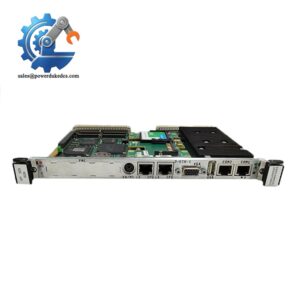
- Full Model Number: FC-R/PB2/N/12
- Lifecycle Status: Discontinued / Legacy
- Core Function: Redundant field controller / processor for Honeywell safety systems
- Top 3 Technical Specs: Redundant controller architecture; Safety Manager / FSC family; safety-system processing
- System Family: Honeywell Safety Manager / FSC
- Controller Type: Redundant field controller
- Application: ESD, F&G, process safety systems
- Redundancy: Dual-controller configuration
- Firmware: Safety Manager release-dependent
- Stock & Condition: New Surplus / Tested Refurbished — physical stock confirmation required
The exact FC-R/PB2/N/12 is documented in current supplier records as a Honeywell field controller and is identified as discontinued by the manufacturer in Radwell’s product record.
Module 3: Obsolescence & Supply Chain Deep Dive
When an FC-R/PB2/N/12 fails inside a Honeywell safety installation, the procurement problem is considerably larger than locating an ordinary PLC CPU. This module belongs to the Honeywell Safety Manager / FSC ecosystem and serves as a field-controller/processor component in safety-related applications. Current technical records associate the FC-R/PB2/N/12 with redundant controller operation and applications such as emergency shutdown and fire-and-gas systems. A failed processor can therefore prevent restoration of a controller pair, extend an outage, or force the plant into a restricted operating state.
For an installed Safety Manager system, a verified matching spare can offer a much lower TCO than prematurely replacing an entire safety platform. The reason is straightforward: a like-for-like repair can preserve existing controller architecture, application logic, field wiring, cabinet arrangement, and approved safety documentation. A broader migration introduces engineering validation, software conversion, proof testing, commissioning, and potentially revised certification work. —Because the FC-R/PB2/N/12 is now treated as discontinued legacy hardware, physical inventory, exact revision control, and configuration compatibility should be established before the replacement unit is released to the field.
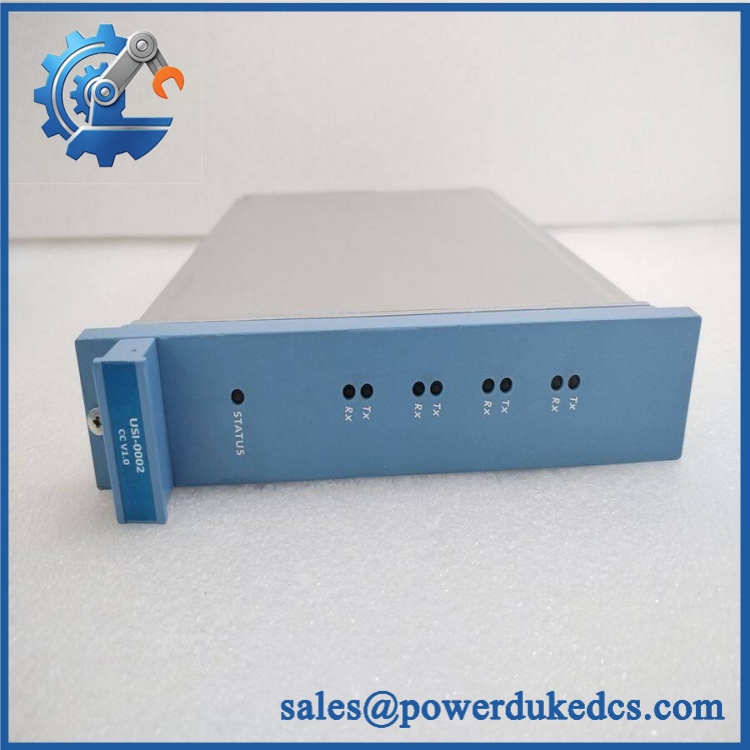
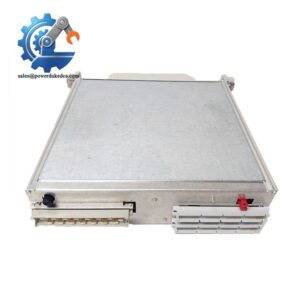
Honeywell FC-R/PB2/N/12
Module 4: Compatibility & Replacement Matrix
| Approval Question | Assessment for FC-R/PB2/N/12 |
|---|---|
| Replacement Type | Drop-in replacement for a matching FC-R/PB2/N/12 installation, subject to system revision and configuration verification |
| Product Family | Honeywell Safety Manager / FSC |
| Component Type | Redundant field controller / processor |
| Redundancy | Supported |
| Safety Application | ESD / F&G / process safety control |
| Software | Safety Manager release-dependent |
| Firmware | Must be matched to the approved system release |
| Hardware Modification | Normally none for exact like-for-like replacement |
| Typical Field Swap | 4–8 hours in a prepared maintenance window |
| Engineering Effort | Low to medium for an identical configured spare; high for platform migration |
Replacement guidance: Approve the unit as a like-for-like replacement only after comparing the complete part number, controller revision, firmware/software release, redundancy arrangement, and project configuration. Available technical records specifically describe redundant-controller installation with a controller chassis and redundancy-link connection.
Field Traps — Watch Out
- Safety Manager release mismatch: A replacement controller should not be assumed compatible simply because the part number matches. Firmware must be synchronized with the approved Safety Manager release. Current technical references cite release-dependent firmware considerations.
- Redundancy-pair mismatch: For redundant installations, verify that the replacement controller is compatible with its partner and that the redundancy link is correctly connected before returning the system to service.
- Certification assumptions: Do not assume that replacing the processor automatically preserves the site’s safety validation. The approved application configuration and site proof-test requirements remain controlling.
Module 5: Quality Assurance & Testing SOP
A safety-system controller requires documented functional verification. Cosmetic inspection alone is not an acceptable release criterion.
1. Identity & Authenticity Verification
- Verify Honeywell identification and exact part number FC-R/PB2/N/12.
- Record serial number, date code, hardware revision, and visible firmware identifiers.
- Perform OEM anti-counterfeit visual inspection of labels, PCB markings, connectors, chassis hardware, and processor assembly.
- Photograph all identification markings before testing.
2. Physical Inspection
- Examine connector pins for bending, oxidation, contamination, or mechanical damage.
- Inspect PCB assemblies for corrosion, overheating, cracked components, and unauthorized rework.
- Check mounting hardware and controller-chassis interfaces.
- Verify the redundancy connection interface is mechanically sound.
3. Power-On Self-Test
- Install the controller in an appropriate Honeywell Safety Manager test environment.
- Apply the specified system supply through controlled test equipment.
- Perform power-on self-test (POST).
- Check controller status LEDs and diagnostic indications.
- Confirm normal startup without watchdog, memory, processor, or communication faults.
4. Controller Functional Testing
- Verify controller initialization within the Safety Manager test environment.
- Confirm processor diagnostics and application execution.
- Establish communication with the test system.
- Exercise representative safety-logic functions.
- Check diagnostic reporting and fault handling.
5. Redundancy Testing
- Pair the unit with a compatible test controller.
- Verify redundancy-link communication.
- Test controlled primary/secondary transfer.
- Confirm that the healthy controller assumes the required control role after simulated controller fault conditions.
- Record transfer behavior and diagnostic status.
6. Extended Stability Testing
- Run representative controller loading for an extended period.
- Monitor processor temperature, supply stability, communications, diagnostic status, and unexpected resets.
- Verify configuration retention through controlled power cycling where permitted.
- Record firmware revision and all test results against the unit serial number.
7. Final QC Release
- Issue a serial-number-specific Test Report.
- Confirm the tested firmware/revision is disclosed to the buyer.
- Attach QC identification.
- Package the processor using ESD protection and mechanical protection for the connector assembly.
The available technical record identifies FC-R/PB2/N/12 as a redundant field-controller/processor module and specifically calls for controller-pair verification, grounding, redundancy-link checks, diagnostics, and Safety Manager firmware synchronization.
Module 6: Procurement & Lifecycle FAQ
Q1. Is Honeywell FC-R/PB2/N/12 genuinely in stock, and what is the emergency-shipping cutoff?
Actual physical stock should be confirmed against the exact part number and serial-numbered unit. For an emergency requirement, request written confirmation of quantity, condition, test status, dispatch date, and carrier cutoff. A current supplier record shows multiple condition categories for this exact part, including never-used and refurbished inventory, which reinforces the need to verify the actual unit being quoted.
Q2. How do you verify the condition and authenticity of a surplus FC-R/PB2/N/12?
Require part-number and serial-number verification, OEM marking inspection, connector inspection, controlled Safety Manager power-up, diagnostics testing, functional controller testing, and redundancy testing where applicable. For safety-system hardware, the QC/Test Report should identify the exact tested serial number and firmware revision.
Q3. Are there firmware compatibility issues engineers should check before issuing the PO?
Yes. The controller’s firmware/software must match the site’s approved Safety Manager release and configuration. Technical references specifically identify firmware synchronization as a maintenance requirement.
Q4. Can FC-R/PB2/N/12 be replaced without modifying the existing safety-system hardware?
For an exact like-for-like replacement in a compatible Safety Manager/FSC installation, the physical exchange is generally treated as a direct replacement. The important engineering checks are controller revision, firmware, redundancy pairing, chassis compatibility, application configuration, and required proof testing.
Q5. Is FC-R/PB2/N/12 still a current product, and what is the lifecycle recommendation?
Procurement teams should treat FC-R/PB2/N/12 as discontinued legacy inventory. Radwell’s current product record explicitly identifies the manufacturer status as discontinued, while recent technical records continue to identify it with the Honeywell Safety Manager/FSC family. For sites that must keep an existing Safety Manager installation operational, holding a tested spare is often financially preferable to initiating an unplanned safety-system migration after a controller failure.



 Start Chat


