

Description
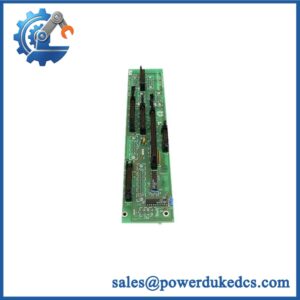
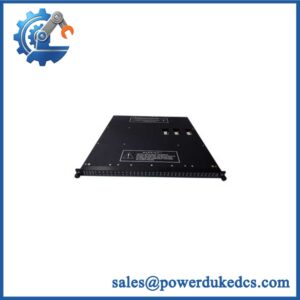
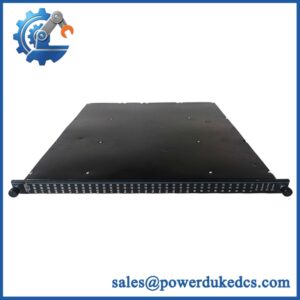
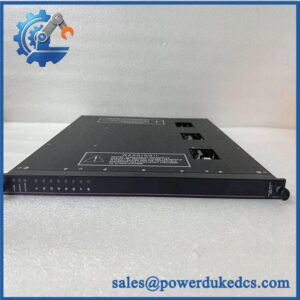
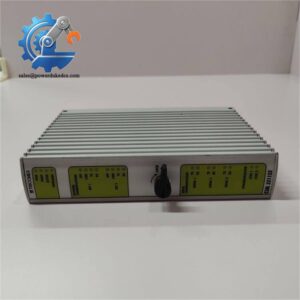
Unboxing & Physical Snapshot
- Manufacturer: Triconex / Invensys
- Model: 2101
- Product type: 32-point digital input module for the Tricon fault-tolerant control system.
- Architecture: Triple Modular Redundant (TMR) safety I/O.
- Input configuration: 32 digital inputs; exact electrical variant must be confirmed from the module label and applicable manual.
- Physical dimensions: Approximately 40.8 × 40.0 × 2.1 cm for the corresponding Tricon I/O module form factor; verify the actual 2101 revision before freight booking.
- Unit weight: OEM/revision verification required.
- Estimated packed shipping weight: Approximately 2.0–3.0 kg pending actual measurement.
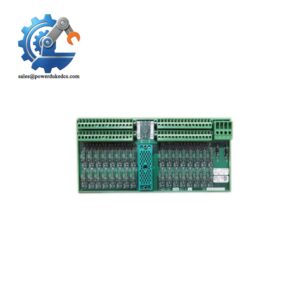
- What’s in the box: Triconex 2101 module; termination panel/cable, mounting accessories, and documentation only when specifically included with the lot.
- Receiving inspection: Record model, serial number, hardware revision, date code, LED condition, keying, connector condition, and ESD packaging.
Product Introduction
Architecture hook: The Triconex 2101 is associated with the Tricon safety-system I/O architecture, where redundant input processing and diagnostics are used to maintain operation when individual hardware faults occur. It should therefore be managed as a safety-system I/O spare, not as an interchangeable general-purpose PLC input card.
The exact electrical specification is revision-dependent and should be established from the physical nameplate before installation. Pay particular attention to the field-voltage variant, termination arrangement, chassis compatibility, and system revision (an apparently identical I/O module can have different field-interface requirements).
Core Technical Specifications
| Parameter | Value |
|---|---|
| Manufacturer | Triconex / Invensys |
| Model | 2101 |
| Product type | Digital Input Module |
| Safety architecture | Tricon TMR |
| Number of inputs | 32 |
| Input type | Digital/discrete |
| Field voltage | Verify exact 2101 revision |
| Input isolation | System/channel isolation per applicable Tricon architecture |
| Diagnostics | Module/channel diagnostics |
| Status indicators | PASS / FAULT / ACTIVE and applicable field indication |
| System interface | Tricon chassis/backplane |
| Termination | External termination arrangement; verify applicable assembly |
| Power consumption | OEM verification required |
| Heat dissipation | OEM verification required |
| Operating temperature | OEM verification required |
| Storage temperature | OEM verification required |
| Humidity | OEM verification required |
| Dimensions | Verify actual hardware revision |
| Weight | Verify actual hardware revision |
| Firmware | System/hardware revision dependent |
| Certifications | Verify exact model/revision |
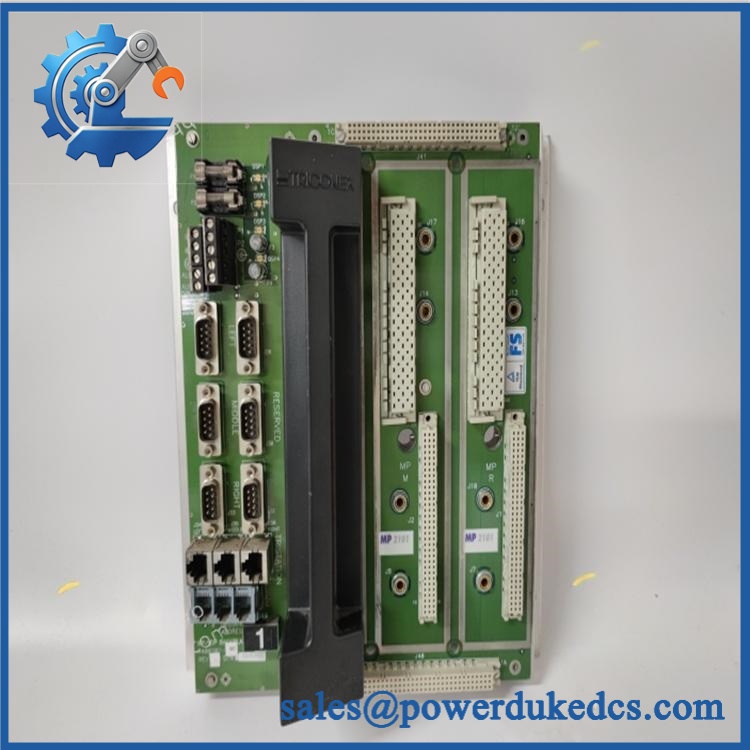
Triconex 2101
Power and heat management
Do not equate the field-input voltage with the module’s internal power consumption. The former describes the external signal circuit; the latter determines the chassis power budget and thermal load.
For warehouse engineering records, use the revision-specific Triconex power-consumption value when calculating UPS loading or cabinet heat dissipation. Avoid importing the figures from another 2100-series module.
Global Compliance & Industry Certifications
The 2101 should be evaluated within the certification framework applicable to the complete Tricon safety system.
- IEC 61508: Verify the applicable functional-safety certification for the Tricon system and hardware revision.
- IEC 61511: Relevant to the SIS lifecycle and application; the individual I/O module should not be represented as independently satisfying an entire safety function.
- CE Mark: Verify the applicable Triconex/Schneider Electric declaration.
- UL/cUL: Confirm the certification record for the exact hardware revision.
- FM/CSA: Verify applicable hazardous-location certification.
- ATEX/IECEx: Do not assume hazardous-area approval merely because the module is part of a safety system.
- Marine approvals: DNV/DNV GL, ABS, or other marine approvals require separate confirmation.
Safety certification matters because the module’s diagnostic behavior, redundancy, fault response, and system integration form part of the overall safety architecture. An electrically similar non-Triconex input card cannot automatically be substituted.
Verify specific lot certifications with OEM.
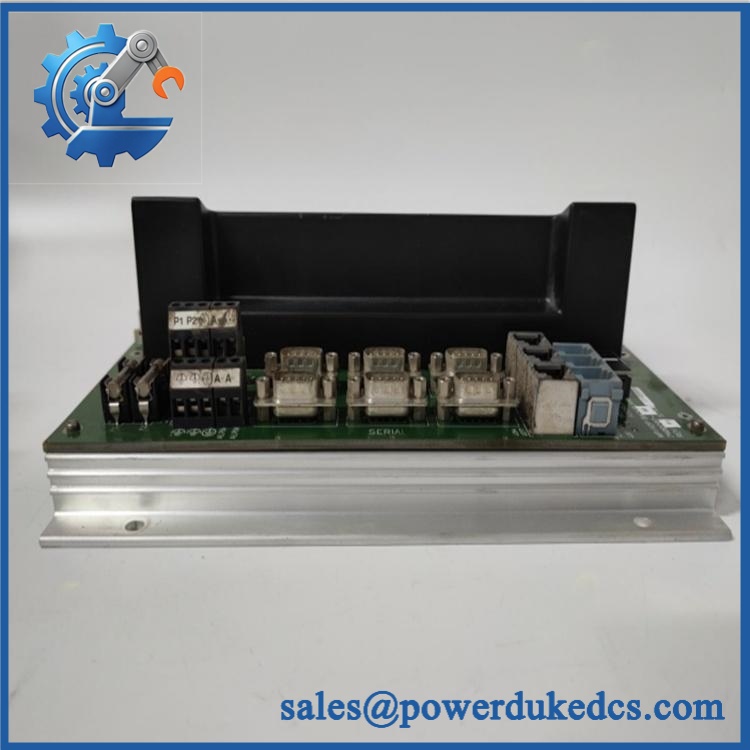
Triconex 2101
Long-Term Storage & Asset Preservation Guide
Keep the 2101 in its original ESD shielding bag. Protect the backplane connector, field interface, and PCB assembly from static discharge, conductive dust, and mechanical shock.
Maintain dry, clean storage conditions. Avoid condensation, salt air, corrosive gases, oil mist, and conductive contamination. For long-term electronic inventory, maintaining RH below approximately 60% is a practical preservation target.
Preserve the safety traceability record. Retain the serial number, hardware revision, date code, certification markings, and original packaging. Do not remove factory labels; these identifiers can determine whether the spare is acceptable for the approved safety configuration.
Physical Installation Prerequisites
- Install only into the Tricon chassis and slot configuration approved for the 2101 revision.
- Confirm the applicable Tricon system generation before issuing the spare.
- Verify the actual field-voltage rating from the module label and OEM manual.
- Confirm the correct external termination panel and cable assembly.
- Apply ESD precautions during module handling.
- Inspect the backplane connector and module guides before insertion.
- Verify field wiring polarity and voltage before reconnecting.
- Maintain unobstructed chassis airflow.
- Follow the manufacturer’s specified cabinet/rack clearance rather than applying an arbitrary 50 mm value.
- Confirm cabinet protective grounding and bonding.
- Follow the approved Triconex maintenance procedure for online replacement where supported.
- After installation, verify PASS, FAULT, ACTIVE, and field diagnostics before returning the safety function to service.
- Any configuration change affecting the SIS should follow the approved Management of Change procedure.
Buyer’s FAQ
Q: What HS tariff code should be used for Triconex 2101?
A: Do not classify it as a generic PLC card without technical review. The final HS code should be based on the confirmed digital-input function and the importing country’s tariff schedule. Have the customs broker validate the classification before export.
Q: What should be declared as Country of Origin?
A: Do not infer COO from the Triconex brand or corporate ownership. Use the physical nameplate, manufacturer documentation, or supplier Certificate of Origin for the specific serial-numbered module.
Q: What shipping weight should be used?
A: Use the actual gross packed weight. The warehouse should weigh the module together with its ESD bag, cushioning, carton, and included accessories before finalizing the commercial invoice.
Q: Does a replacement 2101 contain the latest firmware?
A: Do not assume it does. Verify the hardware revision and applicable Tricon system software baseline before commissioning. Record the spare’s revision information during receiving inspection and compare it with the approved system configuration.
Asset-Control Warning
TRICONEX 2101 should be treated as a controlled safety-system I/O spare. Before releasing it for installation, verify the complete model designation, hardware revision, field-voltage variant, termination hardware, compatible Tricon system revision, certification status, and actual weight.
Do not substitute specifications from 3511, 3721, or another 2100-series module merely because the physical chassis format appears similar.



 Start Chat