

Description
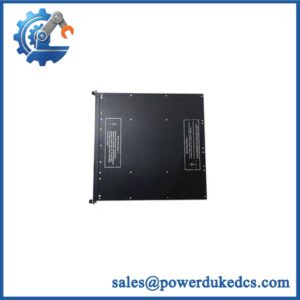
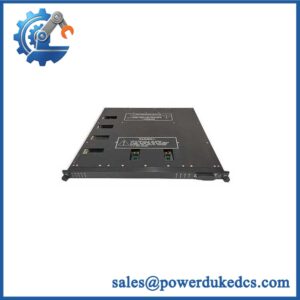
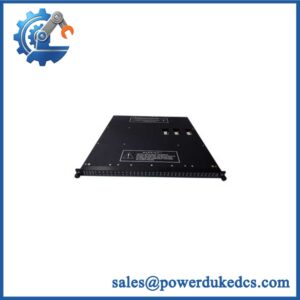
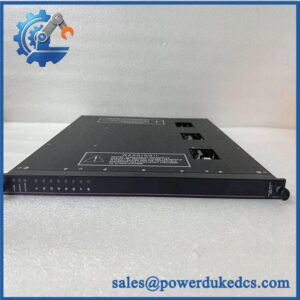
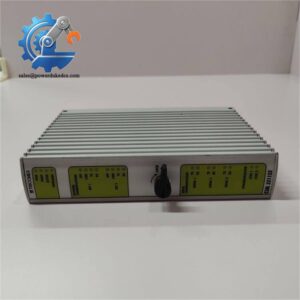
Unboxing & Physical Snapshot
- Manufacturer: Triconex / Invensys
- Part number: 3000510-510
- Product classification: OEM identification required.
- Part-number format: This appears to be a Triconex assembly/part number rather than a standard functional model number such as 3511, 3721, or 2481.
- Physical dimensions: OEM verification required.
- Unit weight: OEM verification required.
- Estimated packed shipping weight: Determine from the actual packaged item before freight booking.
- What’s in the box: 3000510-510 assembly; connectors, cables, mounting hardware, or documentation only when specifically listed on the supplier packing list.
- Receiving inspection: Photograph the complete nameplate, barcode, serial number, hardware revision, date code, connector arrangement, and original packaging.
Product Introduction
Compliance hook: Exact identification is the controlling issue for 3000510-510. Unlike a standard Triconex functional model number, this assembly number by itself does not provide enough reliable information to establish whether the item is an I/O module, baseplate, cable assembly, power component, termination component, or another Tricon system spare.
Do not assign technical characteristics based on the numerical pattern. A warehouse master containing an incorrect function, voltage, or chassis compatibility can create downstream errors in procurement, customs classification, maintenance release, and safety-system configuration (especially with legacy Triconex hardware).
Data-quality control
Do not substitute specifications from Triconex 2101, 2301, 2481, 3511, 3721, or 8111C.
The 3000510-510 identifier should remain technically controlled until its underlying product function is confirmed from the physical assembly or authoritative OEM documentation. This is particularly important when the number is being used for an ERP, CMMS, warehouse, or customs record.
Global Compliance & Industry Certifications
Certification cannot be reliably assigned until the underlying component is positively identified.
- IEC 61508: Verify applicable functional-safety certification for the hardware/system configuration.
- IEC 61511: Evaluate compliance at the SIS lifecycle and application level.
- CE Mark: Verify the applicable Triconex/Schneider Electric declaration.
- UL/cUL: Confirm the exact certification record for the hardware revision.
- FM/CSA: Verify any applicable hazardous-location approvals.
- ATEX/IECEx: Do not assume hazardous-area approval based solely on the Triconex brand.
- Marine approvals: DNV/DNV GL, ABS, or other marine certification requires separate confirmation.
For an audit-grade record, certification evidence should be linked to the actual part number, hardware revision, and applicable certificate, not simply to the Triconex product family.
Verify specific lot certifications with OEM.
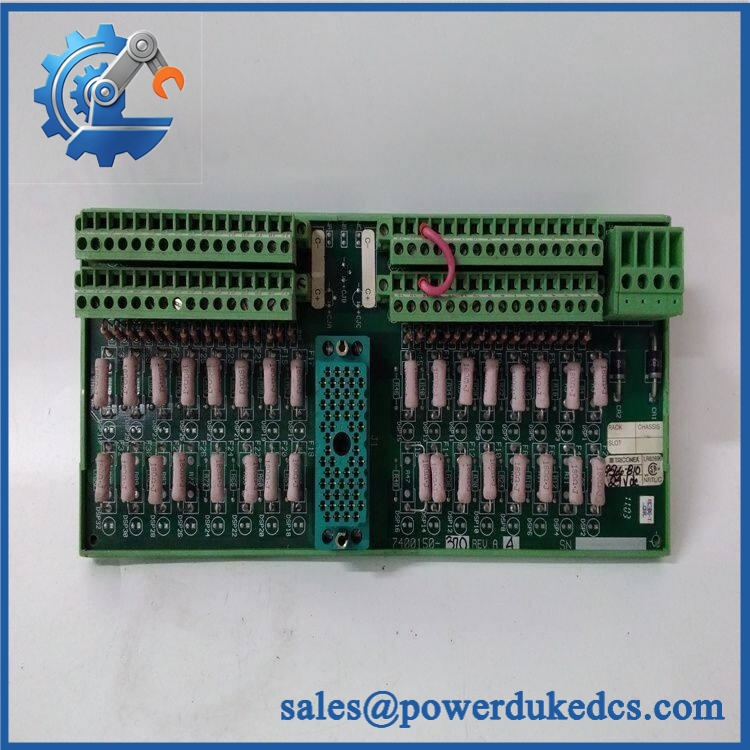
Triconex 3000510-510
Long-Term Storage & Asset Preservation Guide
Keep 3000510-510 in its original packaging whenever practical. If it is an electronic assembly, retain the ESD shielding bag and protect exposed connectors from dust and static discharge.
Control warehouse humidity. Avoid condensation, salt air, corrosive process gases, conductive dust, and oil contamination. For long-term electronic storage, a practical target is below 60% RH.
Preserve every identification marking. Photograph and retain the part number, serial number, revision, date code, barcode, and certification labels. Do not remove factory labels or relabel the assembly with an inferred product description (the original identification is critical if the item later requires OEM cross-reference).
Physical Installation Prerequisites
- Do not install the item until its exact function is confirmed.
- Identify the compatible Tricon/Triconex chassis, baseplate, termination assembly, or host equipment.
- Verify all electrical ratings against authoritative documentation.
- Inspect connectors, terminals, guides, and mounting hardware before installation.
- Use ESD controls for electronic assemblies.
- Confirm cabinet grounding and bonding requirements.
- Verify cabinet cooling requirements after the component has been positively identified.
- Maintain the OEM-specified clearance and ventilation requirements.
- Do not apply an arbitrary 50 mm clearance specification.
- Confirm hardware revision compatibility with the target Tricon system.
- Follow the approved Triconex maintenance procedure for replacement.
- Perform required system diagnostics and functional checks before returning the safety function to service.
- Apply the site’s approved Management of Change process whenever the replacement changes the approved safety configuration.
Buyer’s FAQ
Q: What HS tariff code should be used for 3000510-510?
A: Do not assign a final HS code until the product function is established. The number alone is insufficient to determine whether this is an electronic module, interface assembly, cable, power component, or another category. Once identified, have the customs broker validate the classification.
Q: What is the Country of Origin?
A: Do not infer COO from the Triconex brand. Use the actual product marking, OEM documentation, or a supplier Certificate of Origin for the specific unit. If the supplier cannot provide evidence, flag COO as documentation pending rather than guessing.
Q: What weight should be entered into the shipping documentation?
A: Use the actual gross packed weight. Weigh the item with its ESD packaging, cushioning, carton, and included accessories. Do not copy the weight of another Triconex assembly.
Q: Does 3000510-510 contain the latest firmware?
A: Cannot be established from this assembly number alone. First determine what the part actually is. If it is an electronic module, record its hardware/firmware revision and compare it against the target Tricon system’s approved baseline.
Asset-Control Warning
TRICONEX 3000510-510 should remain classified as “OEM identification pending.” Do not populate the asset master with an assumed module type, voltage, dimensions, weight, firmware status, or certification.
For procurement, customs, and maintenance release, obtain a clear photograph of the complete physical label, including any secondary model designation, serial number, hardware revision, date code, and barcode. Those identifiers should be used to establish the final technical record.



 Start Chat