

Description
-
Brand: Triconex
- Full Model Number: 3351
- System/Series Family: Trident
- Core Function: 32-point commoned 4-20 mA TMR analog input acquisition
- Top 3 Hardcore Specs: 4-20 mA nominal input; 2-22 mA operating range; 32 commoned points
- Input Resolution: 12 bits
- Absolute Error: 0.15% of full scale at 20 mA
- Input Bandwidth: 16 Hz
- Input Impedance: 250 Ω with baseplate
- I-to-V Resistor: 100 Ω ±0.01%
- Scan Time: <1 ms for all 32 points
- Diagnostics: Force-to-Value Diagnostic (FVD)
- Isolation: 500 VDC functional-to-protective earth; 800 VDC functional-to-functional earth
- Hot Spare: Supported
- Associated Baseplate: 2351 for standard 4-20 mA applications
- Stock Status: New Surplus or Fully Tested Refurbished; exact revision to be confirmed
Module 3: Technical Product Introduction
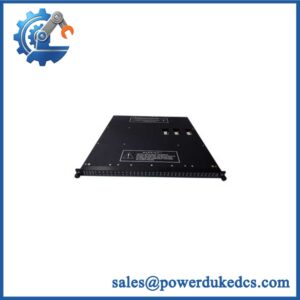
A 4-20 mA loop in a safety controller has to be evaluated three times, not once. The Triconex 3351 is a 32-point commoned analog input module for the Trident platform, using three independent input channels so that the Main Processors can compare the acquired data within the TMR architecture. Trident documentation identifies Model 3351 specifically as a 4-20 mA analog input module, with 32 points and support for continuous diagnostics and hot sparing.
The measurement path is tightly specified. Nominal input current is 4-20 mA DC, with a 2-22 mA operating range and 33 VDC absolute maximum field voltage. Resolution is 12 bits, absolute error is 0.15% of full scale at 20 mA, and the input bandwidth is 16 Hz. With the 2351 baseplate installed, input impedance is approximately 250 Ω, while the internal I-to-V conversion resistor is 100 Ω ±0.01%. All 32 points can be scanned in less than 1 ms, and the module supports Force-to-Value diagnostics.
Module 4: Application Scenarios & Field Realities
- For pressure, flow, level, and process-analyzer transmitters, the 3351 provides the standard 4-20 mA acquisition path into a Trident safety controller. The three-channel architecture allows the input information to be processed independently before the system applies its fault-tolerant voting architecture.
- In SIS applications with online maintenance requirements, hot-sparing capability is a major practical feature. A spare module can remain available for transfer when the active module develops a diagnosed fault, provided the installed baseplate and approved maintenance procedure support the operation.
- Where transmitter output is near the edge of the nominal range, the documented 2-22 mA operating range should be distinguished from the normal 4-20 mA signal span. A 21 mA signal can therefore be processed, but it should not automatically be interpreted as a standard-range process value without checking the application scaling and alarm strategy.
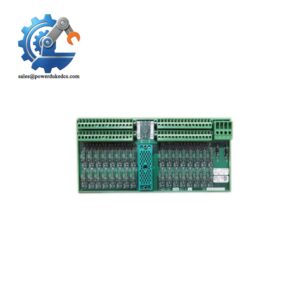
- During cabinet refurbishment, the 2351 baseplate is part of the qualification. The 3351 is a module within a defined Trident I/O architecture, not a generic 4-20 mA input card that can be paired with any termination system. Trident documentation identifies the 2351 as the standard analog-input baseplate for the 3351.
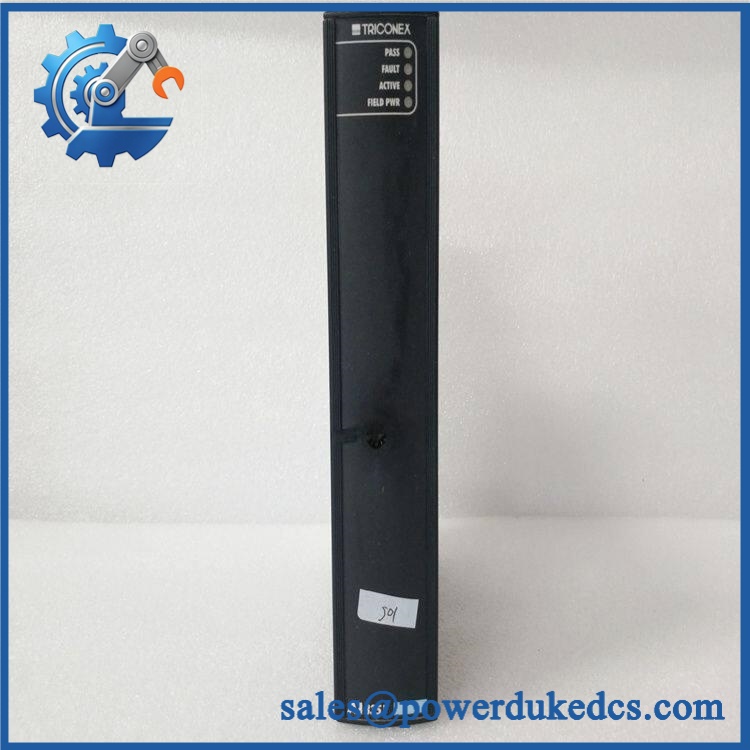
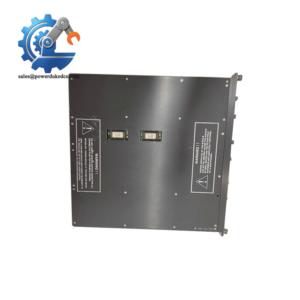
TRICONEX 3351
Module 5: Migration, Compatibility & Installation Traps
Replacement Matrix
Replacement classification: Drop-in Replacement when the installed controller uses a compatible Trident 3351 configuration, matching baseplate, field termination, system version, and hardware revision.
Software compatibility: Configuration verification required. The module is hardware-based, but channel assignments, scaling, alarms, diagnostics, and the installed Trident configuration must match the existing application.
Cross-model replacement: Hardware and configuration verification required. Other Triconex analog-input modules can differ in signal range, HART capability, termination arrangement, channel configuration, or baseplate. A visually similar Trident module is not automatically equivalent. Trident documentation distinguishes the 3351 from other analog-input and mixed analog/digital variants.
Field Traps — Watch Out
1. Do not confuse 3351 with the 3351S2 assembly designation. Triconex lifecycle documentation separately lists 3351S2 as an assembly/module designation for a Trident analog-input module. Before shipment, compare the full marking and revision on the customer’s existing hardware rather than treating 3351 and every 3351S2 listing as interchangeable without verification.
2. Verify the termination/baseplate arrangement. Standard 3351 operation is associated with the 2351 analog-input baseplate. Other termination architectures may involve different baseplate configurations and external termination hardware. The module number alone does not establish the complete field-wiring arrangement.
3. Check loop loading before commissioning. With the 2351 baseplate, the documented input impedance is approximately 250 Ω. That resistance becomes part of the transmitter loop burden, so a transmitter that is already close to its compliance-voltage limit should be checked before replacing the module.
4. Preserve the TMR channel architecture. A healthy analog value on one internal path does not fully qualify the module. The three independent channels and their diagnostics are integral to the Trident safety architecture, so channel-level testing matters during replacement.
Module 6: Quality Assurance SOP
Pre-Shipment Inspection Protocol for TRICONEX 3351
- OEM identity inspection: Verify Triconex marking, exact 3351 designation, hardware revision, serial number, and all additional assembly identifiers.
- Architecture verification: Confirm that the unit is the Trident Model 3351 Analog Input Module, not another similarly numbered Triconex assembly.
- Mechanical inspection: Examine the housing, module guides, connector interfaces, locking mechanism, status LEDs, and accessible PCB surfaces for corrosion, contamination, deformation, cracked components, or unauthorized modification.
- Baseplate verification: Confirm compatibility with the intended 2351 analog-input baseplate and inspect the mating interface for bent, oxidized, or contaminated contacts.
- Power-on self-test: Install the module in a compatible Trident test chassis and verify PASS, FAULT, ACTIVE, and FIELD PWR status behavior.
- Reference-current test: Apply calibrated input currents representing representative values across the 2-22 mA operating range and verify correct channel response.
- 32-channel verification: Test every input point independently rather than accepting a single-channel result as representative of the full module.
- Accuracy verification: Compare calibrated readings against traceable current sources, using the published 0.15% of full-scale absolute-error specification as the engineering reference.
- Resolution and scan test: Verify appropriate 12-bit measurement behavior and confirm the expected acquisition performance using a compatible Trident diagnostic/test environment.
- FVD diagnostic verification: Exercise the Force-to-Value Diagnostic function under controlled conditions and confirm that the expected diagnostic response is generated.
- Isolation verification: Perform controlled insulation/isolation testing between field circuitry, protective earth, and logic circuitry using an approved test method and voltage.
- TMR channel verification: Where the test bench permits, evaluate all three independent input channels and confirm consistent data transfer to the Main Processor architecture.
- Hot-spare test: Use a compatible active/spare configuration to verify module transfer behavior under the applicable Trident maintenance procedure.
- Thermal observation: Run representative 4-20 mA traffic across multiple channels and monitor for abnormal temperature rise, drift, intermittent diagnostics, or channel instability.
- Final QC record: Record exact model, revision, serial number, baseplate used, calibration source, all 32 channel results, diagnostic results, hot-spare result where applicable, test date, and inspector approval.
- ESD-controlled packaging: Place the module in an ESD-safe package and protect connectors, locking features, and PCB surfaces from impact, moisture, contamination, and electrostatic discharge.
Procurement note: The technically supported identity is TRICONEX 3351 — Trident 32-point commoned 4-20 mA Analog Input Module. Published Trident specifications identify 2-22 mA operation, 12-bit resolution, 0.15% full-scale absolute error, 16 Hz bandwidth, <1 ms scanning for all 32 points, FVD diagnostics, hot-spare capability, and 500/800 VDC isolation. The standard installation uses the 2351 Analog Input Baseplate.



 Start Chat