

Description
- Brand: TRICONEX / Schneider Electric
- Full Model Number: 3481S2
- System/Series Family: Tri-GP v2 / Tri-GP v3
- One-Sentence Core Function: Four-point TMR analog output module for generating controlled 4–20 mA signals to field actuators
- Top 3 Hardcore Specs: 4 commoned-return outputs; 4–20 mA controlled / 0–22 mA over-range; 12-bit resolution
- Stock Status: Stock condition and hardware revision to be confirmed
Module 3: Technical Product Introduction
A failed analog output can leave a control valve, positioner, or other final control element without its required command while the upstream safety logic remains healthy. TRICONEX 3481S2 is a four-point TMR analog output module for Tri-GP systems. Each output is generated through triplicated DAC and selector logic, providing the fault-tolerant output architecture expected in a Triconex safety system. The module supports a controlled 4–20 mA output range with 0–22 mA over-range capability and can operate as a hot spare.
For signal accuracy, the 3481S2 uses 12-bit resolution and specifies output accuracy of less than 0.25% of full-scale range over 0–70°C within the 4–20 mA operating range. External loop power is required, with 24 VDC nominal and 32 VDC maximum. The module’s documented output-load capability depends on the available field voltage: approximately 300 Ω at greater than 16 VDC, 500 Ω above 20 VDC, 700 Ω above 24 VDC, and 800 Ω above 28 VDC, based on a 1 A minimum supply condition.
Module 4: Application Scenarios & Field Realities
- For control-valve positioners, the 3481S2 can provide the continuous current command required by a 4–20 mA actuator loop. Before replacement, calculate the complete loop burden—including cable resistance, intrinsic safety interfaces, barriers, and the positioner input—rather than checking the transmitter label alone.
- On process-control final elements, four analog outputs allow one module to handle multiple valve or actuator commands. The outputs use a common-return arrangement, so the field wiring should be reviewed against the approved 2481S2 or external-termination configuration before energization.
- Where HART diagnostics are required, the 3481S2 can be installed with the 2483S2 HART baseplate and Triconex 4850 HART Multiplexer. Schneider/Triconex documentation specifically warns that the 2483S2 and 2483AS2 HART baseplates are for the 3481S2 only; installing another output module on those baseplates can damage baseplate components.
- In hazardous-area installations, the 3481S2 can be used with the 2483AS2 HART hazardous-location baseplate or the approved external-termination arrangement. Verify the certified field interface and barriers before installation—do not treat the standard 2481S2 wiring as automatically valid for a hazardous-location cabinet.
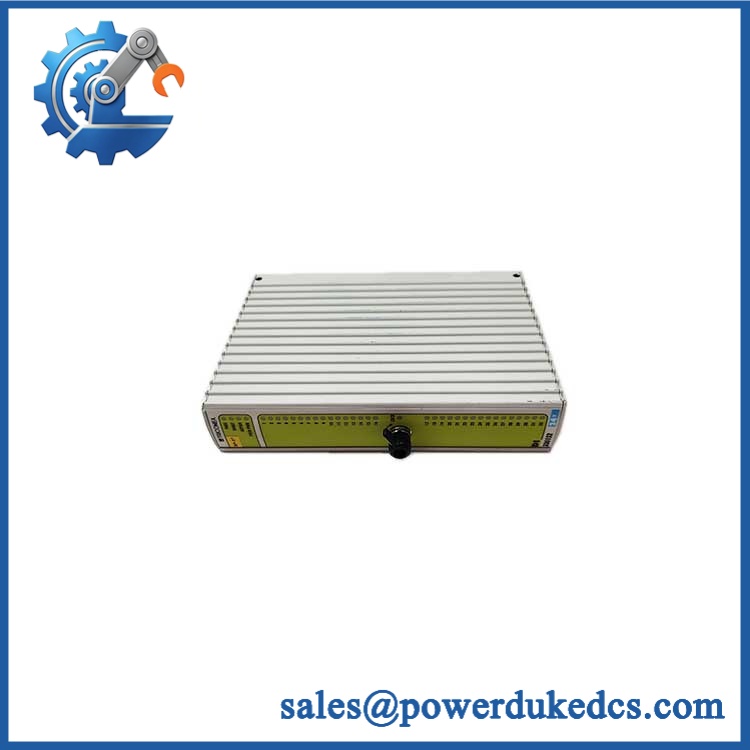
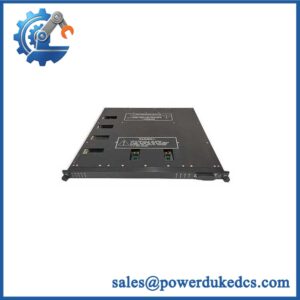
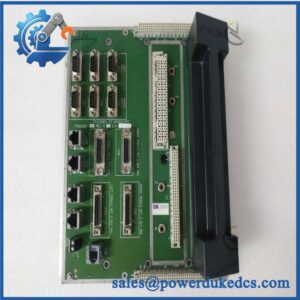
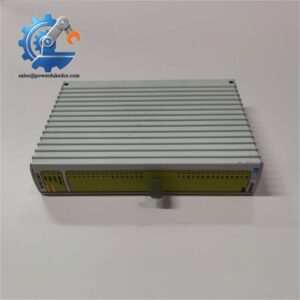
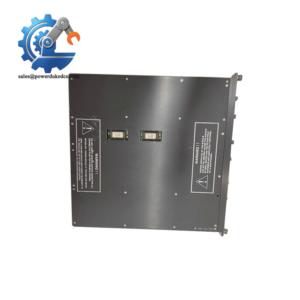
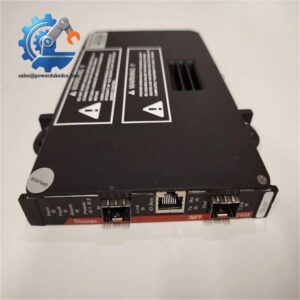
TRICONEX 3481S2
Module 5: Migration, Compatibility & Installation Traps
Replacement Matrix
Replacement Classification: Drop-in Replacement Within the Matching Tri-GP 3481S2 Configuration
A like-for-like 3481S2 replacement is appropriate where the existing Tri-GP application uses the same 3481S2 module, compatible baseplate, field wiring, and approved system configuration. Triconex documentation identifies the 2481S2 as the standard AO baseplate and also supports the 2483S2/2483AS2 HART baseplates and approved external-termination arrangements.
3481S2 → 3482S2: Hardware Modification Required. Both are four-point analog-output modules, but 3482S2 is the high-current 4–40 mA variant. Its output range and load characteristics differ materially from the standard 3481S2, and it is compatible with the 2481S2 baseplate only.
3481S2 → 3481: Configuration Verification Required. Preserve the S2-generation hardware, baseplate, termination, and system revision when replacing an installed 3481S2. Do not substitute an older model solely because the base model number appears similar.
⚠️ Field Traps — Watch Out
1. Loop burden is voltage-dependent: The allowable load resistance increases with available field voltage. At minimum supply conditions, the permissible burden is much lower than at 28 VDC. Long cables and additional series devices can consume the available voltage margin quickly
2. HART baseplate restriction: The 2483S2 and 2483AS2 are specifically for 3481S2 modules. Do not insert a different AO model into these baseplates; the published installation guide warns that doing so can destroy baseplate components.
3. Unused outputs: When using the approved 2481S2 field wiring, unused outputs should be shorted according to the installation documentation. Do not leave unused points floating when the approved baseplate procedure calls for an output jumper.
Module 6: Quality Assurance SOP
Each TRICONEX 3481S2 should undergo identification, analog-output, diagnostic, and TMR verification before shipment.
- OEM identification visual inspection: Verify TRICONEX / Schneider Electric markings, 3481S2 designation, serial number, hardware revision, connector condition, mechanical keying, and front-panel labeling.
- Platform verification: Confirm the unit is intended for the customer’s Tri-GP generation and record the associated 2481S2, 2483S2, 2483AS2, or approved external-termination baseplate.
- Mechanical inspection: Examine the housing, connectors, PCB assembly, ejector/keying features, and visible components for cracks, corrosion, contamination, or evidence of previous repair.
- Power verification: Install the module in an approved Tri-GP test chassis and verify the external loop-power arrangement using 24 VDC nominal, without exceeding the documented 32 VDC maximum.
- Power-on self-test (POST): Confirm expected startup behavior, status indications, diagnostic state, and TMR initialization.
- Four-channel analog test: Exercise all four outputs independently with calibrated measurement equipment and record representative low-, mid-, and high-range values.
- 4–20 mA verification: Test representative outputs near 4 mA, 12 mA, and 20 mA, and verify the measured current against the commanded value.
- Over-range verification: Where authorized by the laboratory test procedure, verify controlled operation through the documented 0–22 mA range without exceeding the approved output limits.
- Accuracy check: Compare calibrated output measurements against the specified <0.25% FSR accuracy characteristic over the applicable temperature range.
- Load/burden test: Test representative loads against the field-voltage-dependent burden limits, recording the supply voltage and measured output current for each test point.
- Forced-Switch Diagnostic (FSD) test: Execute the authorized forced-switch diagnostic and verify the module detects and reports the expected output-path condition. The 3481S2 uses FSD as its documented diagnostic method.
- TMR channel verification: Confirm that the three output-processing paths participate correctly in the module’s triplicated architecture and that the expected voted output is produced.
- Hot-spare verification: Where required, place the module in an approved standby configuration and verify controlled replacement/takeover behavior.
- HART verification: For HART-configured inventory, test the 3481S2 with the compatible 2483S2/2483AS2 baseplate and approved 4850 HART Multiplexer setup.
- Extended stability test: Operate representative outputs under controlled load while monitoring current stability, diagnostics, TMR status, and thermal behavior.
- Final QC record: Retain complete part-number photographs, hardware revision, baseplate reference, four-channel test data, load conditions, FSD results, TMR verification, HART results where applicable, and final QC approval.
The TRICONEX 3481S2 is a four-point TMR analog output module for Tri-GP systems, with 4–20 mA controlled output, 0–22 mA over-range, 12-bit resolution, <0.25% FSR output accuracy, forced-switch diagnostics, and hot-spare support. Its most important replacement constraints are the field-loop burden, common-return wiring, correct baseplate selection, and the strict compatibility of the 2483S2/2483AS2 HART baseplates with the 3481S2 module.



 Start Chat