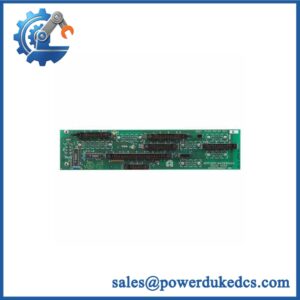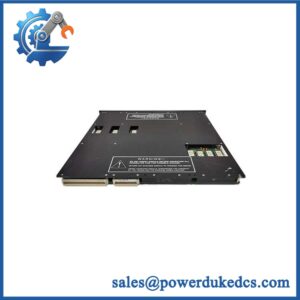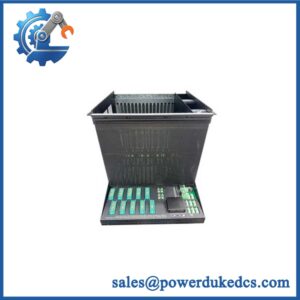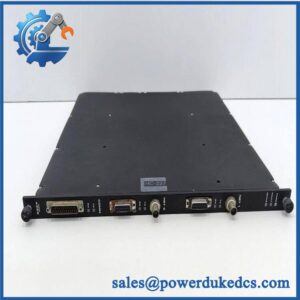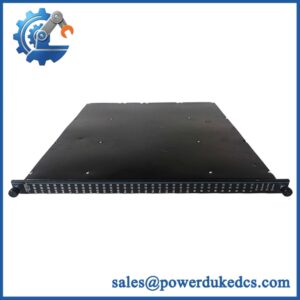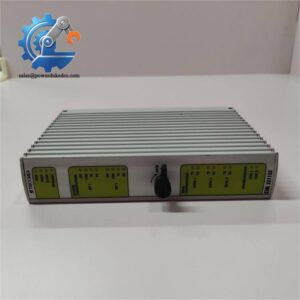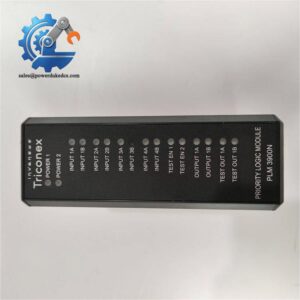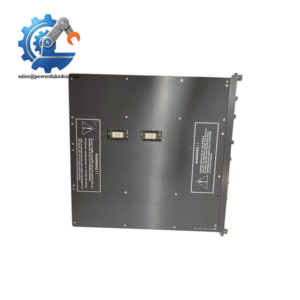
Description
- Brand: TRICONEX
- Full Model Number: EPI3382
- Lifecycle Status: Legacy product family; confirm the lifecycle status of the exact module variant
- Core Function: Enhanced Pulse Input (EPI) module for measuring rotating-equipment speed, RPM, acceleration, and jerk
- System Compatibility: Trident model 3382 for compatible Trident systems; 3382S2 is a separate variant for compatible Tri-GP systems
- Input Channels: 6 pulse-measurement channels
- Input Frequency Range: 0.5 Hz to 32 kHz, subject to the applicable sensor and signal requirements
- Compatible Sensors: Magnetic, active, and open-collector speed sensors
- Maximum Operating Voltage: ±33 VDC
- Pulse Duty Cycle: 20%–80%, or the specified minimum pulse-width requirement
- Measurement Accuracy: Published frequency error of ±0.1% from 0.5–2,000 Hz and ±0.01% from 2,000–32,000 Hz
- Acceleration and Jerk: Maximum specified acceleration rate of 4,000 Hz/s; maximum specified jerk rate of 500,000 Hz/s²
- Stock & Condition: Confirm physical availability, exact model suffix, condition, hardware markings, and functional test records before purchase
The specifications above refer to the documented Triconex 3382 Enhanced Pulse Input family. Confirm the precise module variant against the installed controller documentation before ordering.
Obsolescence & Supply Chain Deep Dive
When rotating-equipment monitoring depends on a legacy safety controller, a failed pulse input module can delay the restoration of speed monitoring and associated protective functions. The TRICONEX EPI3382 designation is used for the Enhanced Pulse Input module in the Trident/Tri-GP product family. Its six channels process pulse signals from compatible speed sensors to provide speed, acceleration, and jerk measurements. These measurements can support turbine, compressor, pump, and other rotating-machinery applications. One identification detail matters before procurement: model 3382 and model 3382S2 belong to different controller families. The original label and controller generation must be checked rather than treating these designations as interchangeable.
For an installed system with validated application logic and existing sensor wiring, sourcing a correctly matched replacement may cost less than migrating the entire safety controller platform. The total cost of ownership (TCO) should include the module price, freight, engineering review, installation labor, functional testing, and downtime exposure. A larger migration may require new controller hardware, revised signal assignments, application engineering, and system revalidation. A suitable replacement can therefore address an immediate spare shortage without forcing an unplanned modernization. However, the economic case depends on the remaining support life of the installed platform and documented performance of the replacement. (For older safety-system components, confirming the exact hardware variant and test coverage before dispatch helps avoid a costly second replacement.)
Compatibility & Replacement Matrix
| Evaluation Item | Engineering and Procurement Guidance |
|---|---|
| Replacement classification | Conditional drop-in replacement when the model, hardware revision, baseplate, and controller platform match |
| Trident compatibility | Model 3382 is documented for compatible Trident v2.1.x and later systems |
| Tri-GP compatibility | Model 3382S2 is documented for compatible Tri-GP v2.1.x and later systems |
| Variant interchangeability | Do not assume that 3382 and 3382S2 can substitute for each other |
| Software compatibility | Confirm the controller project configuration, configured module type, channel assignments, and supported system version |
| Firmware requirements | No firmware flash should be assumed necessary; verify applicable controller and module-version requirements |
| Hardware modification | Normally unnecessary for a properly matched replacement; verify baseplate, connectors, and wiring |
| Signal compatibility | Confirm sensor type, signal amplitude, frequency range, pulse duty cycle, and channel configuration |
| Estimated replacement time | Approximately 2–4 technician-hours for a like-for-like exchange and initial checks, excluding formal safety validation and extended commissioning |
| Cost estimation | Module price + freight + engineering labor + installation + required functional testing and safety-system verification |
| Acceptance requirement | Verify module diagnostics, all six configured channels, measurement accuracy, and associated protective logic using approved procedures |
Field Traps to Check Before Ordering
Controller-generation mismatch
The 3382 and 3382S2 variants are associated with different controller families. The documented 3382 applies to compatible Trident systems, while 3382S2 applies to compatible Tri-GP systems. Confirm the exact installed controller, project version, baseplate, module designation, and suffix. A shared EPI function does not establish hardware interchangeability.
Frequency range alone does not establish compatibility. Check the sensor type, minimum signal amplitude, operating frequency, duty cycle, wiring arrangement, and configured gear-tooth count. For gear-based speed measurement, the configured tooth count can affect accuracy. After replacement, verify the measured speed against an appropriate reference before accepting the module for service. Do not use a live overspeed or shutdown demand as an improvised test.
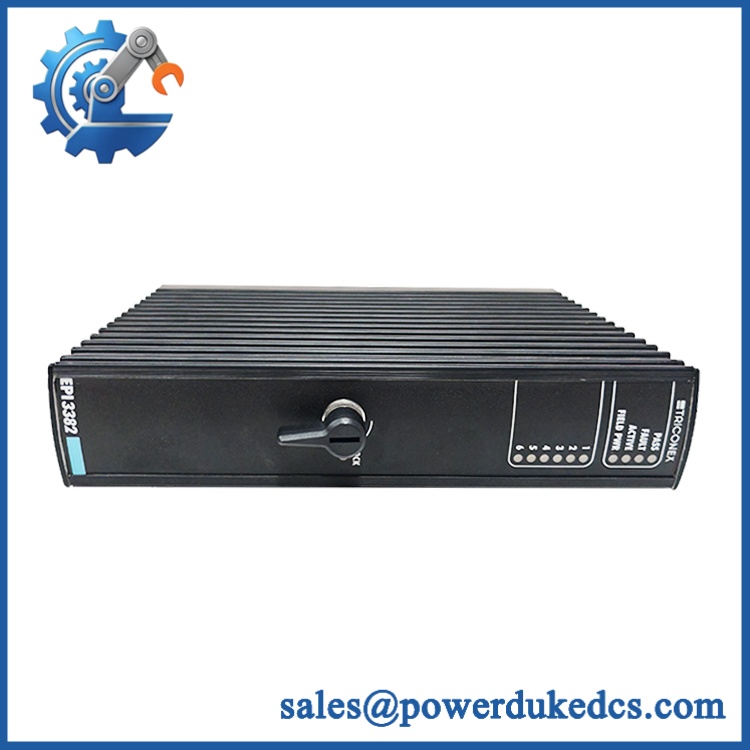
TRICONEX EPI3382
Quality Assurance & Testing SOP
The EPI3382 requires pulse-signal testing rather than generic analog I/O load testing. Use an approved test fixture and the documentation for the exact module variant. For equipment participating in a safety function, testing must follow the site’s approved maintenance and management-of-change procedures.
| QA Stage | Required Action | Acceptance Evidence |
|---|---|---|
| Identification | Record TRICONEX branding, model designation, full module markings, serial or lot identifiers, and revision information | Identification photographs and inspection record |
| OEM anti-counterfeit visual inspection | Inspect labels, PCB markings, component layout, connectors, solder joints, and signs of unauthorized rework | Completed inspection checklist and documented discrepancies |
| Physical condition | Examine the module, connector pins, mounting surfaces, and visible components for corrosion, cracks, contamination, or damage | Condition report and photographs |
| Baseplate compatibility | Verify that the module and baseplate arrangement match the specified controller family | Recorded compatibility check |
| Power-on self-test | Install the module in an approved compatible test setup and follow the documented startup procedure | Startup results and available module diagnostic indications |
| Status indication | Review PASS, FAULT, ACTIVE, or other status indicators where fitted and specified for the exact module | Recorded indicator states and diagnostic results |
| Pulse input testing | Apply controlled reference pulses to each of the six channels at representative frequencies within the supported range | Channel-by-channel results and test-signal records |
| Sensor-interface testing | Check supported signal amplitude, pulse width, duty cycle, and sensor-interface behavior | Results against the applicable input specifications |
| Speed measurement verification | Compare calculated speed against a calibrated reference using the correct gear-tooth configuration | Recorded reference and measured values |
| Acceleration and jerk verification | Where supported by the fixture, apply suitable frequency-change profiles and compare the resulting measurements against expected values | Test conditions, measured results, and acceptance assessment |
| Diagnostic verification | Review reported input faults and diagnostic functions supported by the installed module version | Diagnostic records and identified limitations |
| Final inspection | Recheck the module markings, connectors, protective packaging, and test documentation | Final QA report and packing confirmation |
QA release criteria: Visual inspection and power-on status do not prove measurement accuracy. All six channels should be tested where the agreed test scope permits. If acceleration, jerk, or full-range performance cannot be verified, disclose those limitations before shipment. After installation in a safety-related application, complete the approved validation and proof-testing requirements before returning the affected function to service.
Procurement & Lifecycle FAQ
Is the TRICONEX EPI3382 genuinely in stock, and what is the emergency-shipping cutoff?
Physical availability must be confirmed against the actual allocated unit. Request current photographs of the identification label, exact module suffix, condition grade, and available functional test records. Obtain the earliest confirmed dispatch date in writing. Same-day dispatch depends on order approval, payment clearance, packaging, export documentation, and carrier collection times.
How do you verify the authenticity and condition of a legacy EPI3382?
Request photographs of the actual module, identification markings, connector pins, PCB revision, and any available traceability documentation. The quotation should specify whether the unit is new surplus, used, or tested refurbished. Ask for the exact scope of functional testing and the recorded results. Visual inspection alone cannot prove authenticity or full operating performance.
Are there firmware or compatibility issues engineers should check before issuing the PO?
Yes. Confirm whether the installation requires model 3382 for Trident or 3382S2 for Tri-GP, then verify the controller generation, project configuration, hardware revision, and baseplate. Check the input sensor type, configured frequency range, channel assignments, and gear-tooth parameters. Do not authorize a firmware change or model substitution without technical approval.
What warranty and return terms apply to the TRICONEX EPI3382?
The written quotation should define the warranty period, covered functional defects, dead-on-arrival reporting window, and return authorization procedure. For surplus or used stock, clarify whether coverage includes failures discovered during commissioning and whether test records are included. Agree on acceptance requirements before releasing the purchase order, particularly when the module is intended for a safety-related installation.
Is replacing the more economical than upgrading the controller system?
A correctly matched replacement can preserve existing sensor wiring, validated application logic, and the established controller architecture. Compare the landed module cost with the full migration cost, including hardware, application engineering, revalidation, commissioning, and planned downtime. If failures are recurring or compatible spare availability is declining, evaluate a planned migration separately rather than relying indefinitely on replacement stock.