

Description
- Brand: Woodward
- Full Model Number: 8402-271
- Alternate Part Number: 5852-1036
- Product Family: SOGAV 105
- Lifecycle Status: Legacy / Discontinued
- Core Function: Solenoid-operated gas admission valve
- Top 3 Technical Specs: 24 VDC coil; electromagnetic actuation; SOGAV 105 application
- Stock & Condition: New Surplus / Tested Refurbished; physical stock confirmation required; emergency dispatch subject to cutoff
Current product references consistently associate Woodward 8402-271 with P/N 5852-1036 and identify it as a Woodward gas-control solenoid valve for Wärtsilä/SOGAV applications. Woodward’s current SOGAV product family is designed for electrically actuated gas admission on four-cycle natural-gas and dual-fuel engines.
Module 3: Obsolescence & Supply Chain Deep Dive
A failed 8402-271 can become a shutdown-sensitive procurement issue because this component sits directly in the gas-admission chain. Current references identify the part as a SOGAV 105 / 5852-1036 electromagnetic valve, and independent inventory sources classify it as discontinued while still showing occasional new stock. The exact valve configuration therefore matters more than simply matching the Woodward brand and family number. For an engine package with limited spare capacity, obtaining the correct 24 V valve can avoid extended equipment downtime while the fuel-gas system is awaiting an engineered substitute.
From a TCO perspective, replacing the failed valve while retaining the existing SOGAV installation usually avoids larger costs associated with changing the actuator arrangement, fuel-gas piping interfaces, electrical connections, commissioning parameters, and engine validation. The commercial value lies in preserving an already commissioned fuel-control architecture. —Because current public documentation does not provide a universal field-replacement cross-reference for 8402-271, procurement should require exact dimensional, electrical, and application matching before approving an alternative.
Module 4: Compatibility & Replacement Matrix (Crucial for Buyers)
| Purchase / Migration Case | Compatibility Assessment | Typical Switch Effort |
|---|---|---|
| Replace 8402-271 with the same 8402-271 / 5852-1036 configuration | Drop-in Replacement | 1–3 hours, subject to engine-maker maintenance procedure |
| Replace with an identical SOGAV 105 valve carrying the same approved specification | Drop-in Replacement after verification | 1–3 hours |
| Substitute another SOGAV valve with different coil or mechanical configuration | Hardware Modification | 4–12+ hours |
| Change valve family or fuel-system architecture | Hardware Modification + Engineering Review | 1–3+ days |
| Replace the valve together with the complete gas-admission assembly | Hardware Modification | Several hours to multiple days |
Woodward’s current SOGAV portfolio describes these valves as electrically actuated gas-admission devices for four-cycle natural-gas and dual-fuel engines. The 8402-271 should therefore be treated as an application-specific valve, not as a generic industrial solenoid.
Field Traps — Watch Out
Coil Voltage: Verify the existing electrical supply and coil marking before installation. Current 8402-271 inventory references identify the unit as a 24 V valve. A visually identical valve with a different coil voltage is not a safe substitute.
Valve Application: Some current listings describe 8402-271 as a Wärtsilä/SOGAV 105 gas-control valve, while other low-quality listings incorrectly categorize it as an engine governor or intake-control module. Procurement should rely on the physical part number, nameplate, valve type, and equipment documentation—not generic marketplace descriptions.
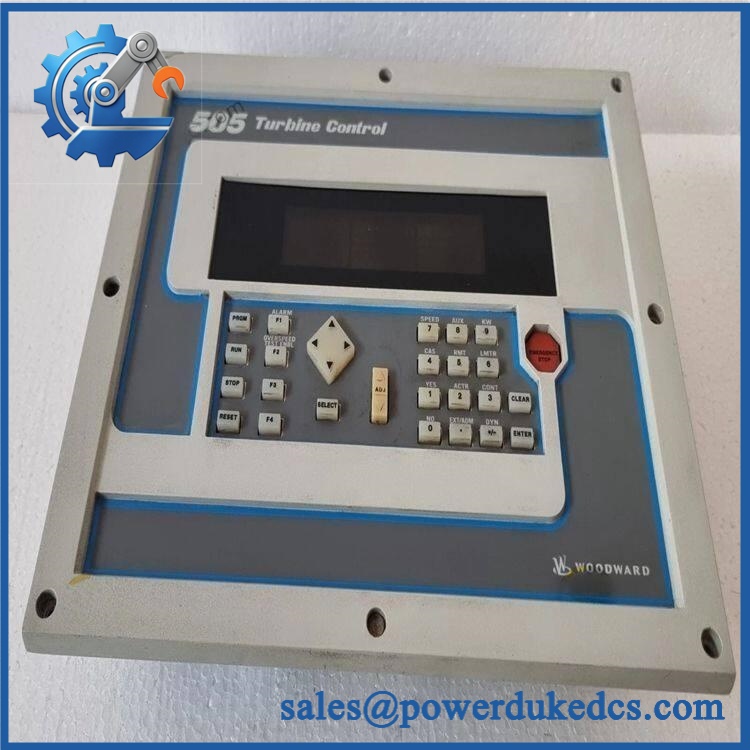
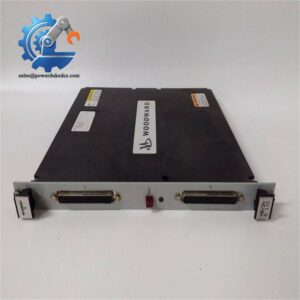
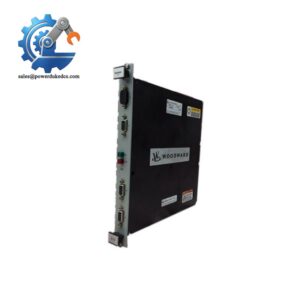
Woodward 8402-271
Module 5: Quality Assurance & Testing SOP
1. Part Identity Verification
Record the complete 8402-271 identifier, alternate 5852-1036 number, revision, serial number, manufacturer marking, and any SOGAV 105 identification.
2. OEM Anti-Counterfeit Visual Inspection
Inspect the valve body, coil assembly, nameplate, terminals, fasteners, machining details, connector arrangement, and manufacturer markings. Compare the supplied hardware against known Woodward construction.
3. Mechanical Inspection
Check mounting interfaces, threaded/port connections, valve body condition, actuator housing, fasteners, and sealing surfaces. Reject units with corrosion, impact damage, contamination, or evidence of unauthorized machining.
4. Coil Electrical Test
Measure coil resistance at controlled ambient conditions and compare the result with the approved test specification for the exact revision. Check insulation integrity and terminal continuity before energization.
5. Power-On Actuation Test
Apply the specified 24 VDC coil supply in a controlled laboratory setup. Verify solenoid actuation, pickup/release behavior, current draw, and absence of abnormal heating.
6. Valve Opening / Closing Test
Using an approved pneumatic or gas-simulation test bench, verify repeatable valve movement and proper return behavior. Do not perform uncontrolled fuel-gas testing on a bench setup.
7. Leakage Test
Carry out an appropriate pressure-decay or approved leak test across the valve in both relevant states. Record the test pressure, duration, and measured leakage.
8. Response-Time Test
Measure actuation and release response under controlled electrical and mechanical conditions. Compare against the application-specific acceptance limit rather than relying on a generic solenoid specification.
9. Extended Cycle Test
Perform repeated energize/de-energize cycles while monitoring coil current, temperature, switching consistency, and mechanical response. Intermittent sticking must trigger rejection.
10. Final QC Record
Record part number, alternate part number, revision, coil measurements, actuation results, leakage data, cycle-test results, inspection findings, and final QC disposition. Package with contamination and mechanical protection suitable for fuel-system components.
Module 6: Procurement & Lifecycle FAQ
Q1. Is Woodward 8402-271 genuinely in stock, and what is the cutoff for emergency shipping?
Current independent listings continue to show 8402-271 / 5852-1036 as available from some suppliers, while another current listing classifies the product as discontinued but shows inventory. That combination indicates residual stock rather than dependable ongoing production. Confirm physical stock, warehouse location, and same-day dispatch cutoff before releasing an emergency PO.
Q2. How do you guarantee the condition and authenticity of an obsolete or surplus 8402-271?
Require exact part-number and alternate-number verification, nameplate inspection, mechanical examination, coil resistance and insulation checks, 24 VDC actuation testing, valve-cycle testing, and an approved leakage test. For a gas-admission valve, functional testing should be documented rather than inferred from cosmetic condition.
Q3. Are there firmware compatibility issues I should warn my engineers about before issuing the PO?
Firmware is not the primary concern because the 8402-271 is an electromechanical valve rather than a programmable controller. The critical checks are coil voltage, valve configuration, mechanical interface, flow direction, sealing arrangement, and compatibility with the installed SOGAV 105 engine package.
Q4. Can 8402-271 / 5852-1036 be replaced by another Woodward SOGAV valve?
Not automatically. Even within the SOGAV family, valve size, port configuration, coil characteristics, mounting geometry, and engine application can differ. The replacement should be approved against the engine package documentation and the complete installed valve identification. Woodward describes SOGAV as a family of application-specific gas-admission valves rather than one universal interchangeable device.
Q5. What warranty and return terms should procurement require?
Specify a written functional warranty covering coil operation, repeatable actuation, valve movement, and leakage performance under the agreed acceptance conditions. The PO should also define the RMA process and exclude damage arising from incorrect voltage, contaminated fuel systems, improper installation, or mechanical over-stressing.


 Start Chat