

Description
- Brand: Woodward
- Full Model Number: 8901-457
- Lifecycle Status: Obsolete; Woodward CPC replacement documentation identifies 8901-457 as an older CPC model, with CPC-II replacements available; an obsolescence reference records last-time-buy ending July 2012.
- Core Function: CPC current-to-pressure converter for hydraulic control
- Top 3 Technical Specs: 4–20 mA control input | 1–7 bar output-pressure class | Class I, Division 2 / ATEX Zone 2 version
- Stock & Condition: New surplus / tested refurbished; exact physical stock and configuration require lot-level confirmation
Module 3: Obsolescence & Supply Chain Deep Dive
A failed Woodward 8901-457 can turn a relatively contained turbine-control repair into a sourcing problem because this is a legacy CPC Current-to-Pressure Converter, not a generic analog signal conditioner. Woodward documentation identifies the standard 8901-457 and 8901-459 variants in the CPC manual, while the CPC-to-CPC-II replacement information maps 8901-457 / 8901-459 to newer CPC-II models. The replacement table identifies these older units as the Class I, Division 2 / ATEX Zone 2, 1–7 bar configuration.
For an operating steam-turbine governor system, maintaining the existing 8901-457 architecture with a verified spare can produce a substantially lower TCO than accelerating a broader control-system migration. The converter accepts the turbine-control demand signal and regulates hydraulic pressure used to position the actuator/valve, so an exact spare can avoid mechanical rework, hydraulic reconnection changes, commissioning, and prolonged turbine downtime. The key point is lifecycle status: an obsolescence reference lists 8901-457 as obsolete with last-time-buy ending July 2012, and identifies newer CPC-II replacement paths. That makes verified surplus stock valuable, but it also means procurement should establish the exact pressure range and hazardous-area configuration before substituting a newer unit.
Module 4: Compatibility & Replacement Matrix
| Approval Point | Assessment |
|---|---|
| Replacement Class | Drop-in replacement when replacing an existing 8901-457 with the same CPC configuration |
| Modern Replacement Path | CPC-II migration available; Woodward replacement documentation maps 8901-457 to newer CPC-II models |
| Software Compatibility | Not normally the primary issue; signal, hydraulic range, calibration and application parameters are more important |
| Hardware Modification | None expected for exact 8901-457 replacement; CPC-II migration may require application-specific changes |
| Control Input | 4–20 mA demand signal |
| Pressure Class | 1–7 bar for the 8901-457 / 8901-459 replacement grouping documented by Woodward |
| Hazardous-Area Class | Class I, Division 2 / ATEX Zone 2 for the documented 8901-457/459 configuration |
| Estimated Switch Time | ~1–3 hours for a like-for-like replacement, followed by hydraulic and control-loop verification |
| Engineering Effort | Low–Moderate for identical replacement; higher for CPC-II migration |
| TCO Position | Usually favorable for an exact spare when the surrounding turbine-control system remains serviceable |
Woodward’s replacement documentation specifically identifies 9907-1105 as a CPC-II replacement for the older 8901-457 / 8901-459 configuration at the 1–7 bar range, with other CPC-II numbers covering different pressure ranges or hazardous-area classifications.
Field Traps — Watch Out
Pressure-range mismatch: Do not substitute a CPC-II simply because its catalog family is “CPC.” The replacement table distinguishes the 1–7 bar and higher-pressure configurations. A wrong pressure range can prevent correct actuator positioning.
Hazardous-area mismatch: The 8901-457 belongs to the Class I, Division 2 / ATEX Zone 2 configuration identified in Woodward’s replacement information. A replacement with a different area classification requires engineering and site-approval review.
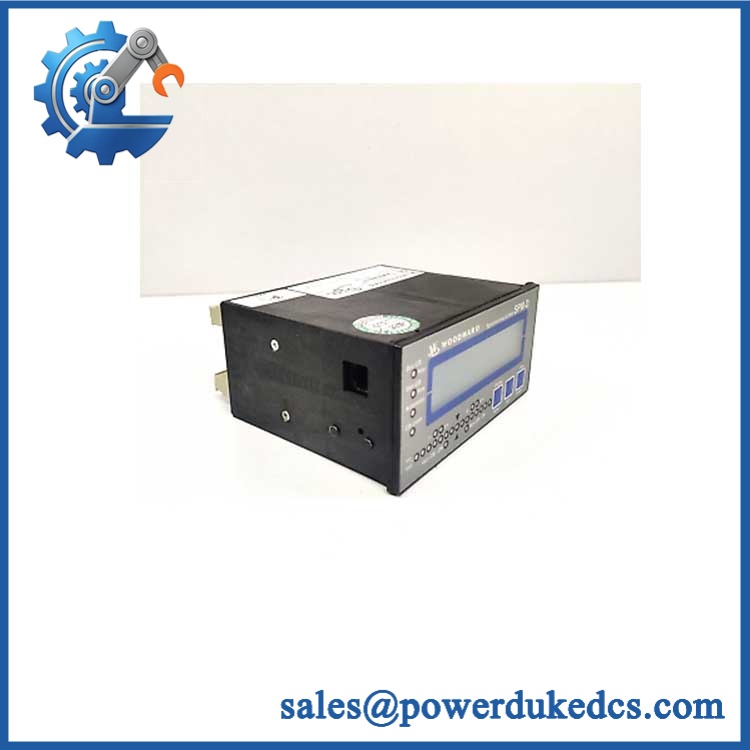
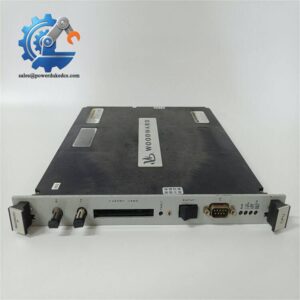
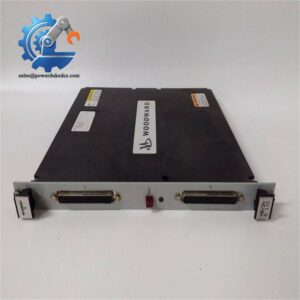
Woodward 8901-457
Module 5: Quality Assurance & Testing SOP
For a hydraulic current-to-pressure converter, electrical power-up alone does not demonstrate service readiness. The test needs to prove the complete signal-to-pressure response.
- Part identity verification: Record Woodward, 8901-457, serial number, nameplate information, revision and hazardous-area markings.
- OEM anti-counterfeit visual inspection: Inspect the housing, labels, connectors, terminal markings, fasteners and evidence of unauthorized repair or component substitution.
- Mechanical inspection: Check mounting surfaces, hydraulic ports, fittings, actuator interface and enclosure for impact, corrosion or thread damage.
- Electrical continuity test: Verify applicable power, ground and signal paths before applying operating power.
- Power-input verification: Apply the approved supply from the actual unit documentation and confirm normal current draw.
- 4–20 mA input simulation: Apply calibrated demand signals at representative points across the operating range.
- Pressure-output test: Verify that hydraulic output tracks the commanded input and remains stable under controlled load.
- Response test: Step the input through multiple demand points and record pressure rise, settling behavior and repeatability.
- Actuator-interface test: Where the test fixture permits, connect a representative hydraulic actuator/load and verify controlled movement.
- Leak inspection: Check hydraulic connections and the converter body under operating pressure for leakage.
- Fault-response test: Verify the applicable shutdown/low-demand behavior and diagnostic response using the approved maintenance procedure.
- Final QC release: Record input-current values, output-pressure values, supply measurements, test duration and serial traceability before protected packaging.
The Woodward CPC manual identifies 8901-457 and 8901-459 as standard CPC versions, while later CPC-II documentation provides explicit replacement mapping from these older models.
Module 6: Procurement & Lifecycle FAQ
1. Is Woodward 8901-457 genuinely in stock, and what is the emergency-shipping cutoff?
Secondary inventory records currently show 8901-457 units offered in new and refurbished conditions, but commercial listings are not proof of physical warehouse availability. For an emergency PO, require actual-unit photographs, exact nameplate confirmation, available quantity, condition, hydraulic test status and same-day carrier cutoff.
2. How do you guarantee the condition and authenticity of an obsolete 8901-457?
Require exact-part-number verification, nameplate and serial traceability, mechanical and hydraulic inspection, calibrated 4–20 mA simulation, pressure-output testing and leak checks. The final QC record should include measured input and output values rather than a simple visual-condition statement.
3. Are there compatibility issues engineers should check before issuing the PO?
Yes. The most important checks are pressure range, hazardous-area classification, 4–20 mA input compatibility, hydraulic connections and actuator requirements. Woodward’s replacement information specifically distinguishes the 8901-457/459 1–7 bar Class I, Division 2 / ATEX Zone 2 configuration from other CPC-II variants.
4. What is the modern replacement for Woodward 8901-457?
Woodward’s CPC-to-CPC-II replacement information maps 8901-457 and 8901-459 to the 9907-1105 CPC-II for the documented 1–7 bar, Div. 2/Zone 2 configuration. Other CPC-II part numbers cover different pressure ranges and hazardous-area classifications, so the replacement must be selected from the actual installed specification.
5. What warranty and return terms should procurement require?
The PO should specify Woodward 8901-457 exactly, including the required pressure range and hazardous-area configuration. Define the functional-test scope, warranty duration, DOA criteria, return window, and required evidence for a failure claim. For obsolete CPC units, hydraulic performance testing should be part of acceptance—not optional.


 Start Chat