

Description
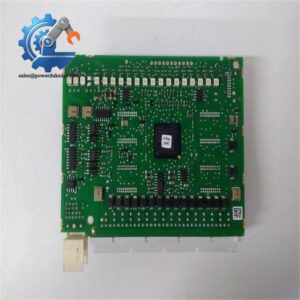
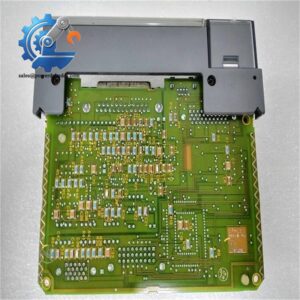
- Model: ABB PPD517A3011
- Order Number: 3BHE041576R3011
- Brand: ABB
- Series: ABB AC 800PEC / UNITROL 6000
- Part Type: Excitation Control Unit / Central Processing Module
- Core Function: Acts as a high-speed control processor for excitation and power-electronics applications.
- Key Specs: AC 800PEC architecture, high-speed process control, PowerLink capability, Ethernet and serial communication options, and very fast analog/digital I/O support. ABB-related technical material describes the AC 800PEC platform as supporting cycle times around 25 µs for typical fast process I/O.
Product Introduction
In a generator excitation system, a controller failure is not simply a PLC maintenance issue. The excitation controller directly participates in voltage regulation, dynamic response, and protective control, so a defective processor can quickly become a system-level outage.
ABB PPD517A3011 3BHE041576R3011 belongs to ABB’s AC 800PEC high-speed control platform and is associated with excitation-control applications. Available ABB-related product documentation identifies the part as PPD517A3011 / 3BHE041576R3011 and describes the AC 800PEC as a modular high-speed control system.
The AC 800PEC platform supports CEX Bus, Ethernet TCP/IP, RS-232/RS-422, Optical ModuleBus, optical links, and PowerLink, depending on the configured system. The platform is designed for fast closed-loop control and power-electronics applications rather than ordinary low-speed PLC sequencing.
Core Technical Specifications
| Parameter | Value |
|---|---|
| Manufacturer | ABB |
| Model | PPD517A3011 |
| Order Number | 3BHE041576R3011 |
| Product Family | AC 800PEC |
| Associated Excitation Platform | UNITROL 6000 |
| Product Type | Excitation Control Unit / Central Processing Module |
| Module Function | High-speed excitation and power-electronics control |
| Controller Architecture | Modular high-speed control system |
| Process I/O Cycle Time | Approximately 25 µs typical for fast AC 800PEC process I/O |
| Communication | Ethernet TCP/IP |
| CEX Bus | Supported by AC 800PEC architecture |
| Serial Interfaces | RS-232 / RS-422 |
| Fieldbus | AnyBus-S supported by platform |
| Optical ModuleBus | Supported |
| PowerLink | Supported |
| PowerLink Capacity | Up to 36 bidirectional fiber-optic PowerLinks reported for AC 800PEC |
| Programming Tool | Control Builder M |
| Service Tool | PECView |
| Control Function | Fast closed-loop control and process logic |
| Excitation Application | Generator/motor excitation control |
| Digital I/O | High-speed process I/O supported by system |
| Analog I/O | High-speed process I/O supported by system |
| CPU Details | Exact processor specification not reliably established |
| Memory | Exact capacity not reliably established |
| Supply Voltage | System-specific; verify installed configuration |
| Firmware | System/application dependent |
| Mounting | AC 800PEC system architecture |
| Cooling | System/cabinet dependent |
| Operating Temperature | Verify exact hardware/environmental specification |
| Storage Temperature | Verify exact hardware/environmental specification |
| Dimensions | Verify against physical unit |
| Weight | Verify actual shipping/unit weight |
| Typical Applications | Excitation systems, power electronics, fast closed-loop control |
| Industries | Power generation, utilities, heavy industry |
| Lifecycle Position | Legacy / specialized spare |
| Replacement Strategy | Exact part-number and system-revision matching |
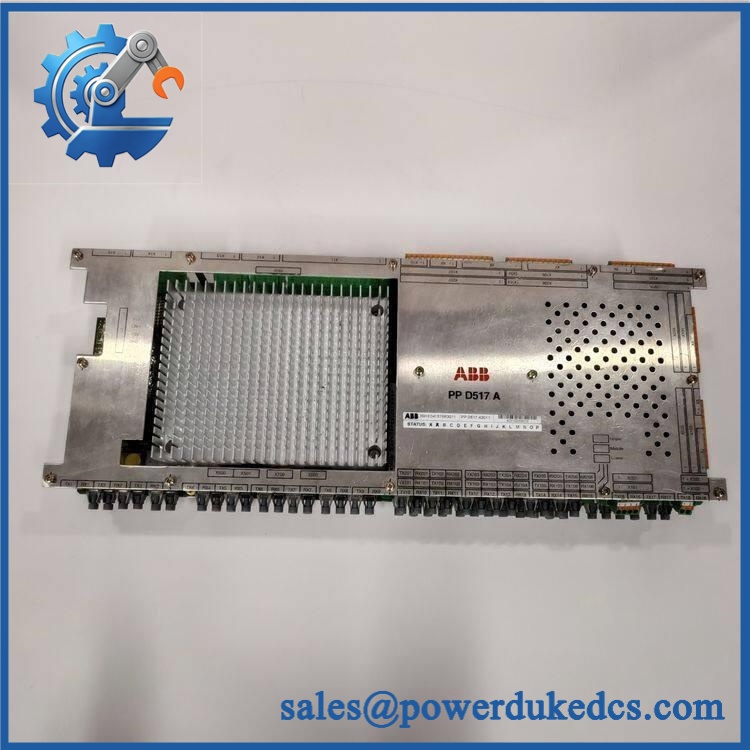
ABB PPD517A3011 3BHE041576R3011 |
The 25 µs cycle-time figure and 36 bidirectional PowerLink capacity come from AC 800PEC platform documentation, not necessarily from an independent specification sheet for every PPD517A3011 configuration.
Application Scenarios & Pain Points
For synchronous-generator excitation, the PPD517A3011 operates within the high-speed control architecture used to regulate excitation-related functions. A processor fault can therefore affect generator voltage regulation and system stability.
In large power-electronics installations, the AC 800PEC platform is designed for fast closed-loop control where ordinary PLC scan performance is insufficient. The published architecture supports process I/O with a typical cycle time of approximately 25 µs.
For UNITROL 6000-related excitation systems, maintaining the exact processor reference is important because the controller is tied to the system’s hardware, firmware, configuration, and excitation-control algorithms.
In installations operating above 50°C, cabinet cooling and controller environmental limits should be checked carefully. Do not use an aftermarket temperature specification unless it can be traced to the exact hardware revision.
Common Error Codes & Diagnostic Symptoms
No verified ABB source located here provides a dedicated numerical , so the following should be treated as diagnostic symptoms rather than official error-code definitions:
- Controller Not Running / CPU Diagnostic Fault → Diagnosis: Possible processor hardware failure, unstable control power, firmware/configuration issue, or system backplane fault. → Action: Check controller diagnostics and power first; replace the when hardware failure is confirmed.
- Excitation Control Not Responding → Diagnosis: Loss of controller processing, communication interruption, or incorrect excitation-system configuration can prevent normal control response. → Action: Check AC 800PEC diagnostics, communication links, and associated I/O before replacing the controller.
- Intermittent Control / Processor Reset → Diagnosis: Unstable supply, thermal stress, internal electronics failure, or watchdog-related conditions may cause repeated resets. → Action: Verify supply and cabinet conditions, review diagnostics, and replace the processor if the fault follows the module.
Cross-Reference & Lifecycle Migration
Cross-Reference
| Reference | Identification |
|---|---|
| ABB excitation/control unit designation | |
| 3BHE041576R3011 | ABB order number |
| Complete purchasing reference | |
| PPD517 | Related family designation |
| AC 800PEC | ABB high-speed control platform |
| UNITROL 6000 | Associated excitation-system platform |
| Central Processing Unit | Functional description used in supplier listings |
| Excitation Control Unit | Application description |
ABB-related sources consistently associate with 3BHE041576R3011 and the AC 800PEC platform.
Previous Revision / Migration
Some aftermarket technical material claims an earlier R2011 version and describes R3011 as a later generation. However, those claims are not sufficiently corroborated by ABB primary documentation in the sources reviewed, so do not treat R2011 as a confirmed direct replacement or predecessor without checking the system’s ABB documentation.
Firmware
The is part of a programmable high-speed control system. Firmware and application configuration can therefore affect compatibility.
Do not flash a replacement automatically. First identify the existing controller firmware, application revision, system configuration, and required Control Builder/PECView environment.
Lifecycle
Recommended classification: Legacy / Specialized Limited-Availability Spare.
For a running excitation system, buffer stock is particularly important. A failed central processor can require considerably more recovery engineering than a standard discrete I/O replacement.
Field Engineer’s Tech Notes
1. Do not treat the PPD517 like a standard PLC CPU.
This controller belongs to the AC 800PEC high-speed control architecture. Its communication, I/O timing, PowerLink configuration, and excitation application need to be considered together.
2. Capture the existing configuration before replacement.
Record firmware, application files, communication settings, optical-link configuration, controller status, and excitation parameters. Replacing the hardware without preserving these details can turn a straightforward hardware repair into a lengthy commissioning job.
Strict QA & Testing SOP
- Inbound identification — Verify ABB marking, , and 3BHE041576R3011.
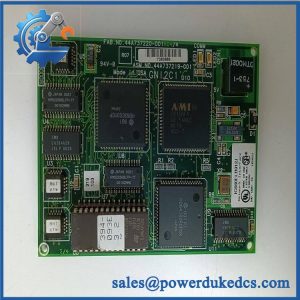
- Nameplate recording — Photograph serial number, hardware revision, date codes, and labels.
- Physical inspection — Check PCB assemblies, connectors, mounting points, optical interfaces, and components.
- ESD inspection — Handle the processor using appropriate antistatic protection.
- Power inspection — Verify the correct AC 800PEC test-rig supply configuration before energizing.
- Startup test — Power the module using an approved compatible test setup.
- Controller diagnostics — Check status LEDs and system diagnostic information.
- Communication test — Verify applicable Ethernet, serial, CEX, or optical communication interfaces.
- I/O test — Confirm communication with compatible AC 800PEC process I/O.
- Control test — Run an approved test application or simulator where available.
- Extended operation — Monitor for processor resets, communication interruptions, or abnormal thermal behavior.
- Configuration verification — Confirm that firmware and application configuration are suitable for the target system.
- Final QA record — Document serial number, revision, test results, and photographs.
- ESD packaging — Package in antistatic material with adequate shock and moisture protection.
Test videos can be provided when available, including actual-unit identification, power-up, diagnostics, communication testing, and functional operation.
Buyer’s FAQ
Q1: What is ABB 3BHE041576R3011?
A: It is an ABB AC 800PEC control unit / central processing module associated with high-speed control and excitation-system applications.
Q2: Is this a normal PLC CPU?
A: Not exactly. It is a specialized high-speed controller used within the AC 800PEC architecture, particularly for power-electronics and excitation applications.
Q3: Is used in generator excitation?
A: Yes. Multiple industrial references associate it with excitation control, while the AC 800PEC platform is designed for high-speed power-electronics control.
Q4: Can I hot-swap the ?
A: Do not assume hot-swapping is supported. Follow the specific AC 800PEC/UNITROL system shutdown, isolation, and replacement procedure.
Q5: Does a replacement require firmware loading?
A: It may require firmware/configuration compatibility checks because the controller participates in a programmable AC 800PEC control system. Preserve the original application and configuration before replacement.
Q6: How do I verify a New Original ABB unit?
A: Check the actual unit for , 3BHE041576R3011, ABB markings, serial/traceability information, hardware revision, and PCB identification. Request actual-unit photographs plus a functional test report or test video before shipment.


 Start Chat