

Description
- ABB UNITROL1020 | Dual-Channel Excitation Controller for Industrial Generators
2. At-a-Glance Executive Brief
- Model: UNITROL 1020
- Brand: ABB
- Series: UNITROL 1000
- Part Type: Automatic Voltage Regulator / Digital Excitation Controller
- Core Function: Controls the excitation of indirectly excited synchronous machines and can operate in automatic voltage, reactive-power, power-factor, or field-current regulation modes.
- Key Specs: Up to 15 A DC continuous excitation current at 55°C as the standard rating, with a 20 A DC option requiring three-phase power and an external 1 mF capacitor; machine-voltage measurement up to 500 V AC, AVR response below 20 ms for three-phase measurement, and 24 V digital I/O.
- Control Interface: Ethernet, USB, RS-485, CAN, digital I/O, analog I/O, and a local control panel.
3. Product Introduction
A generator can remain mechanically healthy yet fail to build or maintain terminal voltage when its excitation regulator is unavailable. In field deployments, this makes the AVR one of the first components to investigate when excitation current, voltage regulation, or generator reactive-power control becomes abnormal.
The ABB UNITROL 1020 is a compact automatic voltage regulator designed for synchronous generators and motors. ABB describes the UNITROL 1010/1020 family as AVR equipment for synchronous machines up to 80 MVA.
UNITROL 1020 provides excitation control plus selectable regulation functions for voltage, reactive power, power factor, and field current. The unit also supports optional functions such as a Power System Stabilizer (PSS), synchronization, data logging, and event recording.
For maintenance teams working with generator excitation equipment, this is particularly relevant to legacy excitation-system replacement, plant modernization, and maintaining a tested spare for critical generating assets.
4. Core Technical Specifications
| Parameter | Value |
|---|---|
| Manufacturer | ABB |
| Model | UNITROL 1020 |
| Product Family | UNITROL 1000 |
| Product Type | Automatic Voltage Regulator |
| Application | Synchronous Generator / Motor Excitation |
| Machine Capacity | Up to 80 MVA |
| Excitation Output | Up to 15 A DC continuous at 55°C |
| Higher Current Option | 20 A DC continuous at 55°C |
| 10-Second Overload | Up to 38 A DC at 55°C |
| Exciter Current Measurement | 0 to 38 A |
| Exciter Current Accuracy | <1% |
| Exciter Current Resolution | <100 mA |
| Machine Voltage Measurement | 1-, 2-, or 3-phase, up to 500 V AC |
| Machine Current Input | 1 to 5 A AC |
| Network Voltage | Up to 500 V AC |
| Measurement Frequency | 10 to 150 Hz |
| Voltage-Regulator Response | <20 ms, 3-phase measurement |
| Digital I/O | 4 inputs / 8 configurable input-output channels |
| Digital I/O Voltage | 24 V |
| Analog I/O | 3 inputs / 2 outputs |
| Analog I/O Range | ±10 V |
| Ethernet | 10/100 Mbit/s |
| USB | USB 1.0/1.1/2.0 |
| CAN | UNITROL 1000 device connections |
| Enclosure Rating | IP20 |
| Local Control Panel | Yes |
| Control Software | CMT 1000 |
| Typical Regulation Modes | AVR, Reactive Power, Power Factor, Field Current |
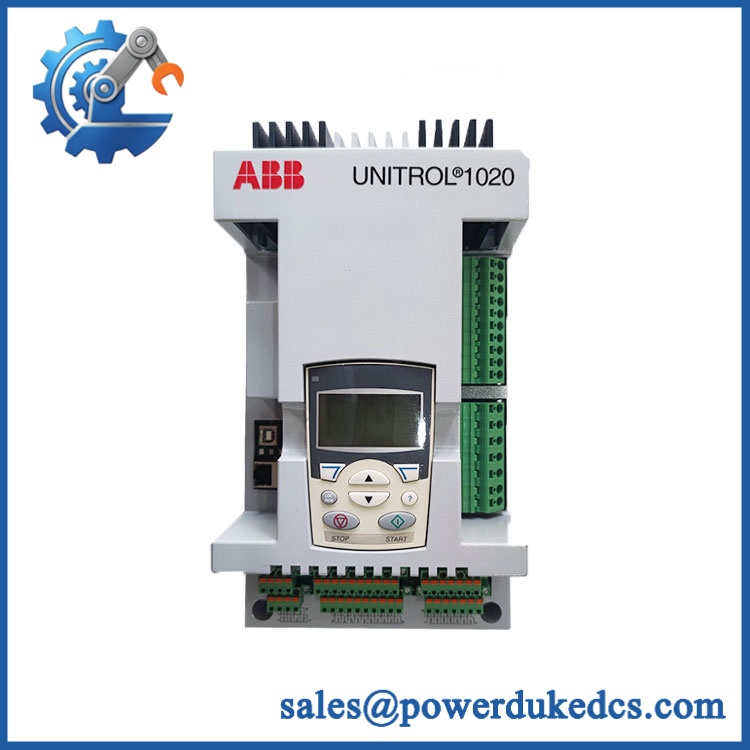
ABB UNITROL1020
ABB’s current quick-installation documentation gives the UNITROL 1020 ratings for excitation output, measurement, I/O, communication, and IP20 protection. The 20 A excitation rating requires three-phase power and an external 1 mF capacitor.
5. Application Scenarios & Pain Points
At a hydroelectric generating station, UNITROL 1020 can regulate generator terminal voltage while controlling excitation according to the selected operating mode. Its architecture supports applications where generator voltage and reactive-power behavior must remain stable as operating conditions change.
For industrial synchronous motors, the regulator can be used for excitation control rather than only generator voltage regulation. Field-current and power-factor regulation are among the operating functions described for the UNITROL 1020.
During generator commissioning, technicians can use CMT 1000 for parameter adjustment, monitoring, trending, and step-response testing. ABB’s documentation specifically identifies CMT 1000 as the commissioning and maintenance tool for the AVR.
In a dual-channel excitation installation, redundant UNITROL 1000 arrangements can be used where continued excitation availability is important. ABB’s current UNITROL 1000 portfolio includes both single- and dual-channel configurations.
For cabinets operating above 50°C, thermal conditions deserve attention. The published continuous excitation-current rating is specified at 55°C, so cooling, ventilation, ambient temperature, and cabinet heat accumulation should be checked before commissioning.
6. Common Error Codes & Diagnostic Symptoms
Symptom/Code: Red D804 LED ON — Alarm/Trip active
→ Diagnosis: ABB identifies the red D804 device-status LED as an alarm/trip indication. The actual cause should be identified through the local panel or CMT 1000 event/alarm information before condemning the regulator.
→ Action: Read the active alarm/trip, verify associated measurements and wiring, and replace the UNITROL 1020 only after the regulator hardware is confirmed defective.
Symptom/Code: Red D804 LED blinking — Startup failure
→ Diagnosis: ABB documentation states that a blinking D804 indicates a startup failure in which the target software could not load parameters; excitation output is blocked.
→ Action: Check stored parameters, software compatibility, and controller status. If the unit cannot load or retain the required configuration, replace or repair the AVR.
Symptom/Code: No generator excitation
→ Diagnosis: Possible causes include an interrupted field circuit, field circuit breaker not closing, failed field flashing, missing UAUX, missing UPWR, or regulator/setpoint problems. ABB’s troubleshooting procedure calls for checking the green/yellow LED status and measuring the relevant supplies.
→ Action: Verify the field circuit, UAUX, UPWR, operating mode, and setpoint before replacing the UNITROL 1020.
7. Cross-Reference & Lifecycle Migration
Product Identification
The requested designation is:
- ABB Model: UNITROL 1020
- Product Family: UNITROL 1000
- Function: Automatic Voltage Regulation / Excitation Control
- Application: Synchronous generators and motors
- Control Software: CMT 1000
- Related Documentation: UNITROL 1020 User Manual 3BHS335648 E82
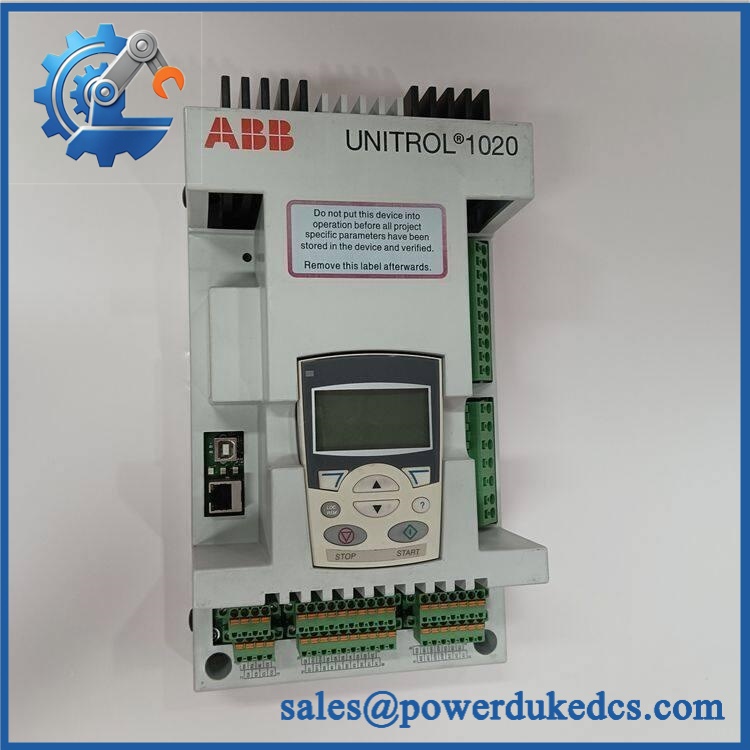
ABB UNITROL1020
Unlike an ABB I/O card with a single board-level ordering number, UNITROL 1020 is a configurable excitation product. Procurement should therefore include the complete ordering designation from the existing nameplate, rather than using “UNITROL 1020” alone.
Configuration Compatibility
Before replacement, verify:
- UNITROL 1020 ordering configuration
- Hardware revision
- Software/target release
- Main and redundant channel arrangement
- Excitation-current rating
- Power-supply architecture
- Generator voltage/current measurement configuration
- Digital and analog I/O assignments
- Communication configuration
- PSS/synchronization options
ABB’s manual identifies compatibility requirements for CMT 1000 Release 5.1 with the documented AVR release and notes that earlier CMT 1000 versions are no longer compatible.
Lifecycle Strategy
UNITROL 1020 belongs to ABB’s established UNITROL 1000 excitation platform, while ABB continues to market the UNITROL 1000 family. The current ABB portfolio also presents UNITROL 1020 functionality within newer compact excitation-system offerings.
For an existing UNITROL 1020 installation, buffer stock should focus on the exact configured unit, not merely the generic product family. Record the hardware revision, software release, excitation rating, configuration file, parameter backup, and installed options.
Firmware compatibility should be checked before commissioning a replacement. Do not assume that every UNITROL 1020 revision can accept the same application files or engineering-tool release.
8. Field Engineer’s Tech Notes
Tech Note 1 — Never disconnect the unit while the orange DC-voltage warning is active.
The UNITROL 1020 contains large capacitors that can remain charged after the equipment is disconnected. ABB specifically warns against connecting or disconnecting the unit while the warning LED is blinking. Verify the unit is safely discharged before touching the connections.
Tech Note 2 — Check UAUX and UPWR separately.
A “dead” excitation system does not automatically mean the AVR electronics have failed. ABB’s troubleshooting sequence distinguishes the auxiliary supply UAUX from the power-electronics supply UPWR. Measure both before replacing the controller (this saves considerable troubleshooting time on field-service calls).
9. Strict QA & Testing SOP
- Order Identification
Confirm the complete UNITROL 1020 ordering designation and configuration. - Nameplate Inspection
Photograph the ABB identification label, serial number, hardware revision, and configuration markings. - Mechanical Inspection
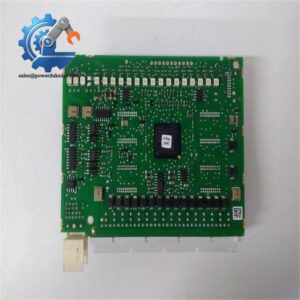
Check the enclosure, mounting points, terminals, heat sink, connectors, and control-panel interface. - ESD Inspection
Use appropriate ESD controls when handling the electronic assembly. - Power Input Verification
Confirm the intended UAUX and UPWR supply configuration before energizing the test unit. - Controlled Power-Up
Energize the AVR using an approved test arrangement and monitor the status LEDs. - LED Diagnostic Check
Verify normal D800, D802, and D804 behavior. ABB identifies D800 as power/processor status, D802 as excitation/limiter status, and D804 as device alarm/trip status. - Measurement Verification
Test applicable generator-voltage, machine-current, and exciter-current measurement circuits. - Analog I/O Test
Verify the applicable ±10 V analog inputs and outputs. - Digital I/O Test
Exercise configured 24 V digital inputs and outputs. - Communication Test
Verify Ethernet, USB service access, and applicable RS-485/CAN communication. - CMT 1000 Test
Connect the engineering tool and verify parameter access, monitoring, alarms, and event data. - Regulation Test
Under a suitable controlled generator/excitation test arrangement, verify AVR and applicable PF/VAR/field-current regulation functions. - Step-Response Test
Perform approved regulator step-response testing and confirm stable dynamic behavior. - Parameter Backup
Save the verified configuration and parameter file for the customer’s maintenance record. - Extended Run Test
Monitor temperature, excitation output, alarms, and communication stability. - Final Inspection & Packaging
Record all test results and package the unit using anti-static and impact-resistant protection.
Test videos can be provided when available, along with actual product photographs, nameplate images, and test documentation.
10. Buyer’s FAQ
Q1. What is ABB UNITROL 1020 used for?
UNITROL 1020 is an automatic voltage regulator and excitation controller for indirectly excited synchronous generators and motors. It can also operate in reactive-power, power-factor, and field-current regulation modes.
Q2. What is the excitation-current capacity?
The published UNITROL 1020 specification lists 15 A DC continuous at 55°C, with a 20 A DC configuration available when the required three-phase power supply and external 1 mF capacitor are provided. The published 10-second overload rating reaches 38 A DC at 55°C.
Q3. Can UNITROL 1020 be hot-swapped?
No hot-swap assumption should be made. The excitation system contains hazardous voltages and stored DC energy. ABB specifically warns that capacitors can remain charged after shutdown and that the unit must not be connected or disconnected while the warning indication remains active.
Q4. Does UNITROL 1020 have a local display?
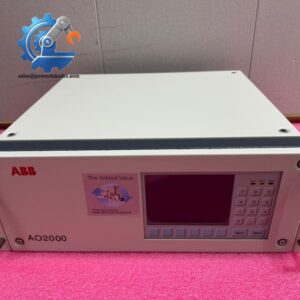
Yes. Unlike UNITROL 1010, the UNITROL 1020 includes a local control panel. ABB’s product documentation lists the panel as a distinguishing feature between the two models.
Q5. Which software is used to configure UNITROL 1020?
ABB uses CMT 1000 as the commissioning and maintenance tool. It provides parameter adjustment, monitoring, trending, and access to data/event information.
Q6. What should I provide when purchasing a replacement?
Provide the complete UNITROL 1020 ordering designation, nameplate photograph, hardware/software revision, excitation-current rating, generator voltage/current information, and configuration or parameter backup if available. For a critical generator application, request actual unit photographs, functional-test records, warranty terms, and return conditions.


 Start Chat