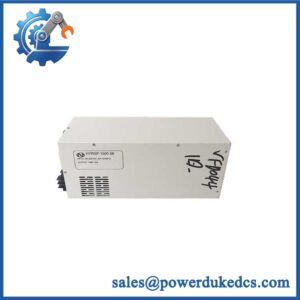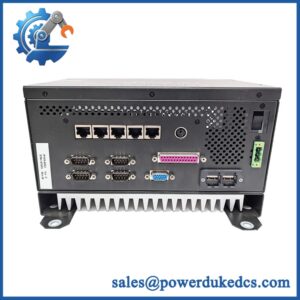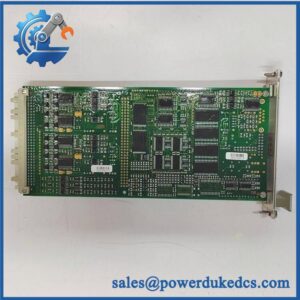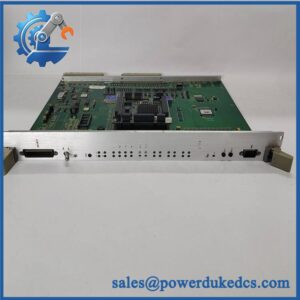
Description
-
Brand: ALSTOM
-
Full Model Number: EP3-F-4-EN
-
Product Family: EPIC III
-
Lifecycle Status: Reported discontinued by the manufacturer; current OEM support status requires confirmation
-
Core Function: Electrostatic precipitator (ESP) process controller
-
Top 3 Technical Specs: 24 V AC or DC supply ±15%; power consumption below 15 VA; operating ambient temperature of +5°C to +60°C. These values are listed in an EPIC III controller manual and must be confirmed for the exact EP3-F-4-EN revision.
-
Stock & Condition: Available quantity, condition, hardware revision, test records, and dispatch date subject to confirmation
Obsolescence & Supply Chain Deep Dive
When an ALSTOM EPIC III controller fails, restoring an existing electrostatic precipitator can become a sourcing challenge, particularly when the original equipment is no longer sold through normal OEM channels. The EP3-F-4-EN is identified as an EPIC III ESP controller associated with industrial dust collection and emission-control equipment. Replacing it with the correct hardware can help maintain the existing control architecture without immediately initiating a wider retrofit. Before ordering, match the complete model number, nameplate details, installed wiring, and system configuration. Availability depends on actual inventory, revision, and condition—not the product listing alone.
A verified replacement may reduce total cost of ownership (TCO) by avoiding premature replacement of the control cabinet, field wiring, associated equipment, and wider process-control infrastructure. The financial assessment should include the replacement price, engineering review, maintenance labor, functional testing, and potential production losses. For preliminary planning, allow approximately 2–4 maintenance labor hours for a straightforward replacement, excluding fault diagnosis, process tuning, and formal commissioning. This is a planning allowance, not a guaranteed installation time. If recurring failures or unsupported system components indicate broader lifecycle risk, compare the replacement option with a controlled modernization project before committing capital.
Compatibility & Replacement Matrix
|
Replacement Scenario |
Classification |
Required Action |
Preliminary Time Allowance |
|---|---|---|---|
|
Exact EP3-F-4-EN model and verified matching revision |
Conditional drop-in replacement |
Confirm mounting, connectors, terminal assignments, wiring, and the approved installation procedure. |
2–4 maintenance labor hours |
|
Different hardware revision of EP3-F-4-EN |
Compatibility requires engineering approval |
Verify revision-specific documentation, configuration requirements, parameter settings, and firmware support. |
2–4 engineering hours for initial review |
|
Another EPIC III controller variant |
Not an automatic replacement |
Compare hardware configuration, supply requirements, I/O arrangement, and application-specific functions. |
Estimate after documentation review |
|
Different controller platform |
Potential hardware and software modification |
Assess field wiring, control logic, interfaces, process settings, and commissioning requirements. |
Site-specific estimate required |
Budgetary cost assessment: Calculate the installed replacement cost as the controller price plus labor, engineering review, testing, and outage exposure. A different controller variant may require additional configuration and commissioning work. Actual costs depend on the plant’s wiring arrangements, process requirements, and acceptance procedures.
Field Traps to Check Before Ordering
-
Power supply mismatch: The general EPIC III controller documentation specifies 24 V AC or DC ±15%. Verify that this rating applies to the exact EP3-F-4-EN revision and confirm the installed supply before energizing the replacement.
-
Terminal assignment differences: Check the original controller’s wiring drawings against the replacement’s terminal layout. Do not transfer conductors based solely on terminal position or connector appearance.
-
Configuration and tuning loss: Record the existing controller’s application settings, process parameters, and relevant configuration data before removal, where the approved procedure permits. Confirm how these settings will be restored.
-
High-voltage process controls: ESP controllers interact with equipment that may operate at hazardous voltages. Verify the applicable isolation, discharge, interlock, and commissioning procedures before conducting functional tests.
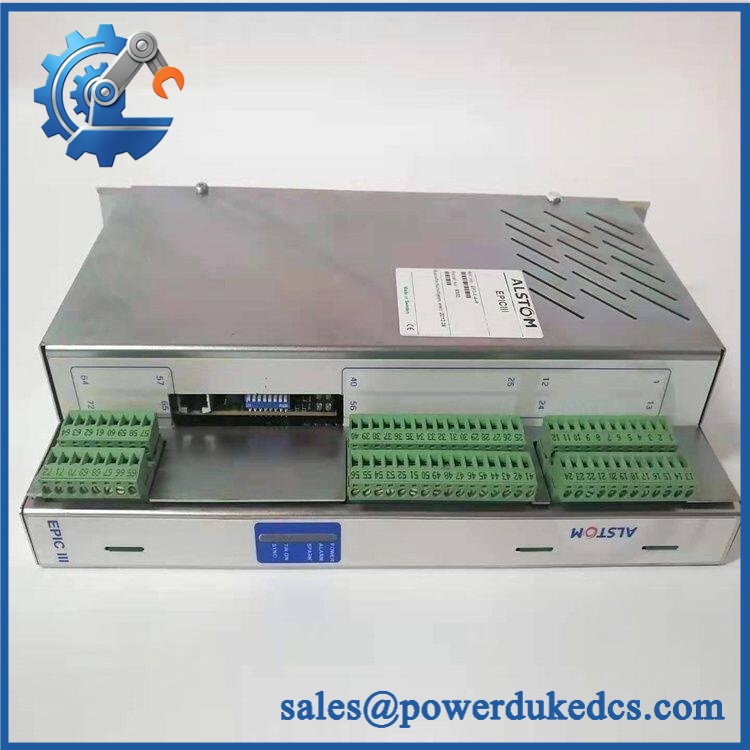
ALSTOM EP3-F-4-EN
Quality Assurance & Testing SOP
The following procedure defines the proposed inspection and testing scope for ALSTOM inventory. Tests must follow the applicable OEM documentation and use qualified personnel and suitable equipment.
Visual Inspection and Traceability
-
Model verification: Match the ALSTOM identification label, designation, and available serial or production codes against the purchase specification.
-
Physical examination: Inspect the enclosure, PCB where accessible, terminal blocks, connectors, and mounting features for corrosion, impact damage, contamination, or unauthorized rework.
-
Authenticity screening: Review manufacturer markings, label consistency, available traceability documents, and evidence of prior handling.
-
Condition documentation: Record whether the actual unit is new original, new surplus, or previously used, as applicable.
-
Photographic records: Capture the complete unit, nameplate, connectors, and visible revision information before packaging.
Power-On and Diagnostic Checks
-
Verify the test supply against the applicable documentation before energization.
-
Conduct a controlled power-on self-test (POST) using an approved test setup.
-
Check the power and diagnostic indicators fitted to the actual revision, including applicable ALARM, SPARK, T/R ON, SYNC ON, RTU, or Network indicators.
-
Record startup behavior, diagnostic messages, and any abnormal status indications.
-
Verify that the controller initializes correctly and communicates with compatible test equipment where supported.
Functional and Interface Testing
-
Simulate documented input signals through an approved test arrangement.
-
Verify applicable analog measurement channels and digital control functions against the relevant acceptance criteria.
-
Exercise available output functions using suitable test loads within documented electrical limits.
-
Check controller response to simulated operating and alarm conditions where the approved test procedure supports these checks.
-
Record the test configuration, measured results, channel behavior, and any functions not tested.
Final Acceptance and Shipment Release
-
Match the tested unit’s identity and revision to the sales documentation.
-
Provide actual-unit photographs and the agreed inspection or functional-test report.
-
Identify any unperformed tests and restrictions on the test setup.
-
Package the controller using appropriate electrostatic-discharge protection and mechanical protection.
-
Release the unit only after the agreed acceptance requirements have been met.
Testing limitation: A bench test does not establish correct operation of the complete ESP installation. Site wiring verification, process checks, interlock testing, and commissioning must follow the plant’s approved procedures.
Procurement & Lifecycle FAQ
Is the ALSTOM in stock, and what is the emergency shipping cutoff?
The available quantity, condition, and hardware revision must be confirmed against physical inventory. Request written confirmation of the stock location, payment requirements, export documentation, and earliest dispatch date. Same-day shipping depends on warehouse readiness and carrier collection times.
How do you verify the authenticity and condition of discontinued controllers?
Request photographs of the actual , identification-label details, available traceability records, and a written condition declaration. Where functional testing is required, agree on the test scope and acceptance criteria before ordering. Visual inspection alone does not demonstrate complete operational functionality.
Will the work with my existing EPIC III system?
Compatibility depends on the installed hardware revision, wiring, supply voltage, application settings, and system configuration. Confirm the replacement against the original unit and the applicable technical documentation. Obtain engineering approval before installation, particularly when substituting a different controller variant.
What warranty and return terms should be confirmed before issuing the purchase order?
Specify the warranty period, start date, covered defects, exclusions, and return authorization procedure in the order documentation. Confirm the deadline for reporting a defective-on-arrival unit and who pays return freight. Do not assume that a surplus controller carries the original manufacturer’s warranty.
Is replacing the more economical than upgrading the ESP control system?
For an otherwise serviceable installation, replacing a confirmed faulty controller may avoid the engineering and commissioning costs of a wider modernization. Compare the spare-part price, installation labor, validation costs, downtime risk, and expected remaining service life. Consider an upgrade when recurring failures, unavailable supporting components, or control-system limitations increase the long-term cost of continued maintenance.