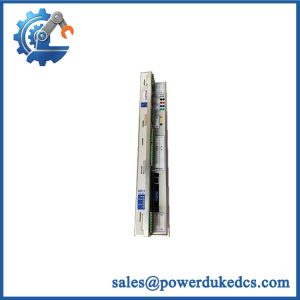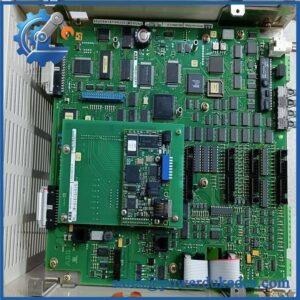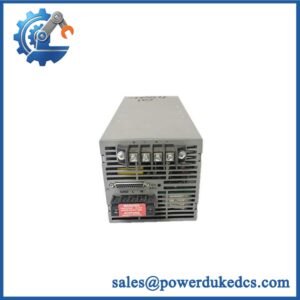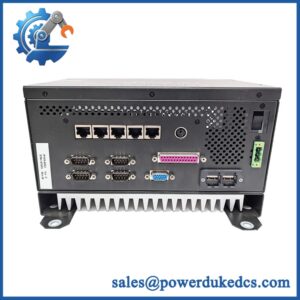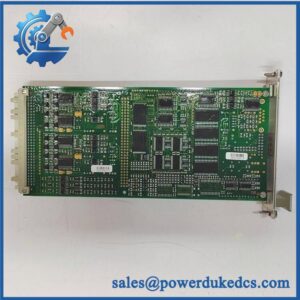
Description
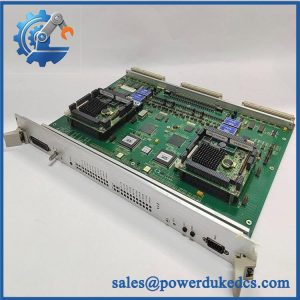
- Brand: ALSTOM
- Full Model Number: FS0953-REV2D
- Board Designation: CPHC16-S
- Associated Platform: S4000 Uninterruptible Power Supply (UPS), bypass section
- Lifecycle Status: Legacy spare; current OEM production and support status unverified
- Core Function: Bypass control logic for determining when the static bypass switch should be switched on or off
- Top 3 Technical Specifications:
- Board function: Static bypass control
- System application: S4000 UPS, CPHC16-S board configuration
- Hardware revision: REV2D, subject to confirmation against the physical identification label
- Stock and Condition: Confirm actual inventory, revision, packaging, and condition before ordering
- Compatibility Requirement: Verify the complete board designation and installed UPS configuration
- Dispatch Lead Time: Confirmed against stock, order approval, packing, and carrier collection
- Warranty: Written coverage and return terms required on the quotation
Obsolescence and Supply Chain Analysis
When a bypass-control fault threatens the availability of an aging UPS, sourcing the correct control board becomes a maintenance priority. The ALSTOM FS0953-REV2D CPHC16-S is associated with the bypass-control section of the S4000 UPS. Its control logic determines when the static bypass switch (SSB) should operate, while coordinating with inverter control circuits and monitoring bypass supply conditions. The documented functions include frequency and phase monitoring, inverter-to-bypass synchronization, and coordination between multiple UPS units in parallel or hot-standby configurations. A failed or incorrectly identified board can delay restoration and complicate troubleshooting.
For sites maintaining an established S4000 installation, a verified like-for-like replacement may cost less than a complete UPS migration. The financial comparison should include the spare’s purchase price, expedited freight, qualified labor, commissioning, and the cost of an extended outage. A targeted repair also limits the immediate scope of cabinet changes and system reengineering. However, one replacement does not resolve the long-term supply risk of legacy electronics. Record the installed board revision, confirm the available service documentation, and identify an approved migration option if recurring failures or declining spare availability increase lifecycle exposure.
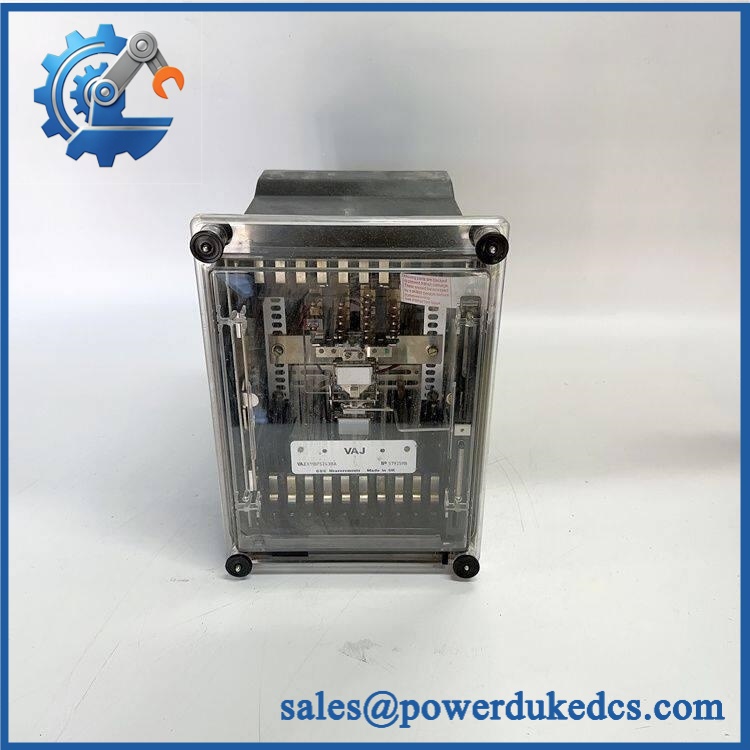
ALSTOM FS0953-REV2D
Compatibility and Replacement Matrix
The exact revision matters. Match the FS0953-REV2D identification to the installed CPHC16-S board and the specific S4000 configuration before authorizing replacement.
| Replacement Scenario | Compatibility Assessment | Required Action |
|---|---|---|
| FS0953-REV2D CPHC16-S replaced with an identical, verified unit | Candidate direct replacement | Confirm revision, connectors, EPROM identification, and system configuration |
| FS0953 CPHC16-S replaced with an revision | Compatibility requires verification | Confirm hardware and firmware compatibility against the applicable service documentation |
| replacedCPHC16-R | Not an established substitute | -R is associated with rectifier control; do not interchange without explicit engineering approval |
| replaced with a different bypass-control board | Not established | Verify electrical interfaces, control logic, installation requirements, and approved system configuration |
| Replacement involving firmware or EPROM changes | Requires revision-specific verification | Check the installed program version against the companion control hardware and applicable test procedure |
| Replacement requiring wiring or connector modifications | Engineering approval required | Document the proposed change and complete the required validation |
Replacement Cost and Time Estimates
The following are preliminary maintenance-planning allowances, not quoted service rates or manufacturer-approved replacement durations.
| Activity | Preliminary Allowance |
|---|---|
| Part identification and compatibility review | 30–60 minutes |
| Physical inspection and pre-installation checks | 30–60 minutes |
| Qualified replacement labor | 1–3 hours |
| Bypass-control functional testing and commissioning | 2–4 hours |
| Spare board and expedited freight | Supplier quotation required |
| Total maintenance window | Approximately 3–6 hours of planned work, subject to site conditions and commissioning results |
These allowances may overlap and should not be added mechanically to determine a guaranteed outage duration. High-voltage isolation, parallel-unit operation, access restrictions, and unexpected faults can extend the work. Confirm the maintenance window with the responsible UPS engineer before scheduling the replacement.
Field Traps to Check Before Ordering
Control-board family mism is the bypass-control version, while -R is associated with rectifier control. Similar naming does not establish interchangeability.
EPROM and companion-board compatibility: The S4000 service documentation describes a bypass test procedure that checks the inst program version against the companion ICP board. Record the actual program version separately from the PCB revision. REV2D alone does not confirm firmware compatibility.
Supply phase and synchronization: Following replacement, qualified personnel must verify the bypass supply conditions, phase sequence, frequency, and synchronization using the approved procedure. An incorrect phase sequence or synchronization fault can prevent acceptable bypass operation.
Hot-swap assumption: Do not assume this board can be replaced while energized. Follow the specific isolation procedure and site-approved maintenance controls.
Quality Assurance and Testing SOP
The FS requires identification and functional checks appropriate to a UPS bypass-control board. Testing must account for its control signals and synchronization functions rather than relying on generic PLC module procedures.
| QA Stage | Required Action | Acceptance Criteria |
|---|---|---|
| Part identification | Record the FS0953- designa marking, serial information, and available traceability documents | Markings documented and consistent with the purchase specification |
| OEM anti-counterfeit visual inspection | Inspect identification labels, PCB markings where accessible, connectors, soldering, component condition, and signs of unauthorized rework | No unexplained identification discrepancies or defects affecting use |
| Mechanical inspection | Check connector alignment, mounting points, corrosion, impact damage, and contamination | No visible condition that compromises installation or electrical contact |
| Power-on self-test (POST) | Energize only through an approved test fixture; record startup behavior and diagnostic indications | Results agree with the applicable test procedure; inspect ERR/RUN LEDs only if fitted |
| Display and program verification | Record the displayed program version and observe the documented startup indication | Version is identified, and observed behavior matches the applicable technical reference |
| Bypass-control signal testing | Check control inputs and outputs using the prescribed test setup | Switching commands and responses meet the documented criteria |
| Synchronization testing | Verify the inverter-to-bypass synchronization procedure using suitable test equipment | Results satisfy the system’s approved acceptance limits |
| Frequency and phase monitoring | Verify the relevant monitoring functions using the approved test procedure | Detection and response agree with the applicable service instructions |
| Functional I/O load testing | Test control interfaces and outputs with the specified test fixture and loads | No unexpected switching, signal failures, or unresolved diagnostic faults |
| Final inspection and packing | Photograph the tested unit, record the final condition, and package it using suitable ESD protection | Shipped unit matches the inspected part and associated test record |
Testing Scope and Documentation
The documentation describes a dedicated static-bypass test procedur, including synchronization checks and the verification of bypass-switch operation. Actual testing should follow the applicable procedure for the installed hardware and program revision.
Do not substitute an arbitrary load or apply voltage to unidentified terminals. This board participates in a safety-critical power-control function; its testing and installation require suitably qualified personnel.
A pre-shipment report should identify the tested unit, inspection date, test configuration, observed program version, functional checks completed, and any limitations. A visual inspection or power-on test alone does not demonstrate complete operational performance. Extended burn-in should be represented as completed only when the agreed test scope includes documented burn-in results.
Procurement and Lifecycle FAQ
Is t genuinely in stock, and what is the emergency shipping cutoff?
Physical inventory must be confirmed against the exact revision requested. Obtain written confirmation of quantity, condition, packaging, dispatch cutoff, and expected carrier collection. Emergency dispatch depends on stock verification, order approval, payment clearance, export documentation, and carrier availability.
How do you verify the condition and authenticity of this legacy UPS board?
Request photographs of the actual board, includin markings. The seller should specify whether the unit is new original, new surplus, or used, as applicable. Ask for available traceability records and a unit-specific inspection or functional test report. Visual inspection alone cannot prove OEM authenticity.
Are there firmware compatibility issues to resolve before issuing the purchase order?
Yes. Confirm the inst revision, program version, and applicable companion-board configuration. The bypass test procedure includes checking program-version compatibility with the ICP board. Do not assume that matching PCB revision labels guarantee matching firmware, or that an EPROM from another unit can be transferred without verification.
What warranty and return terms apply to?
The written quotation should state the warranty period, coverage conditions, defective-on-arrival procedure, return authorization requirements, and exclusions. For surplus or used equipment, confirm whether the warranty covers functional failure and how a claim must be documented. Retain the identification photographs, inspection report, packing records, and test results.
Is replacin more economical than upgrading the UPS?
A verified like-for-like replacement may be the lower-cost option when the current UPS remains suitable and the required spare is available. Compare the complete repair cost—including the board, freight, qualified labor, commissioning, and downtime—with the costs of a new UPS, engineering changes, installation, and system validation. If spare availability is uncertain or failures recur, include lifecycle support and future migration planning in the capital decision.