

Description
- Model & Brand: GE Fanuc / GE CP238TA
- Series: CP238 Series / CompactPCI
- Part Type: 6U CompactPCI PMC Carrier / Expansion Board
- Physical Dimensions: Approximately 6U CompactPCI form factor, 233.35 × 160 mm front-panel PCB envelope; rear I/O PMC routing depends on installed carrier configuration.
- Estimated Shipping Weight: Approximately 1.3 kg for a protected board assembly; verify actual packed weight for freight documentation.
- What’s in the Box: CP238TA carrier board, ESD shielding protection, rigid PCB protection, and applicable QC documentation. PMC mezzanine cards, rear-transition hardware, cables, and chassis hardware are separate unless specifically included.
Product Introduction
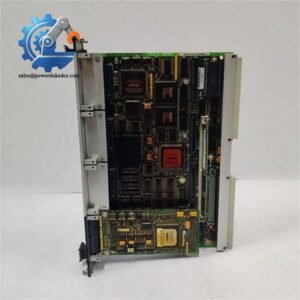
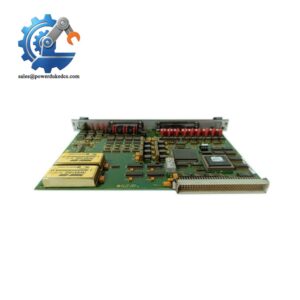
The GE CP238TA mounts as a 6U CompactPCI carrier board and provides two PMC expansion positions for industrial computing systems. Its primary PCI bus and auxiliary PCI bus can operate independently, while the front panel provides a 10/100/1000Base-TX Ethernet port for host-system connectivity. This is a computing-platform expansion board rather than a conventional GE PLC I/O module.
The carrier supports PMC cards with either 32-bit or 64-bit PCI interfaces at 33 MHz or 66 MHz, giving the installed mezzanine hardware a defined PCI expansion path. Some records associate CP238TA with GE Fanuc, Ramix, and later Abaco Systems product families, so the exact board label and PMC configuration should govern procurement (particularly for long-obsolete embedded-control installations).
Core Technical Specifications
| Parameter | Value |
|---|---|
| Manufacturer / Family | GE Fanuc / CP238 Series |
| Model | CP238TA |
| Product Type | 6U CompactPCI PMC Carrier Board |
| Form Factor | 6U CompactPCI |
| PMC Slots | 2 |
| PMC Bus Width | 32-bit or 64-bit |
| PMC Bus Frequency | 33 MHz or 66 MHz |
| PCI Architecture | Primary PCI + auxiliary PCI buses |
| PCI Bus Operation | Primary and auxiliary buses can operate asynchronously |
| Front Ethernet | 1 × 10/100/1000Base-TX |
| Rear I/O | PMC I/O routing through CompactPCI J3/J5 connectors where supported |
| Hot-Swap Hardware | Hot-swap register support is documented for the board family |
| Hot-Swap Indicator | Blue LED/control indication associated with hot-swap circuitry |
| Nominal Power Input | 24 VDC in published industrial records |
| Processor | Host/PMC dependent; carrier itself is not a general-purpose PLC CPU |
| User Memory | Depends on installed PMC/host architecture |
| Application Firmware | Carrier-dependent; no generic standalone PLC firmware |
| Storage | Depends on installed PMC or host configuration |
| Typical Application | Industrial computing, turbine/control-system expansion, communications |
| Cooling | Chassis airflow dependent |
| Dimensions | 6U CompactPCI; approximately 233.35 × 160 mm PCB envelope |
| Approx. Weight | 1.3 kg |
| Mounting | CompactPCI chassis/backplane |
| Hot Replacement | Hardware supports hot-swap functions, but system procedure controls whether live replacement is permitted |
| Lifecycle Position | Legacy / Obsolescence-Controlled |
The two PMC positions are the defining feature. The carrier does not itself establish what I/O, storage, communications, or processing functions the final system provides; those depend on the mezzanine cards fitted into the slots.
Published records also identify a 24 VDC supply arrangement and a front-panel Gigabit Ethernet interface. Because the available descriptions are reseller-derived and can differ by configuration, the actual board label and chassis power documentation should be used for final electrical acceptance.
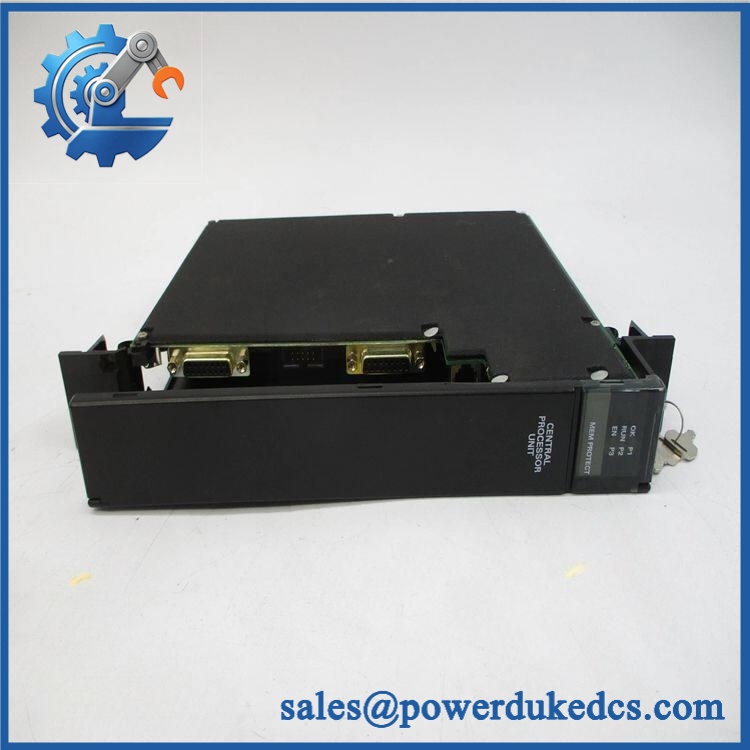
GE CP238TA
🚨 Global Compliance & Industry Certifications
The CP238TA should be treated as a legacy CompactPCI computing component, with certification evaluated against the complete chassis, carrier, PMC population, and host equipment.
- CE Mark: Verify against the applicable CP238/CompactPCI system declaration and board revision.
- UL/cUL: Confirm the complete CompactPCI chassis and installed board configuration rather than assuming certification for the carrier alone.
- ATEX / IECEx: Do not assume standalone hazardous-area approval for . Any classified-area deployment requires documentation for the complete certified equipment assembly.
- Marine / DNV GL: No standalone marine approval should be assumed without project-specific evidence.
- EMC: The Ethernet and PCI interfaces make system-level EMC compliance dependent on the chassis, grounding, cabling, and installed PMC cards.
- Country of Origin: Establish from actual manufacturing traceability.
- HS Tariff Classification: Confirm the final code with the destination-country customs broker.
A hazardous-location certificate, where applicable, belongs to the defined equipment assembly and operating conditions. A bare carrier board should not be represented as independently certified merely because it was once installed in a certified industrial system.
Verify specific lot certifications with OEM.
🚨 Long-Term Storage & Asset Preservation Guide
Keep the inside an ESD shielding bag until installation. Protect the CompactPCI backplane connector and both PMC connectors from dust, oxidation, and accidental impact; those interfaces are the most mechanically vulnerable areas of a stored carrier.
Maintain a dry, stable warehouse without condensation. For multi-year spare storage, below approximately 60% RH is a practical target, particularly where the board will be stored outside its original chassis.
Inspect the large connector fields, PMC socket hardware, heat-generating components, and soldered components before issue. Do not assume a long-stored carrier is electrically ready simply because the PCB looks clean.
Preserve the installed PMC card inventory and slot assignment with the asset record. The ‘s function can change substantially depending on which two PMC boards were originally installed.
Physical Installation Prerequisites
Install the only in the compatible 6U CompactPCI chassis and backplane. The rear J3/J5 routing and installed PMC configuration must match the original system design.
Provide the chassis with the specified 24 VDC system supply where that configuration applies, and verify the carrier’s actual power input from the chassis documentation before energizing. Do not infer the supply arrangement from the front-panel Ethernet connector or from an unrelated CP238 variant.
Ensure that the PMC retaining hardware is fully secured before inserting the carrier into the chassis. Check the CompactPCI guide rails, backplane connector alignment, front-panel retaining screws, and PMC ejector mechanisms.
The published carrier architecture supports hot-swap circuitry, but that does not automatically mean every installed can be removed while the host system remains active. The chassis controller, operating system, installed PMC cards, and site procedure must all support the operation.
Maintain the CompactPCI chassis cooling path. Because thermal conditions are governed by the carrier, PMC cards, neighboring slots, and chassis fans, use the complete equipment thermal design rather than imposing an arbitrary 50 mm clearance rule.
Buyer’s FAQ — Logistics & Compliance Focus
Q: What HS Tariff Code should be used for ?
A: The is a CompactPCI carrier/expansion board, but the final Harmonized System classification depends on the importing country’s tariff schedule and customs interpretation. Have the importer or customs broker confirm the code before issuing the commercial invoice.
Q: Does the shipment country establish Country of Origin?
A: No. COO should be supported by manufacturing or traceability documentation for the actual unit or lot. Seller location, warehouse address, and export port do not independently establish manufacturing origin.
Q: Does the include the latest firmware pre-loaded?
A: Do not assume a standalone firmware image. The is primarily a PMC carrier, and its actual computing or I/O function depends on the installed PMC cards and host system. Record the original PMC population, slot assignment, BIOS/board revision where applicable, and operating-system configuration before replacement.
Q: Can the be shipped and replaced as a hot-swappable board?
A: The board family includes hot-swap register hardware, but live replacement depends on the complete CompactPCI chassis and system implementation. For transport, use ESD shielding, rigid protection around the backplane and PMC connectors, moisture control, and internal cushioning; insure the shipment for the documented commercial replacement value.




 Start Chat