

Description
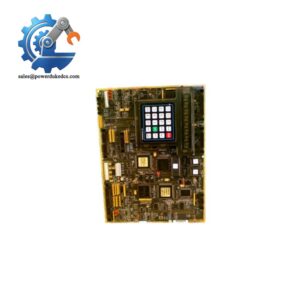
- Model & Brand: GE Digital Energy D20 EME
- Series: D20/D200 Substation Controller
- Part Type: Ethernet/Memory Expansion Module
- Physical Dimensions: Approximately 233 × 170 × 16 mm (W × H × D) for the main-card envelope; installed connector and media-interface components can extend the overall depth.
- Estimated Shipping Weight: Approximately 0.4–0.7 kg for a protected main card and accessories; use the actual packed weight for freight documentation.
- What’s in the Box: D20 EME main board, ESD shielding protection, and applicable inspection/QC documentation. Memory expansion board, media interface card, and interconnect cable are option-dependent and must be confirmed separately.
Product Introduction
The GE D20 EME installs as a VME-based expansion module inside a compatible D20 or D200 substation controller chassis. Its job is to add Ethernet connectivity, global memory, or both to the D20/D200 architecture; it is not the main RTU processor. That distinction becomes important when a warehouse record simply says “D20 EME,” because several hardware configurations share the same family name.
At the hardware level, the EME uses a main Ethernet/memory card with optional memory expansion and a separate Media Interface Card (MIC). Supported media include 10Base-T, 10Base2, and 10Base-FL, while the documented memory configurations include 0 MB, 8 MB, and 16 MB battery-backed SRAM. In a brownfield substation, exact option matching matters (the wrong memory or media configuration can turn a nominally correct replacement into an incompatible assembly).
Core Technical Specifications
| Parameter | Value |
|---|---|
| Manufacturer | GE Digital Energy / General Electric |
| Model Family | D20 EME |
| Product Type | Ethernet/Memory Expansion Module |
| Platform | D20 / D200 Substation Controller |
| Architecture | VME-based |
| Primary Function | Ethernet connectivity and/or global memory expansion |
| Ethernet Capability | 10 Mbps Ethernet-class network connectivity |
| Memory Options | 0 MB, 8 MB, or 16 MB |
| Memory Type | Battery-backed SRAM |
| 8 MB Main Card | 526-2100 |
| 0 MB Ethernet Main Card | 526-2101 |
| 8 MB Memory-Only Main Card | 526-2102 |
| D20EME2 8 MB Main Card | 526-2117 |
| Memory Expansion Card | 526-2115, 8 MB |
| Maximum Documented Memory | 16 MB with applicable 8 MB main card + expansion card |
| Media Options | 10Base-T, 10Base2, 10Base-FL |
| 10Base-T MIC | 526-2110 / later 526-2116 option |
| 10Base2 MIC | 526-2111 |
| 10Base-FL MIC | 526-2112 |
| EME Internal Cable | 977-0298 |
| D20EME Backplane Power | Approx. 110 mA at +5 VDC |
| D20EME with MIC | Approx. 0.60 A at +12 VDC |
| Host Chassis | D20/D200 VME chassis |
| Compatible D20 VME Chassis | 500-0280 with 953-3061 MX subassembly |
| D20 Non-VME Chassis 500-0305 | Not compatible |
| Older 500-0280 without 953-3061 | Not compatible |
| Main Card Dimensions | Approx. 233 × 170 × 16 mm |
| Processor | No standalone D20 system processor function |
| Application Memory | Global-memory function, configuration-dependent |
| Firmware | System-dependent |
| Hot Replacement | Do not assume |
| Lifecycle Position | Discontinued / Legacy |
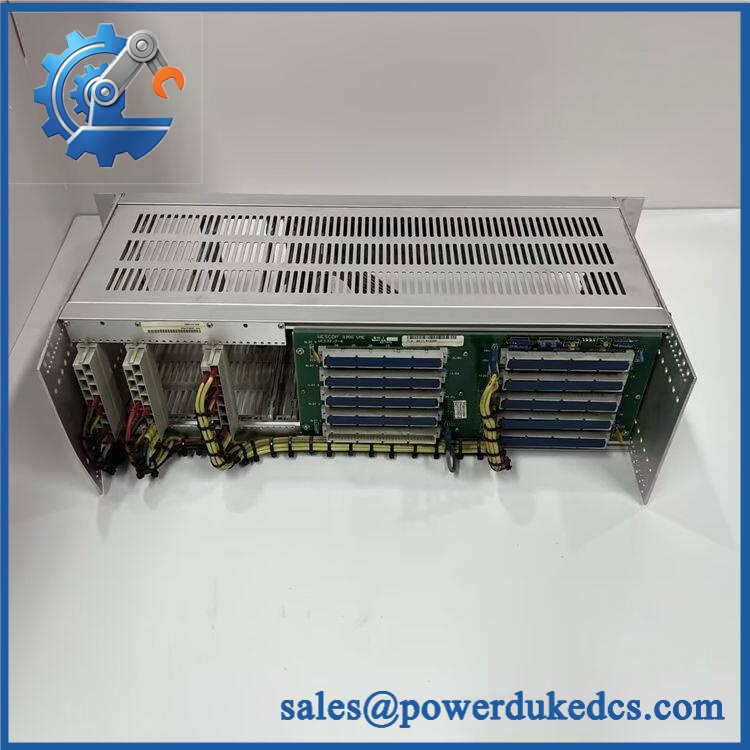
GE D20 EME
Configuration matrix
The term D20 EME does not identify one unique electrical configuration.
| Main EME Variant | Function |
|---|---|
| 526-2100 | 8 MB global memory + Ethernet |
| 526-2101 | Ethernet only, 0 MB EME memory |
| 526-2102 | 8 MB global memory, no Ethernet |
| 526-2117 | D20EME2 8 MB memory + Ethernet |
| 526-2115 | Additional 8 MB memory expansion |
The older EME family can therefore appear in a system with 8 MB or 16 MB global memory, or with Ethernet functionality but no EME memory. GE also distinguishes the D20EME2 media-interface architecture from the earlier EME family, so the installed main-card and MIC numbers should be captured together.
Power and thermal considerations
GE installation documentation specifies approximately 110 mA from +5 VDC for the D20EME and approximately 0.60 A at +12 VDC when a MIC is installed. That additional 12 V demand is significant in a D20 chassis because the available 12 V capacity is limited; GE specifically warns that an EME with a MIC, combined with several modems, can exceed the chassis supply capability.
For thermal calculations, use the complete D20/D200 rack power budget. The 233 × 170 mm card has no independent cooling system; heat removal depends on the chassis and adjacent VME population.
🚨 Global Compliance & Industry Certifications
The D20 EME belongs to the GE D20/ substation automation platform, with compliance evaluated in the context of the complete RTU installation.
- CE Mark: Verify against the applicable D20/ product declaration and the exact EME revision.
- UL/cUL: Confirm the certification applicable to the complete D20/ cabinet and chassis configuration.
- ATEX / IECEx: Do not assume hazardous-area certification for the standalone EME card.
- Marine / DNV GL: No standalone DNV GL approval should be assumed without project-specific documentation.
- EMC: GE documentation references industrial EMC standards including EN 61000-6-2, EN 61000-6-4, EN 61326-1, and CISPR 11, plus surge, EFT, ESD, and conducted/RF immunity testing for the D20 product family.
- Safety / Insulation: The D20 family documentation references EN 61010-1 and IEC 60255-5 dielectric and insulation testing.
- Environmental: D20 documentation references IEC 60068 environmental tests covering cold, dry heat, vibration, shock, bump, and damp heat.
- Country of Origin: Establish from actual manufacturing traceability.
- HS Tariff Classification: Confirm the final classification with the destination-country customs broker.
These standards are important in substation environments because Ethernet and memory-expansion hardware must continue operating under specified EMC disturbances, temperature, vibration, and electrical-transient conditions. Product-family compliance should not be represented as an unrestricted certification for a loose replacement card.
Verify specific lot certifications with OEM.
🚨 Long-Term Storage & Asset Preservation Guide
Keep the D20 EME in an ESD shielding bag with the VME connector and MIC interface protected. Do not expose the card edge to repeated bare-hand contact; connector contamination is particularly troublesome in legacy VME racks.
The EME memory variants use battery-backed SRAM, so battery condition belongs in the warehouse preservation record. The exact battery arrangement depends on the card revision and memory configuration; inspect the battery area for leakage, corrosion, or date-code concerns before energizing a long-stored card.
Keep storage dry and condensation-free. For long-duration warehouse control, a practical target below approximately 60% RH reduces oxidation risk around VME connectors, battery contacts, and the MIC interface.
Preserve the exact 526-2100 / 526-2101 / 526-2102 / 526-2117 identity and the installed MIC number. Do not mix 8 MB, memory-only, and Ethernet-only assemblies under a generic “D20 EME” inventory description.
Physical Installation Prerequisites
Install the D20 EME in a compatible D20/ VME chassis. GE documentation specifically identifies 500-0280 with the 953-3061 MX subassembly as compatible; the 500-0305 non-VME chassis is not compatible, nor is an older 500-0280 configuration without the required MX subassembly.
The EME connects to the D20ME/ME II processor through the appropriate internal interface arrangement. Where a MIC is fitted, the 977-0298 interconnect cable must remain inside the chassis. GE warns that routing this cable outside the chassis can increase EMI radiation or interfere with system operation.
Check the chassis power budget before adding or replacing an Ethernet-equipped EME. The D20 power supply provides 5 V and 12 V rails with limited capacity, and the EME/MIC combination consumes substantially more 12 V current than a basic processor card.
Maintain the original 3U rack airflow and card spacing. There is no sound basis for replacing the chassis-specific mechanical requirements with a universal 50 mm clearance rule.
For memory-enabled EME cards, preserve the battery and memory configuration. For Ethernet-enabled versions, retain the original MIC, media type, connector arrangement, and network topology.
Buyer’s FAQ — Logistics & Compliance Focus
Q: What HS Tariff Code should be used for a GE D20 EME?
A: The D20 EME is a specialized substation-controller expansion card, and the final Harmonized System classification depends on the importing country’s tariff schedule and customs interpretation. Because the EME can be supplied as an Ethernet, memory, or combined module, the exact configuration should be included in the customs description.
Q: Does the shipping country establish Country of Origin?
A: No. COO should be supported by manufacturing or traceability documentation for the actual EME main card, MIC, or complete kit. Seller location and export port do not establish manufacturing origin.
Q: Does a D20 EME arrive with the latest firmware pre-loaded?
A: It depends on the function being added. GE states that upgrading a D20 VME or from an older GreenSpring Ethernet card to an Ethernet EME requires software reinstallation in the D20ME/ME II processor. A memory-only EME upgrade does not require new firmware, although a new configuration may be necessary. Therefore, the EME card itself should not be treated as the sole software baseline.
Q: What should shipping insurance and packing cover?
A: Insure the module for its documented commercial replacement value and photograph the main-card number, memory/battery arrangement, MIC interface, connectors, and packaging before dispatch. Use ESD shielding, rigid VME-connector protection, moisture control, and internal cushioning; include the main EME part number, MIC number, memory option, and interconnect cable in the packing record.



 Start Chat