

Description
- Model: DL-1200/RTU
- Brand Reference: GE, as supplied; exact GE OEM attribution should be verified from the physical nameplate
- Series: Legacy RTU / dedicated-line power-modem equipment
- Part Type: Plug-in RTU Power Modem / Communication Card
- Core Function: Converts serial data into low-speed FSK audio signaling for dedicated-line or similar communication channels used with legacy RTU systems.
- Key Specs: 300, 600, or 1200 BPS selectable line rate, terminal interface up to 115.2 kbps, 2FSK modulation, synchronous/asynchronous operation, 2-wire or 4-wire transmission, half/full-duplex operation, and 600 Ω line impedance.
Product Introduction
The DL-1200/RTU is described in legacy documentation as a card-type 1200 BPS dedicated-line power modem compatible with Harris RTU equipment. Its role is communications rather than PLC logic or field I/O processing: serial data from the RTU is modulated into FSK tones for transmission over a dedicated audio path, telephone line, carrier channel, microwave link, or another supported voice-band transport.
There is an important identity issue for procurement. The strongest exact-model documentation I found is for the DATALINK DL-1200/RTU, while several current reseller pages relabel the same model as a GE RTU module and publish unrelated modern RTU specifications. Those reseller specifications conflict substantially with the legacy modem documentation, so they should not be copied into an engineering database. For a GE-branded spare request, verify the actual manufacturer marking, board revision, chassis interface, and Harris/RTU compatibility before approving the item (especially for an outage-critical communications path).
Core Technical Specifications
| Parameter | Value |
|---|---|
| Buyer-Supplied Model | DL-1200/RTU |
| Product Type | Card-Type Power Modem / RTU Communication Module |
| Documented Product Family | DL-1200 Power Modem |
| Primary Application | RTU and SCADA communication |
| RTU Compatibility | Harris RTU-compatible card format documented |
| Line Transmission Rates | 300 / 600 / 1200 BPS |
| Default Factory Setting | 600 BPS |
| Terminal Data Rate | Up to 115.2 kbps |
| Modulation | Binary FSK / 2FSK |
| Communication Mode | Synchronous or asynchronous |
| Duplex Modes | Simplex, half-duplex, full-duplex |
| Physical Line | 2-wire or 4-wire |
| Supported Standards | DL, Bell 102/103/202, CCITT V.21/V.23, and LEC audio standards |
| Output Impedance | 600 Ω |
| Transmit Level | 0 to -20 dB, continuously adjustable |
| Receive Level | 0 to -40 dB |
| Reported Bit Error Rate | ≤ 1 × 10⁻⁵ under the documented test condition |
| Minimum SNR Reference | 16 dB for the documented operating condition |
| Transmission Media | Dedicated line, telephone line, microwave, carrier, spread-spectrum, or voice-channel fiber transport |
| Power Supply | AC 165–265 V, 50/60 Hz; optional DC 220 V or -48 V configuration documented for the DL-1200 family |
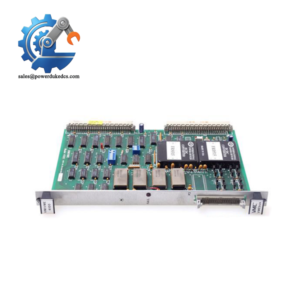
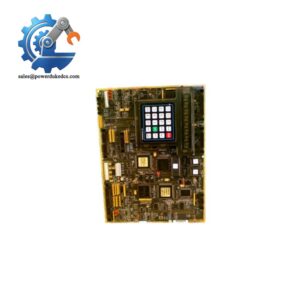
| Physical Form | Plug-in card for compatible RTU chassis |
| Front Indicators | PWR, TD, RD, RTS reported for the DL-1200 family |
| Configuration | DIP switches and jumpers |
| Firmware | No modern downloadable firmware package established |
| Application Memory | None established |
| Approximate Dimensions | Exact OEM card dimensions not verified in the reviewed documentation |
| Unit Weight | Exact OEM net weight not verified |
| Lifecycle | Legacy / discontinued technology |
The legacy DL-1200 manual documents 300/600/1200 BPS, up to 115.2 kbps terminal speed, binary FSK, synchronous/asynchronous operation, 2-wire/4-wire operation, 600 Ω impedance, adjustable transmit/receive levels, and AC 165–265 V power with optional DC configurations. It also identifies the DL-1200/RTU as the card version compatible with Harris RTU equipment.
That evidence is materially different from several modern reseller pages that describe DL-1200/RTU as a high-capacity Ethernet RTU with large I/O counts, IP65/IP67 housing, or modern SCADA protocols. Those descriptions are not supported by the exact legacy modem manual and should not be used for this model without physical verification.
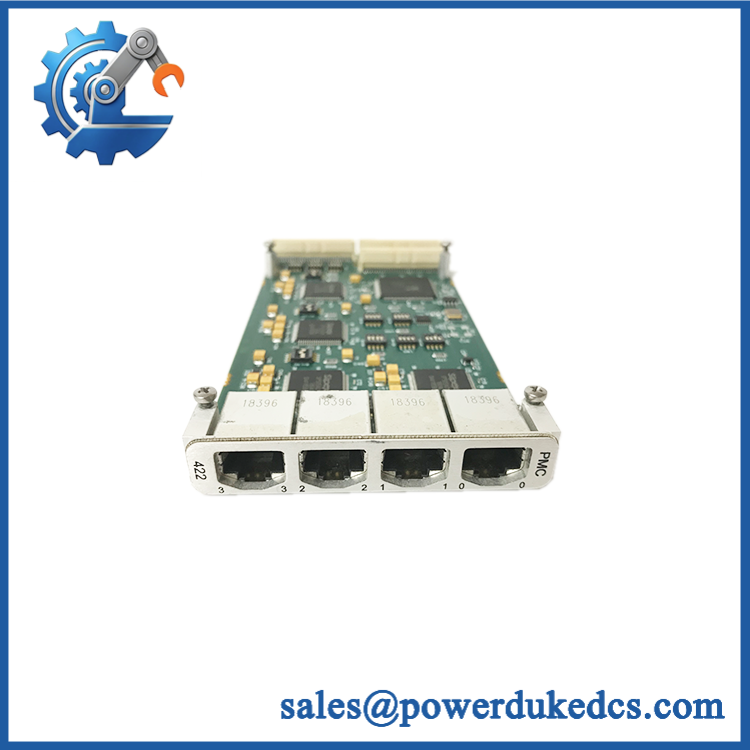
GE DL-1200/RTU
Application Scenarios & Pain Points
Micro-case — an RTU remains operational but the master station can no longer poll it. A low-speed modem fault can interrupt the entire telemetry path even though the RTU’s I/O subsystem is healthy. For the DL-1200/RTU, line level, modulation mode, baud setting, and physical 2-wire/4-wire configuration should be checked before replacing the card.
In utility substations, legacy dedicated-line modems can provide the communication link between field RTUs and a dispatch or SCADA center. The documented 300/600/1200 BPS modes are suited to older low-bandwidth telemetry applications rather than modern high-speed Ethernet networks.
For pipeline and distributed infrastructure, the modem architecture can be useful where an existing audio communication channel already connects remote RTUs over long distances. The manufacturer documentation describes dedicated line, microwave, carrier, and other voice-channel transmission paths, with dedicated-line distances reported at approximately 5 km for the standard application
At remote sites with significant electrical noise, signal-to-noise margin becomes a practical maintenance variable. The documented DL-1200 setup specifies a 16 dB minimum SNR reference under the relevant test condition; a low-SNR line should be investigated before a healthy modem is condemned.
🚨 Common Error Codes & Diagnostic Symptoms
This is a communications modem card rather than a PLC CPU, so it does not have a modern numerical software fault-code system.
Symptom/Code: No carrier / no communication link → Diagnosis: Possible incorrect line wiring, muted or disconnected audio path, incorrect DIP-switch mode, or failed modem transmit section. → Action: Verify the 2-wire/4-wire configuration, line continuity, transmit level, and selected modulation mode before replacing the card.
Symptom/Code: High bit-error rate / intermittent polling → Diagnosis: Possible poor SNR, excessive line attenuation, incorrect receive level, or noise on the transmission channel. The documented operating reference uses approximately 16 dB SNR. → Action: Measure the line quality and receive level, then adjust or repair the communication path before replacing the modem.
Symptom/Code: RTU does not handshake after card replacement → Diagnosis: Possible baud-rate, frequency, protocol-standard, duplex, or DIP-switch mismatch. The DL-1200 supports several operating modes and factory default configuration is documented as 600 BPS. → Action: Compare every switch position with the original card and remote station configuration; restore the required settings and cycle power.
🚨 Cross-Reference & Lifecycle Migration
Cross-Reference
The documented DL-1200 family includes several form factors:
- DL-1200/RTU — card-type power modem compatible with Harris RTU equipment
- DL-1200/1RTU — related card-type RTU version
- DL-1200/AC — desktop AC-powered modem
- DL-1200/DC — desktop DC-powered modem
- DL-1200/RACK — rack-mounted multi-port configuration
- DL-1200/1U — 19-inch 1U chassis version
These variants should not be treated as direct mechanical substitutes. The /RTU version is specifically associated with an RTU card environment, while the other versions use different mechanical packaging.
Firmware Requirement
No conventional firmware-flashing requirement has been established for the DL-1200/RTU.
Configuration is performed through DIP switches and jumpers, including operating speed, modulation standard, line mode, and related communication parameters. The original manual documents switch-selectable frequency and operating modes.
Lifecycle Status
Status: Legacy / Obsolete Technology
The documentation reviewed dates the DL-1200 manual to the legacy generation of low-speed power modems, and the exact /RTU form factor is primarily found in secondary or surplus channels today. It should therefore be treated as a controlled legacy spare rather than a current Ethernet RTU platform.
For buffer stock, preserve the complete DL-1200/RTU identity, switch configuration, line standard, and host RTU type. A card with the wrong operating mode can be electrically healthy and still fail to communicate.
Field Engineer’s Tech Notes
Warning 1 — Photograph every DIP switch before extraction.
The DL-1200 family uses switch-selected frequency points and communication modes. The documented factory default is 600 BPS, but the installed system may use 300 or 1200 BPS. Copy the original positions exactly before removal (this is one of the easiest errors to avoid).
Warning 2 — Do not confuse a modem fault with a line fault.
Measure the audio path at the modem interface before replacing the card. Transmit level, receive level, impedance, SNR, and external wiring all influence communication quality. A new modem will not correct a damaged leased line.
Strict QA & Testing SOP
Step 1 — Identity verification
Confirm DL-1200/RTU on the physical assembly. For a GE-supplied item, record the GE marking as well as any original manufacturer or board-level identification.
Step 2 — Mechanical inspection
Check the card edge, chassis guides, connectors, mounting hardware, PCB, and component condition for corrosion, cracking, contamination, or unauthorized repair.
Step 3 — DIP-switch documentation
Record every DIP-switch position and jumper before changing any setting. Compare against the target RTU communication configuration.
Step 4 — Power-input verification
Verify the exact card power arrangement from the physical label and host chassis. The DL-1200 documentation identifies AC 165–265 V, with optional DC 220 V or -48 V versions in the family. Never assume a DC option applies to every /RTU card.
Step 5 — Controlled startup
Energize the card in an approved compatible RTU test chassis and verify the PWR indicator and startup behavior.
Step 6 — Serial-interface test
Connect a known-good serial source and verify transmit/receive behavior through the modem interface.
Step 7 — Modulation test
Test the required 300, 600, and/or 1200 BPS mode using an approved modem test setup. Confirm that the selected mode corresponds to the DIP-switch configuration.
Step 8 — Line-level verification
Measure transmit and receive levels against the applicable documented test procedure. The family specification provides adjustable transmit levels from 0 to -20 dB and receive levels from 0 to -40 dB.
Step 9 — BER/SNR test
Use a controlled line simulator to verify communication integrity and observe bit-error performance at the specified SNR conditions.
Step 10 — 2-wire/4-wire test
Verify the required physical-line configuration and duplex mode. Confirm that the card responds correctly in the intended half- or full-duplex arrangement.
Step 11 — RTU compatibility test
Install the modem in a compatible RTU test chassis and verify successful polling from a known-good master station or simulator.
Step 12 — Extended communication test
Operate the card continuously while monitoring carrier state, receive/transmit activity, errors, and abnormal heating.
Step 13 — Documentation
Record all switch settings, measured levels, BER/SNR results, serial information, photographs, and inspector/date information.
Step 14 — ESD-safe packaging
After testing, place the PCB in suitable ESD shielding material and protect the card edge, connectors, and adjustment hardware from physical impact.
Test videos are available for applicable units tested on a compatible RTU/modem test setup.
Buyer’s FAQ
Can I hot-swap the DL-1200/RTU?
Do not assume hot-swapping is permitted. This is a plug-in communications card associated with an RTU chassis, and the documented power options can include hazardous AC or high-voltage DC arrangements. Follow the host RTU maintenance procedure and isolate the applicable power before card removal.
How do I verify a New Original DL-1200/RTU?
Request photographs of the actual card, including the complete DL-1200/RTU marking, PCB revision, DIP switches, connectors, component side, and packaging. For a GE procurement request, also verify that the physical board actually carries the GE identification claimed by the seller; the strongest exact-model documentation reviewed identifies the legacy DL-1200/RTU as a DATALINK/Harris-compatible modem card rather than a modern GE RTU CPU.
What HS tariff code should be used?
The final HS/HTS code depends on the verified customs identity of the shipment and the importing country’s tariff schedule. If the physical item is confirmed as a 1200 BPS FSK power modem card, it should be classified according to its actual communications function rather than as a general-purpose RTU with a large I/O count.
Have the importing-country customs broker confirm the final national tariff classification before filing.
Does the DL-1200/RTU include the latest firmware?
No conventional firmware package has been established in the exact legacy documentation reviewed. Operating parameters are selected through DIP switches and jumpers, including the line speed and communication mode.
For replacement control, request the actual switch configuration and compare it with the failed card before installation.
What Country of Origin should be declared?
Do not infer COO from the GE label alone. The exact-model documentation reviewed identifies the DL-1200 family with Beijing DATALINK Technology Co., Ltd., while current reseller pages may relabel the product as GE equipment. The actual physical nameplate and supplier origin declaration should control the customs record.
What warranty should I expect?
Warranty depends on the supplier’s written terms and the condition category of the unit. For this legacy communications card, obtain the warranty period, actual-unit photographs, switch configuration, functional-test scope, and return conditions before purchase. A third-party warranty should not be represented as an OEM GE factory warranty unless separately documented.


 Start Chat