

Description
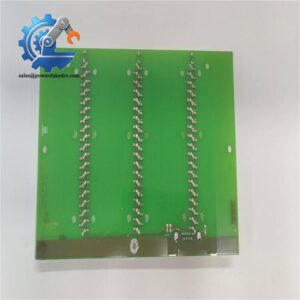
- Model & Brand: GE DS200DTBDG1ABB
- Product Family: GE Speedtronic Mark V / DS200
- Part Type: Contact Output Expansion / Terminal Board
- Physical Dimensions: Approximately 11.25 × 3.00 in. (about 286 × 76 mm) based on published board dimensions.
- Estimated Net Weight: Approximately 0.34–0.8 kg, depending on whether the published value refers to the bare board or packed assembly. Current supplier records report both figures.
- Estimated Shipping Weight: Approximately 0.8–1.2 kg with ESD shielding, cushioning, and export packaging.
- Terminal Capacity: 2 terminal blocks, 107 terminals each
- Connectors: 3 × 34-pin and 3 × 40-pin connectors
- Other Hardware: Multiple test points and 2 jumpers
- PCB Coating: Standard/normal coating
- Mounting: Screw-secured PCB assembly within the Mark V equipment
- What’s in the Box: DS200DTBDG1ABB board unless the purchase order specifically includes associated terminal hardware or documentation.
The published board description identifies DS200DTBDG1ABB as a Mark V terminal board with two 107-terminal blocks, three 34-pin connectors, and three 40-pin connectors.
Product Introduction
The GE DS200DTBDG1ABB is installed within the Speedtronic Mark V turbine-control cabinet as a terminal/interface board rather than as a processor or standalone controller. Its large terminal blocks provide field wiring access, while the rear/interface connectors route signals between the terminal board and associated Mark V control electronics. That physical architecture is why connector identity and wire-to-terminal mapping deserve particular attention during replacement.
For lifecycle management, preserve the complete G1ABB assembly identity. Published Mark V records distinguish the board’s functional acronym, artwork revision, and assembly style; the B-rated artwork revision changes component placement without necessarily changing the intended board function. Treat revision identity as a controlled asset attribute, especially where an old turbine installation has no current engineering drawing package.
Core Technical Specifications
| Parameter | Value |
|---|---|
| Manufacturer | General Electric |
| Product Family | Speedtronic Mark V |
| Board Family | DS200 |
| Model | DS200DTBDG1ABB |
| Functional Acronym | DTBD |
| Functional Description | Mark V Terminal Board / Contact Output Expansion Termination Module |
| Assembly Type | Normal Assembly |
| PCB Coating | Normal Coating |
| Revision | B-rated artwork revision |
| Terminal Blocks | 2 |
| Terminals per Block | 107 |
| Total Listed Terminations | 214 |
| 34-Pin Connectors | 3 |
| 40-Pin Connectors | 3 |
| Test Points | Multiple |
| Jumpers | 2 |
| Board Length | Approx. 11.25 in. |
| Board Height | Approx. 3 in. |
| Approx. Metric Size | 286 × 76 mm |
| Typical Input System | Mark V turbine-control wiring |
| Mounting | Screw-mounted PCB |
| Typical Field Interface | Contact/output signal termination |
| Lifecycle | Legacy / Obsolete |
| Typical Packed Weight | Approximately 0.8 kg from supplier listings |
The board’s terminal and connector count is documented by the Mark V technical record. Secondary listings also classify it as a terminal board used within legacy GE turbine-control equipment.;
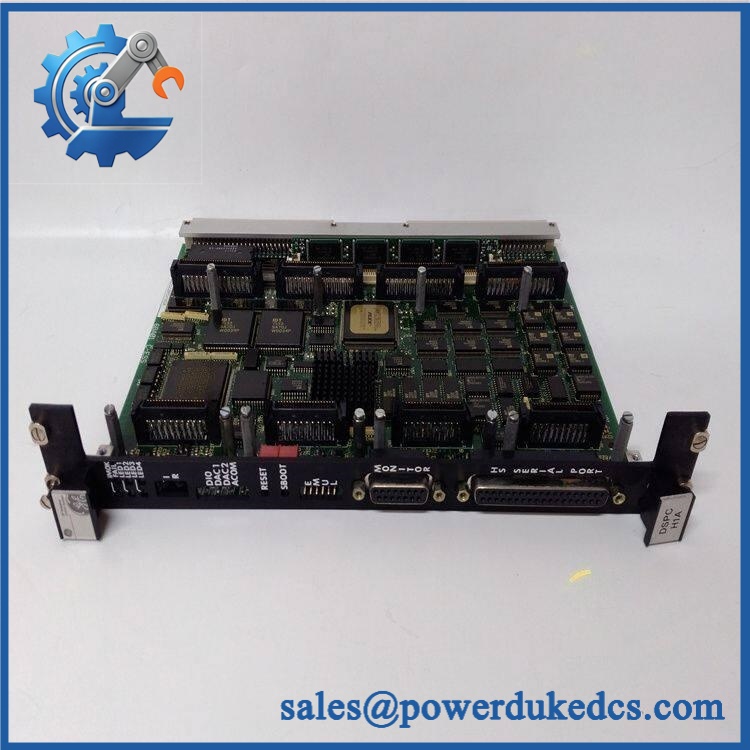
GE DS200DTBDG1ABB
Global Compliance & Industry Certifications
For the DS200DTBDG1ABB, certification should be assessed at the Mark V system and installation level. A terminal board by itself should not be assigned certifications simply because the complete turbine-control system carried an agency approval.
- CE Mark: Verify against the applicable GE/Mark V system documentation and exact board revision. Do not infer standalone CE conformity from the part number.
- UL/cUL: No reliable evidence establishes a separate UL/cUL listing for the loose board. A complete Mark V cabinet may have different agency documentation.
- ATEX / IECEx: The board should not be treated as an intrinsically safe component. Hazardous-area application requires assessment of the complete turbine-control installation, field barriers, wiring, enclosure, and approved equipment.
- Marine / DNV: No verified standalone DNV approval was established for this specific terminal board.
- RoHS: Because this is legacy Mark V hardware, do not assume modern RoHS status without checking the manufacturing revision and original compliance documentation.
- System Safety: The board participates in turbine control and protection circuitry, but that does not make the bare PCB independently safety-certified.
For an audit file, retain the nameplate, original GE documentation, system certification, revision identification, and installation-specific approval evidence separately.
Verify specific lot certifications with OEM.
Long-Term Storage & Asset Preservation Guide
Keep the in an ESD shielding bag. The board has numerous terminals, connectors, diodes, rectifiers, capacitors, and other exposed electronic components. Connector contacts should remain covered, and the PCB should never be stacked directly against another unprotected board.
Control warehouse humidity below 60% RH where practical. The published supplier operating values vary, but long-term preservation should use a substantially controlled environment to minimize oxidation at the 107-terminal blocks and the six multi-pin connectors. Include desiccant when the part is sealed for multi-year storage.
Do not move the jumpers or alter the terminal-board configuration while performing warehouse inspection. The has two documented jumpers and extensive field terminations. A casual “inspection adjustment” can invalidate the original configuration record (photograph the installed jumper positions before any bench work).
Protect against mechanical loading. The 34-pin and 40-pin connectors should not carry shipping force. Use foam around, rather than directly against, the connector bodies and terminal blocks.
Physical Installation Prerequisites
The is a screw-mounted Mark V PCB, approximately 11.25 × 3 inches, rather than a DIN-rail module.
Cabinet environment: Maintain the Mark V cabinet’s original airflow path and environmental limits. Do not install the board in a sealed enclosure without the thermal management required by the turbine-control system.
Clearance: Do not impose a generic 50 mm clearance around the board when the original Mark V cabinet defines the spacing. Preserve enough working room to prevent terminal wires from pressing against the PCB and to allow proper connector engagement.
Grounding: Follow the Mark V cabinet grounding scheme. Terminal-board signal returns, cable shields, and protective earth should remain separated according to the approved wiring drawings.
Terminal mapping: Record each field wire before removal. The board contains 214 listed screw-terminal positions, making a one-position wiring error capable of propagating into multiple control or status circuits.
Connector control: Verify all three 34-pin and three 40-pin connectors by their printed designations before mating. Do not rely solely on physical fit.
Buyer’s FAQ — Logistics & Compliance Focus
Q: Which HS Tariff Code should I use for ?
A: Supplier customs records commonly classify this Mark V terminal board under HS 8538.90, including national extensions such as 85389091. That is a useful starting point, but the final tariff code must be confirmed against the importing country’s tariff schedule and the exact function stated on the commercial invoice.
Q: What Country of Origin should appear on the invoice?
A: Use the actual manufacturing origin supported by the board’s label or GE records. One secondary listing reports USA as COO, but supplier declarations should not override manufacturer evidence when the lot is being audited.
Q: Should I buy shipping insurance for one board?
A: Yes when the board is required for a production-critical Mark V turbine. Although individual supplier listings report roughly 0.34–0.8 kg, the financial exposure is driven by replacement scarcity and turbine downtime rather than freight weight. Use ESD shielding, rigid packaging, tracking, and insurance based on the declared commercial value.
Q: Does the come with the latest firmware pre-loaded?
A: No firmware should be expected on this terminal board. It is passive/interfacing hardware within the Mark V architecture. Acceptance should instead focus on the exact G1ABB identity, artwork revision, terminal arrangement, connector condition, jumper position, and electrical continuity.


 Start Chat