

Description
- Brand: GE Multilin
- Full Model Number: F650BABF2G0LOSHE
- Lifecycle Status: Discontinued by manufacturer
- Core Function: Feeder management, protection, control, and monitoring relay
- Top 3 Technical Specs: 24–48 VDC supply; redundant RS485 rear serial communication; 10/100Base-TX rear Ethernet
- I/O Configuration: Slot F; 8 digital inputs / 8 digital outputs / 2 trip-close circuit supervision circuits
- Form Factor: 19-inch rack configuration
- Stock & Condition: New Surplus; physical stock verification before PO; expedited shipping subject to confirmed cutoff
The F650 ordering code is configuration-specific. The referenced configuration is identified as a feeder management relay with basic display, redundant RS485, rear 10/100Base-TX Ethernet, 24–48 VDC supply, 19-inch rack format, and the stated Slot F I/O arrangement. GE’s F650 documentation confirms that the F650 family is a configurable digital bay controller with CPU, power supply, I/O, and communications modules.
Obsolescence & Supply Chain Deep Dive
Once an F650 installation reaches the legacy phase, a failed relay becomes a procurement problem as much as an electrical problem. Public commercial records identify F650BABF2G0LOSHE as discontinued by the manufacturer, while the F650 platform itself remains documented in GE’s technical literature. That gap between installed equipment and current production creates longer sourcing cycles, configuration uncertainty, and a higher probability of receiving an F650 variant with the wrong communications or I/O arrangement. For an outage-critical feeder, holding the exact ordering code as a spare can shorten material lead time without forcing an immediate controls modernization project.
The TCO argument is strongest when the existing protection scheme, wiring, relay settings, and station communications remain serviceable. A like-for-like replacement can preserve the existing protection platform while avoiding the engineering studies, panel changes, software integration, commissioning, protection testing, and operator retraining associated with a wider replacement project. GE’s manual also shows that functionality depends on firmware and configuration, so the lowest-risk purchase is not simply “an “; it is the same complete ordering code with matching hardware and verified settings. For planning purposes, allow the existing relay configuration to be backed up and compared before energizing the replacement.
Compatibility & Replacement Matrix
| Buyer Check | Assessment |
|---|---|
| Replacement Class | Drop-in Replacement when replacing an identical F650BABF2G0LOSHE configuration |
| Software Compatibility | Existing protection settings and communications configuration must be verified; firmware version should be checked before commissioning |
| Hardware Modification | Normally not required for an exact like-for-like replacement |
| Physical Replacement Time | Approx. 30–90 minutes for qualified personnel, excluding isolation and protection testing |
| Configuration & Functional Checkout | Approx. 1–3 hours, depending on site procedures and communications checks |
| Planning Labor Allowance | Approx. 2–6 technician/engineering hours total; labor cost = site hourly rate × actual hours |
| PO Approval Requirement | Match full F650BABF2G0LOSHE ordering code, power supply, display configuration, communications, I/O, and revision information |
Field Traps to Watch
Firmware mismatch: GE’s documentation identifies firmware revisions with different available functions and communications features. The manual documents firmware upgrade procedures and identifies firmware 7.00-and-higher behavior for certain Ethernet redundancy functions. Do not assume that a later or earlier firmware image is automatically equivalent to the version operating in the existing relay.
CT/VT and terminal configuration: GE specifically warns that CT and VT connections must not be switched and that current inputs incorporate shorting provisions for module extraction. Before replacement, record the rear-terminal wiring and preserve the existing CT/VT arrangement exactly; protection-system wiring errors can create a serious commissioning and safety issue.
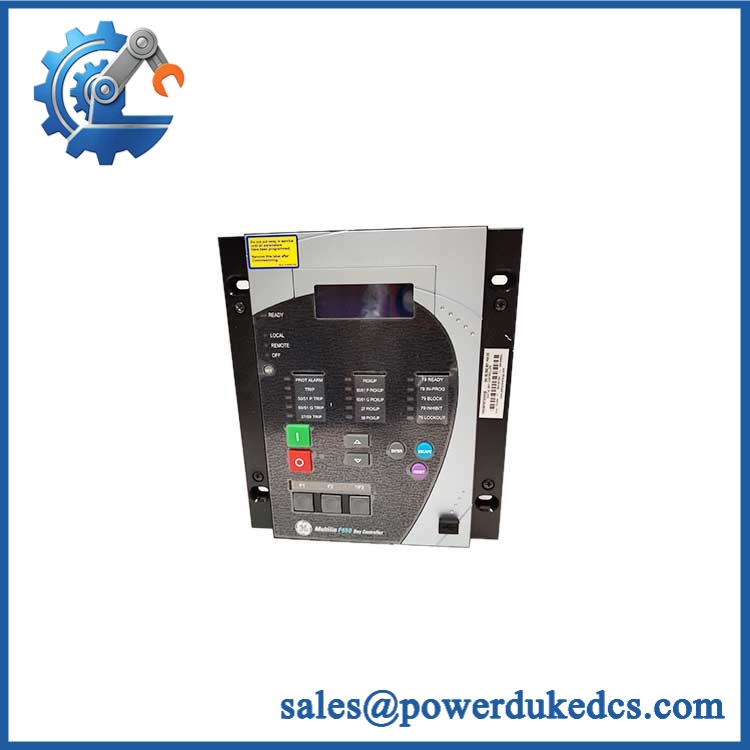
GE F650BABF2G0LOSHE
Quality Assurance & Testing SOP
A surplus F650BABF2G0LOSHE should pass a controlled inspection sequence before shipment:
- OEM anti-counterfeit visual inspection: Verify GE/Multilin identification, complete F650BABF2G0LOSHE ordering code, nameplate data, revision markings, housing condition, connector layout, and evidence of unauthorized rework.
- Nameplate verification: Compare the delivered ordering code against the PO and the failed relay. GE’s own inspection procedure instructs users to verify the model number on the identification label.
- Mechanical inspection: Examine the front display, mounting hardware, rear terminals, connectors, communication ports, labels, and enclosure for impact, corrosion, contamination, or deformation.
- Power-up test: Apply the correct control voltage for the configured unit and confirm normal startup behavior, display operation, diagnostic indications, and applicable ERR/RUN or status LED behavior.
- Self-diagnostic review: Check startup alarms, diagnostic messages, hardware fault indications, and stored error conditions where accessible.
- Digital I/O load testing: Exercise the configured digital inputs and outputs under a controlled test setup, including representative trip/close supervision circuits where the fixture supports them.
- Communications test: Verify the installed serial and Ethernet interfaces appropriate to this ordering code. Confirm link establishment and basic data exchange before shipment.
- Protection-function verification: Where the test bench supports it, inject representative voltage/current signals and verify measurement and selected protection functions against the documented configuration.
- Configuration record: Save a copy of the tested relay configuration and record model number, firmware revision, serial information where available, test date, results, and inspection photographs.
- Final release inspection: Apply a QC status label only after electrical, functional, and documentation checks are complete.
GE’s documentation provides commissioning and verification procedures covering measurement, communications, firmware, and configured protection functions. A supplier’s pre-shipment test should therefore be documented as an actual inspection and functional test, not presented as undocumented “factory testing.”
Procurement & Lifecycle FAQ
Is the GE genuinely in stock, and what is the cutoff for emergency shipping?
Physical inventory should be confirmed against the exact ordering code before the PO is released. For emergency requirements, obtain written confirmation of unit identity, condition, testing status, and same-day shipping cutoff. Current external inventory records have reported unused units for this exact model, but supplier-side live stock must still be verified at order time.
How do you guarantee the condition and authenticity of a discontinued relay?
Require model-number and nameplate verification, physical inspection, controlled power-up, diagnostic review, communications testing, I/O testing, and traceability records for the exact unit shipped. GE’s installation documentation itself begins with physical inspection and model-number verification, making those appropriate procurement controls for legacy inventory.
Are there firmware compatibility issues engineers should check before issuing the PO?
Yes. firmware versions affect available functions and communications behavior. Engineering should record the firmware revision of the installed relay, back up the configuration, and verify that the replacement can operate with the site’s existing settings and communication architecture before commissioning.
What warranty terms and return conditions should procurement require?
The quotation should state the warranty duration, DOA coverage, return-authorization procedure, inspection period, and exclusions in writing. For surplus or discontinued equipment, the warranty should be tied to the exact tested unit supplied and should not be confused with a current manufacturer production warranty.
Why purchase the exact instead of replacing the whole protection system?
When the installed protection scheme remains technically serviceable, an exact relay replacement can avoid the engineering, wiring changes, protection-study updates, communications integration, commissioning, and training costs associated with a larger modernization project. The appropriate decision should be based on remaining asset life, failure history, spare availability, cybersecurity requirements, engineering resources, and five-year TCO.



 Start Chat