

Description
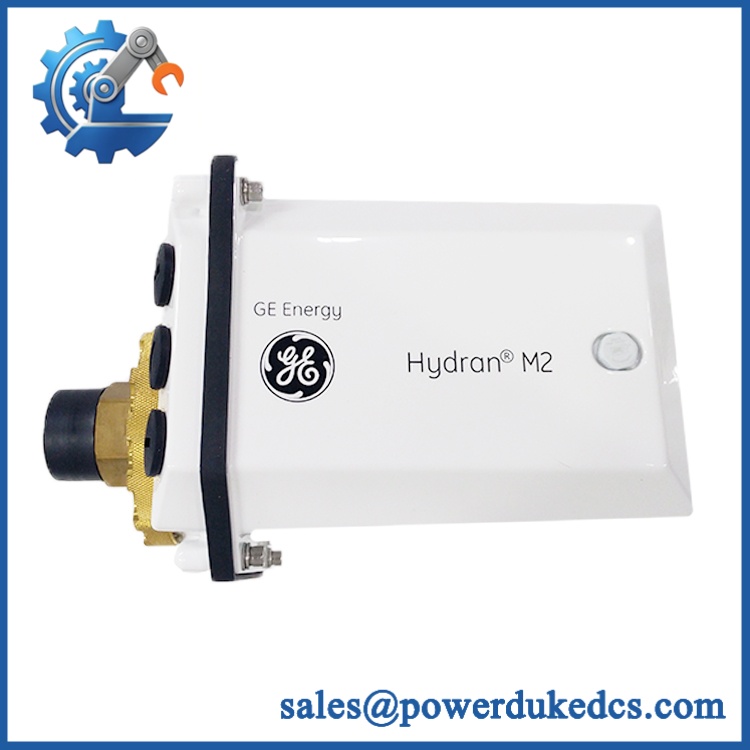
- Brand: GE
- Full Model Number: Hydran M2-X
- Product Type: Online Dissolved Gas Monitor
- System/Series Family: GE Hydran Transformer Monitoring
- Core Function: Continuous online monitoring of key dissolved fault gases in transformer oil
- Top 3 Hardcore Specs: H₂ | CO | C₂H₂ monitoring
- Measurement Principle: Online dissolved-gas extraction and gas detection
- Application: Oil-filled power and distribution transformers
- Stock Status: New surplus / condition to be confirmed per available unit
Module 3: Technical Product Introduction
Transformer faults rarely begin with a dramatic electrical event. Localized overheating, partial discharge, arcing, and insulation degradation can generate dissolved gases in transformer oil long before an external failure becomes obvious. GE Hydran M2-X is an online transformer-monitoring instrument designed to continuously track key dissolved fault-gas conditions, giving maintenance personnel an additional diagnostic signal without waiting for periodic laboratory oil sampling.
The M2-X is particularly relevant to transformer condition monitoring because its measurement approach focuses on gases associated with developing electrical and thermal faults. Depending on the configured instrument and sensor arrangement, Hydran systems monitor gases such as hydrogen (H₂), carbon monoxide (CO), acetylene (C₂H₂), and other dissolved-gas indicators. The actual alarm thresholds should always be interpreted against transformer design, loading, historical trends, and laboratory DGA results. —A single elevated reading should not automatically be treated as proof of an internal fault.
Module 4: Application Scenarios & Field Realities
- On large oil-filled power transformers, continuous gas monitoring provides a way to observe changing gas conditions between scheduled laboratory DGA samples. Trending is generally more informative than reacting to one isolated measurement.
- For transformers supplying critical industrial loads, an online monitor can provide an early warning layer when the cost of an unexpected outage is high. Alarm thresholds should be coordinated with the site’s transformer protection and maintenance procedures rather than treated as independent trip commands.
- During transformer commissioning or post-maintenance operation, establish a baseline after the unit reaches a stable operating condition. Fresh oil, maintenance activity, temperature, and load changes can affect measured gas conditions and should be documented alongside the monitor’s readings.
- In substations with remote condition monitoring, the Hydran M2-X can form part of a broader transformer diagnostic strategy. Communication and alarm integration should be tested at the actual control-system interface rather than assuming that a valid local display proves remote data transmission.
Module 5: Migration, Compatibility & Installation Traps
Replacement Matrix
| Replacement Type | Hydran M2-X Assessment |
|---|---|
| Drop-in Replacement | Potentially yes, when replacing the same Hydran M2-X configuration with matching sensor, mounting, power, and communication interfaces |
| Software Compatible | Configuration-dependent; alarm settings, communication parameters, and monitoring configuration must be restored and verified |
| Hardware Modification Required | Not expected for an exact configuration match; required if the installation uses different sensor, oil-interface, mounting, or communication hardware |
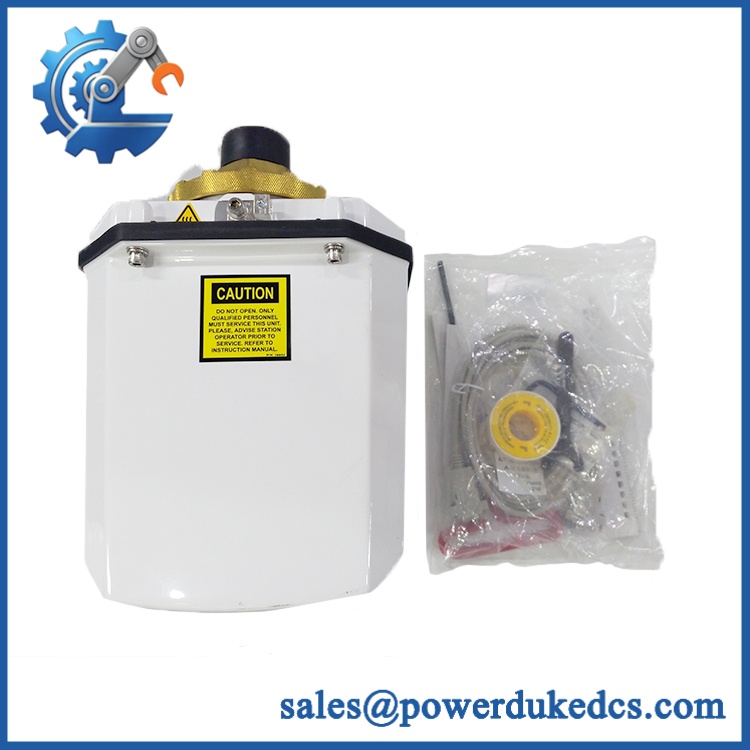
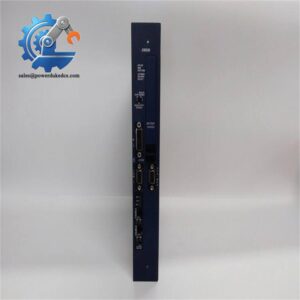
GE Hydran M2-X
Field Traps — Watch Out
1. Sensor and oil-interface configuration matters.
Do not treat the M2-X electronics as an isolated plug-in instrument. Verify the installed gas-extraction/sensor arrangement, oil connection, tubing, valves, and mounting hardware before replacing the monitor.
2. Do not copy alarm thresholds blindly.
Transformer DGA interpretation depends on gas type, concentration, rate of change, transformer design, loading, and historical data. Preserve the existing configuration only after verifying that it belongs to the same transformer and monitoring setup.
3. Check oil isolation before mechanical removal.
Any monitor connected directly to transformer oil requires an appropriate isolation and depressurization procedure. Do not loosen an oil connection simply because the electronic unit has been powered down.
4. Verify communications separately.
If the M2-X is connected to a substation monitoring or SCADA system, record the existing communication settings before replacement. Local gas readings can be correct while remote alarms remain unavailable because of an interface or configuration mismatch.
Module 6: Quality Assurance SOP
Before shipment, each available GE Hydran M2-X should pass a documented inspection sequence:
- OEM identification inspection — Verify GE Hydran branding, complete M2-X model designation, serial information, rating/nameplate data, and hardware revision where available.
- OEM anti-counterfeit visual inspection — Examine enclosure construction, labels, connectors, display/interface components, fasteners, and internal workmanship where inspection access is permitted.
- Physical inspection — Check the enclosure, mounting points, cable glands, electrical connectors, sensor connections, tubing interfaces, valves, and exposed mechanical components for corrosion or damage.
- Power-on self-test (POST) — Apply the specified electrical supply under controlled laboratory conditions and verify normal startup, display behavior, diagnostic status, and absence of self-test faults.
- Sensor/interface inspection — Verify the gas-sensing assembly and associated connection interfaces are physically intact and correctly identified.
- Controlled gas-signal verification — Where the appropriate GE-approved calibration/test equipment is available, apply a controlled reference condition and verify that the instrument responds within the applicable calibration tolerance.
- Alarm verification — Simulate representative alarm conditions using an approved test method and confirm that configured alarm states operate correctly.
- Communication handshake verification — Connect the monitor to a compatible test environment and verify the applicable communications interface, data transmission, and alarm reporting.
- Display and operator-interface test — Verify measured values, status indications, menus, alarms, and operator controls where fitted.
- Extended stability test — Operate the monitor under controlled conditions and observe for unexpected resets, diagnostic faults, display abnormalities, or communication interruptions.
- Calibration/status review — Record available calibration information and verify that the unit is suitable for the customer’s intended monitoring application.
- Final inspection and packaging — Record model number, serial information, test results, inspection date, and packaging condition before dispatch.
QA note: Hydran M2-X is a transformer condition-monitoring instrument, so simply powering it on is not sufficient evidence of measurement accuracy. Where suitable calibration equipment is available, controlled sensor/gas-response verification and communication testing provide much stronger acceptance evidence.


 Start Chat