

Description
- Brand: GE / GE Fanuc
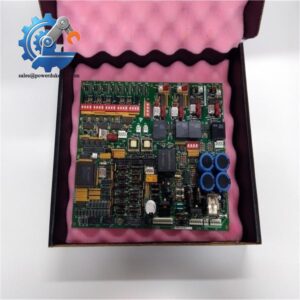
- Full Model Number: IC670GBI002
- System/Series Family: GE Field Control / Genius I/O
- Core Function: Genius Bus Interface Unit connecting Field Control I/O modules to a host PLC or computer
- Bus Protocol: Genius Bus
- I/O Capacity: Up to 8 Field Control I/O modules
- Data Exchange: Up to 128 bytes input + 128 bytes output per Genius bus scan
- Nominal Supply: 24 VDC
- Supply Range: 18–30 VDC
- Typical Power: Approx. 16.8 W
- Module Output Supply: Approx. 1.4 A available to connected modules
- Redundancy: Supports redundant CPU/Bus Controller architectures and dual Genius bus configurations
- Configuration: Hand-held Monitor / Genius configuration tools
- Terminal Interface: Dedicated BIU terminal block
- Stock Status: New Surplus / Fully Tested Refurbished — verify revision, terminal block, and field-station configuration
GE’s Field Control documentation identifies IC670GBI002 as the Genius Bus Interface Unit that connects Field Control I/O modules to a host PLC or computer over the Genius Bus. The BIU can exchange up to 128 bytes of input data and 128 bytes of output data per bus scan, perform diagnostics, and support redundant or dual-bus architectures.
Module 3: Commercial-Technical Deep Dive
A Field Control station can have healthy individual I/O modules and still disappear from the PLC when the Genius Bus Interface Unit fails. The GE IC670GBI002 is the communications and station-management layer between the host PLC or computer and the Field Control I/O modules. GE documentation identifies support for up to eight Field Control I/O modules, with as much as 128 bytes of input and 128 bytes of output data exchanged during each Genius bus scan. The BIU also performs diagnostic checks on itself and its attached I/O modules and can relay fault information to the host.
The practical ROI comes from restoring an established distributed-I/O station without disturbing the field wiring attached to the individual I/O modules. The IC670GBI002 is mounted on a dedicated BIU terminal block, which stores station configuration parameters and provides power and single- or dual-bus communication connections. GE documentation specifically notes that the BIU can be removed and replaced without removing the station’s field wiring or reconfiguring the I/O station. —That does not eliminate commissioning checks: the replacement must retain the correct Genius bus address and station configuration, and its firmware revision must support the attached modules.
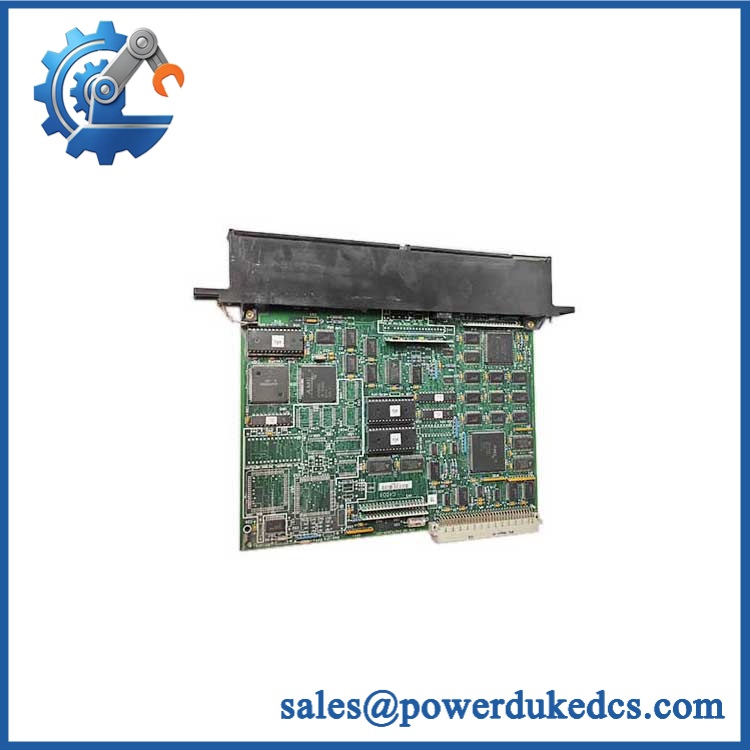
GE IC670GBI002
Module 4: Compatibility & Installation Traps
Migration/Compatibility
For an existing GE Field Control installation specified for IC670GBI002, the preferred strategy is a like-for-like Genius Bus Interface Unit replacement. GE identifies this unit as the Field Control BIU for connecting the station’s I/O modules to a Genius bus.
A PLC logic rewrite is not normally required. The BIU stores station configuration parameters in its associated terminal block, so replacing the BIU does not inherently require rewiring or rebuilding the I/O station. The important checks are the Genius bus address, attached module compatibility, power configuration, terminal block, and firmware revision.
⚠️ Field Traps (Watch Out)
- BIU versus terminal block: IC670GBI002 is the electronics/interface unit. It mounts onto the BIU terminal block, which provides field power and Genius communication connections and stores configuration parameters. Do not confuse the BIU with its terminal hardware.
- 24 VDC supply: The low-voltage version uses 24 VDC, with an operating range of 18–30 VDC. The related high-voltage IC670GBI102 is a different hardware variant. Verify the exact part number before energization.
- Genius address and station configuration: The BIU acts as the Genius network node for the entire Field Control station. A wrong node address or configuration can make every downstream I/O module appear unavailable even when those modules are healthy.
- Module compatibility: The BIU’s firmware must support the attached Field Control I/O modules. GE documentation specifies, for example, that certain Micro Field Processor applications require BIU revision 2.0 or later.
- Dual-bus configuration: The BIU terminal block contains bus-switching circuitry for dual or redundant Genius bus applications. Verify both communication paths before declaring the replacement operational.
Module 5: Quality Assurance SOP
- OEM anti-counterfeit visual inspection — verify GE/GE Fanuc markings, complete identifier, LED layout, connector arrangement, labels, and evidence of unauthorized modification.
- Part-number reconciliation — photograph the full catalog number, revision marking, serial information, and all secondary identifiers.
- Mechanical inspection — examine the BIU housing, terminal-block interface, mounting hardware, communication connectors, LED panel, and PCB surfaces for cracks, corrosion, contamination, or rework.
- Terminal-block compatibility verification — confirm the unit is paired with the correct Field Control BIU terminal block before testing.
- Power-on self-test (POST) — apply controlled 18–30 VDC power and verify normal startup, status LEDs, diagnostics, and module-power behavior.
- Genius Bus handshake verification — connect the BIU to a representative Genius controller/test network and verify node recognition.
- Station-address verification — confirm the configured Genius bus address against the customer’s approved station configuration.
- I/O module recognition test — connect representative Field Control I/O modules and verify correct identification and data exchange.
- Input/output data transfer test — verify representative process data in both directions and confirm the documented 128-byte input/output exchange capability where the test system supports it.
- Diagnostic verification — generate controlled module or communication faults and confirm that the BIU reports the appropriate diagnostic condition.
- Redundancy test — where applicable, verify dual-bus or redundant-controller behavior using the approved Field Control architecture.
- Configuration retention check — verify that the associated terminal block retains the intended station configuration after BIU replacement and power cycling.
- Stability observation — operate the complete station under representative data traffic and monitor for bus errors, dropped modules, resets, or communication instability.
- Final QC release — retain identification photographs, firmware/revision records, bus-address information, I/O recognition results, communication logs, and packaging inspection documentation.
For a Genius BIU, a successful power-up proves very little. The meaningful acceptance test is complete station communication with the expected I/O modules and correct Genius diagnostics.
Module 6: CRO-Driven Buyer FAQ
1. What is GE ?
It is a GE Fanuc Field Control Genius Bus Interface Unit. It connects the Field Control I/O station to a host PLC or computer through the Genius Bus and exchanges up to 128 bytes of input and 128 bytes of output data per bus scan.
2. How many I/O modules can support?
The Field Control architecture supports up to eight I/O modules attached to the BIU station. Individual I/O terminal blocks accommodate the field modules, while the BIU provides the station-level Genius communication interface.
3. Is a 24 VDC unit?
Yes. The is the low-voltage Field Control BIU version, specified for 24 VDC nominal operation with an 18–30 VDC supply range. The related IC670GBI102 is a different high-voltage variant.
4. Can be replaced without rewiring the Field Control station?
Yes, when the existing installation uses the corresponding BIU terminal block. GE documentation states that the BIU can be removed and replaced without removing the station’s field wiring or reconfiguring the I/O station, because the terminal block retains the station configuration.
5. Does require Genius Bus configuration?
Yes. The BIU is the Genius network node for the entire Field Control station, so its network address and station configuration must match the host PLC configuration. Configuration is performed using the applicable Genius configuration tools or Hand-held Monitor.
6. Can be hot-swapped?
GE’s documentation states that the BIU can be removed and replaced without disturbing the field wiring, but this should not be interpreted as unrestricted energized hot-swapping. Follow the specific Field Control maintenance procedure and site isolation requirements before disconnecting the BIU from its terminal block.
7. What warranty and technical support should I expect?
The quotation should clearly state whether the BIU is new surplus, unused, or tested refurbished and specify the warranty period. Technical support should cover exact-part verification, BIU/terminal-block compatibility, Genius address configuration, I/O recognition, firmware/revision checks, and documented communication-test results. PLC configuration changes, Genius network redesign, and field commssioning should remain separate engineering activities.



 Start Chat