

Description
- Model & Brand: GE IC695ALG616, PACSystems RX3i non-isolated analog input module. The part is configured for 16 single-ended inputs or 8 differential inputs.
- Physical Dimensions: Approximately 34 × 145 × 140 mm (W × H × D). Use the actual unit and cabinet drawing for final mechanical clearance calculations.
- Estimated Shipping Weight: Approximately 0.34 kg / 0.75 lb for the module according to one current distributor specification. Some market listings give higher shipping figures, so use the packed gross weight rather than the bare-module estimate for freight documents.
- What’s in the Box: Normally the IC695ALG616 module. The applicable terminal assembly should be verified against the actual RX3i installation; do not assume a terminal block or field wiring harness is included unless it appears on the quotation or packing list.
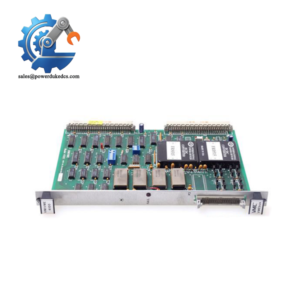
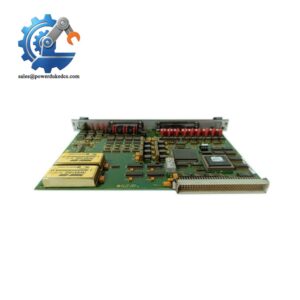
- Physical Design: Single-slot RX3i module with a front terminal interface, status indication, retaining hardware, and backplane connector. Keep the original ESD packaging with the asset record where available.
Product Introduction
A PACSystems RX3i installation places the IC695ALG616 directly on an RX3i universal backplane, where it acquires analog voltage or current signals for the control application. This is an I/O module rather than a CPU or communications processor, so cabinet compatibility starts with the backplane and CPU firmware requirements. GE migration documentation specifies an RX3i CPU firmware version of 3.0 or later for this module.
The signal architecture is unusually flexible for a non-isolated input card: sixteen single-ended channels can be used, or eight differential channels, with configurable voltage and current ranges. Resolution is provided through a 24-bit ADC, while configurable digital filtering includes 8, 12, 16, 40, 200, and 500 Hz selections. The current/voltage input circuitry remains non-isolated, which should be considered when evaluating field grounding and common-mode conditions.
Core Technical Specifications
| Parameter | Value |
|---|---|
| Manufacturer | GE / GE Intelligent Platforms |
| Product Family | PACSystems RX3i |
| Exact Part Number | IC695ALG616 |
| Module Type | Non-isolated analog input module |
| Input Configuration | 16 single-ended or 8 differential |
| Current Input Ranges | 0–20 mA, 4–20 mA, ±20 mA |
| Voltage Input Ranges | ±10 V, 0–10 V, ±5 V, 0–5 V, 1–5 V |
| Additional Low-Level Voltage Ranges | ±50 mV, ±150 mV |
| ADC Resolution | 24-bit |
| Data Format | IEEE 32-bit floating point or 16-bit integer within a 32-bit field |
| Digital Filter Options | 8, 12, 16, 40, 200, 500 Hz |
| Input Impedance — Voltage | >100 kΩ |
| Input Impedance — Current | Approximately 249 Ω ±1% |
| Overvoltage Protection | ±60 VDC continuous |
| Overcurrent Protection | ±28 mA continuous |
| Field-to-Backplane Isolation | 1500 VAC for 1 minute |
| Backplane Supply | 5.0 VDC and 3.3 VDC |
| Published Backplane Demand | Up to 450 mA at 5 V; up to 600 mA at 3.3 V |
| Maximum Module Power Figure | Approximately 6.48 W in published specifications |
| Operating Temperature | Commonly specified around 0°C to 60°C; exact revision documentation should control |
| Storage Temperature | -40°C to +85°C |
| Dimensions | Approx. 34 × 145 × 140 mm |
| Approx. Module Weight | 0.34 kg |
| Installation | One slot on RX3i universal backplane |
| CPU Requirement | RX3i CPU firmware 3.0 or later |
| Configuration Software | PACSystems / Machine Edition environment, version requirements depend on hardware revision |
The power figures deserve particular attention. A published equipment listing reports 450 mA maximum at 5.0 V and 600 mA maximum at 3.3 V, while the migration documentation gives the same electrical requirements. Those values should be included when calculating backplane loading and cabinet thermal conditions rather than treating the card as a negligible heat source.
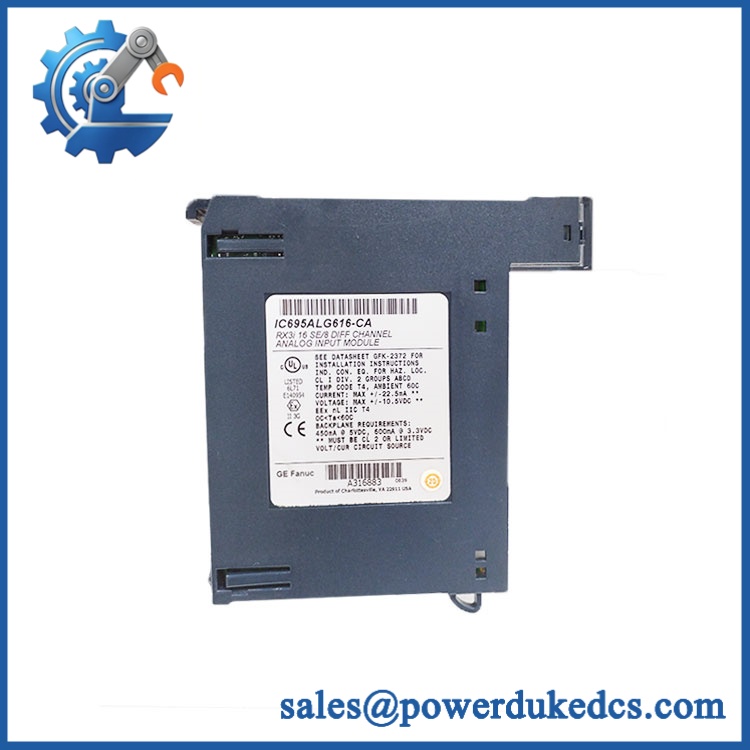
GE IC695ALG616
🚨 Global Compliance & Industry Certifications
For compliance-controlled inventory, the exact hardware revision and certification record should be retained with the asset. The IC695ALG616 family has documented hazardous-location and international certification coverage, but the approval must be matched to the actual catalog/revision and installation conditions.
- CE: Certification documentation covers IC695ALG616 as an RX3i I/O device.
- UL / cUL: The product family is covered by North American safety approvals.
- UL HAZ: The certification documentation specifically lists among covered I/O modules.
- ATEX: An Emerson-issued ATEX certificate identifies among the covered RX3i devices. The certificate describes these as open-type programmable-controller I/O equipment intended for installation in an end-user-supplied enclosure.
- IECEx: Do not claim IECEx approval unless the exact unit and applicable certificate establish it.
- Marine approvals: Some distributor records associate the RX3i family with marine approvals such as ABS, BV, DNV, GL, KRS, and LR. These should be treated as configuration-specific until the relevant certificate has been checked.
The ATEX documentation is particularly relevant for hazardous-area audits because it defines the equipment scope, temperature limitations, and enclosure requirements. It does not mean that any arbitrary cabinet installation containing an automatically qualifies for hazardous-area service.
Verify specific lot certifications with OEM.
🚨 Long-Term Storage & Asset Preservation Guide
Leave the module inside its original ESD shielding bag during inactive storage. The front terminal area and backplane connector are the interfaces most likely to suffer contamination or handling damage; unnecessary unpacking provides no preservation benefit.
Control humidity, temperature cycling, and condensation. The published storage range reaches -40°C to +85°C, but moving a cold module directly into a warm, humid cabinet can produce condensation on the PCB and connector surfaces. Allow the packaged module to reach ambient temperature before opening the ESD bag.
Track the hardware revision separately from the catalog family. This matters for because later hardware revisions are tied to different firmware requirements. GE documentation records an important revision boundary: firmware 2.00 and later requires -FB or later hardware, while earlier hardware cannot be field-upgraded to that firmware revision.
For warehouse preservation, record the carton condition, ESD-bag condition, visible catalog number, revision, serial/date information where available, and inspection date. Do not routinely open sealed factory packaging simply to perform cosmetic inspections.
Physical Installation Prerequisites
The must be installed in an RX3i universal backplane. GE’s migration documentation explicitly states that the module requires an RX3i CPU with firmware 3.0 or later and suitable Machine Edition configuration software.
Before cabinet installation:
- Confirm that the receiving rack is an approved RX3i universal backplane and that one I/O slot is available.
- Check the terminal assembly and field wiring against the exact application drawing before inserting the replacement card.
- Keep the front terminal area accessible for service and diagnostic work.
- Provide sufficient space around the rack for cabinet airflow and wiring bend radius. Do not apply a generic 50 mm clearance rule unless the approved enclosure drawing calls for it.
- Bond the cabinet and grounding system according to the control-panel electrical standard.
- Use a grounded ESD workstation or wrist strap when handling an unpackaged module.
- Verify that the backplane power budget can accommodate the module’s published 5 V / 3.3 V current requirements before adding it to an existing rack.
One important point for commissioning: the input stage is described as non-isolated. Field grounding, shield termination, and common-mode voltage therefore require engineering review rather than being left to wiring convenience.
Buyer’s FAQ
Q1. What HS tariff code should be used for the ?
A supplier or customs broker may classify this type of programmable-controller I/O hardware under HS heading 8538, commonly covering parts suitable for electrical control or distribution equipment. The exact six-, eight-, or ten-digit tariff code depends on the importing country and customs interpretation.
Use the broker-validated classification on the commercial invoice. Do not treat a supplier’s historical tariff code as a binding customs ruling.
Q2. What should I use as the Country of Origin?
Do not determine COO from the current seller’s warehouse location. The manufacturing origin should be supported by the physical nameplate, manufacturer documentation, supplier COO declaration, or other traceable commercial evidence.
For an audit-controlled shipment, the part number, COO, quantity, unit value, and package records should agree across the purchase order, commercial invoice, packing list, and origin documentation.
Q3. Does the module include the latest firmware?
That depends on the exact hardware revision. The has multiple hardware revisions, including AA, BA, CA, DA, EA, FB, and later revisions in current market records.
GE documentation identifies a significant firmware compatibility boundary: firmware 2.00 and later requires -FB or later hardware, while earlier versions cannot be field-upgraded to that firmware revision. Therefore, procurement should specify the required hardware revision when firmware compatibility matters.
Q4. Is the suitable for hot insertion?
Published technical listings describe the module as supporting insertion and removal under power, but that capability should not be interpreted as permission for unrestricted live work in every plant.
Follow the site’s energized-work rules, rack configuration requirements, hazardous-area procedures, and approved GE installation documentation. In a safety-critical cabinet, isolate power unless the specific operating procedure expressly authorizes live replacement.
Lifecycle & Asset-Control Note
The is an established RX3i legacy-generation analog input platform, while current market inventory still includes new, new-surplus, and refurbished units. One current distributor lists multiple revisions and active inventory categories, illustrating why the exact suffix should be captured in the ERP record rather than purchasing against the family number alone.
For long-term plant support, maintain at least one revision-matched spare where loss of analog measurement can create a production or safety consequence. Before substituting a later revision, validate firmware, configuration-software requirements, calibration behavior, terminal hardware, and application accuracy against the installed system.



 Start Chat