

Description
- Brand: GE General Electric
- Full Model Number: IS200DTAIH1ACC
- Lifecycle Status: Legacy / Mark VI installed-base component
- Core Function: Simplex Analog I/O Terminal Board
- Top 3 Technical Specs: 10 analog inputs; 2 analog outputs; 37-pin JR1 interface
- Series: GE Mark VI Speedtronic
- Terminal Block: 48 screw terminals
- Input Type: Configurable analog field inputs
- Output Type: 0–20 mA analog outputs; jumper-configurable output arrangement
- Configuration Hardware: 21 jumpers
- Mounting: DIN rail with plastic holder
- Architecture: Simplex
- Associated Processor: VAIC analog I/O processor
- Stock & Condition: Exact stock confirmation required; New Surplus / Tested Refurbished; Emergency shipping subject to cutoff
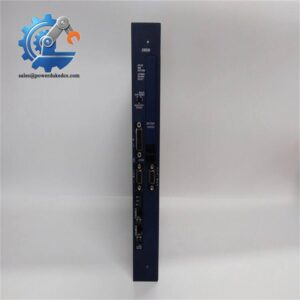
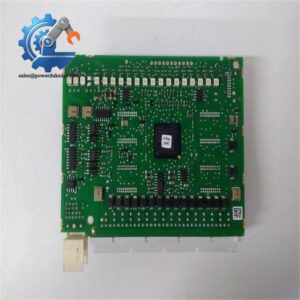
The IS200DTAIH1ACC is identified as a GE Mark VI DTAI Simplex Analog I/O Terminal Board. Available technical references describe 10 analog input channels and 2 analog output channels, a 37-pin JR1 connector, a permanent 48-terminal TB1 connection block, and jumper-based signal configuration.
Module 3: Obsolescence & Supply Chain Deep Dive
A failed IS200DTAIH1ACC can interrupt a large group of field instrumentation points without requiring replacement of the Mark VI controller itself. This terminal board provides the physical termination and signal interface for analog field devices, with published references identifying 10 configurable analog inputs and 2 analog outputs. In the Mark VI architecture, DTAI boards interface with the VAIC analog I/O processor, so a damaged termination board can affect pressure, flow, temperature, level, and other instrumentation routed through the affected I/O chain.
From a TCO perspective, an exact DTAI replacement preserves the installed VAIC processor, field wiring, cabinet arrangement, and existing control application. A complete control-system migration would introduce engineering, rewiring, loop-checking, testing, and outage costs that are difficult to justify when the failure is isolated to the terminal interface. The main procurement constraint is configuration matching: this is a simplex DTAI board, and its jumper settings, terminal assignment, and connected processor must match the original installation. (Public references are inconsistent about some detailed electrical ratings, so the installed GE drawings should control final approval.)
Module 4: Compatibility & Replacement Matrix
| Approval Item | Engineering Assessment |
|---|---|
| Exact Part Replacement | Drop-in Replacement for a matching Mark VI DTAI installation |
| Software Compatibility | Configuration-dependent; verify VAIC assignment and existing I/O configuration |
| Firmware Flash | Not normally required for the passive terminal board itself |
| Hardware Modification | Normally none for an exact board replacement |
| Architecture | Simplex |
| Analog Inputs | 10 |
| Analog Outputs | 2 |
| Field Termination | 48 screw terminals |
| Processor Interface | 37-pin JR1 |
| Jumper Configuration | 21 jumpers |
| Mounting | DIN rail |
| Estimated Physical Swap | 1–3 hours |
| Engineering / Commissioning Allowance | 250–1,250 planning range |
| Post-Replacement Testing | Required for every connected loop |
The DTAI board is a termination/interface component rather than the VAIC processor itself. Two DTAI boards can be used with a VAIC in configurations providing up to 20 analog inputs and 4 analog outputs, according to current technical references.
⚠️ Field Traps — Watch Out
- Jumper Configuration: The board contains jumper settings used to configure signal paths and output behavior. Photograph every jumper position before removal and reproduce the original configuration on the replacement.
- Simplex Architecture: Do not substitute a TMR-oriented terminal board merely because its connectors appear similar. The DTAI is documented as a Simplex Analog I/O Terminal Board and should be matched to the installed Mark VI architecture.
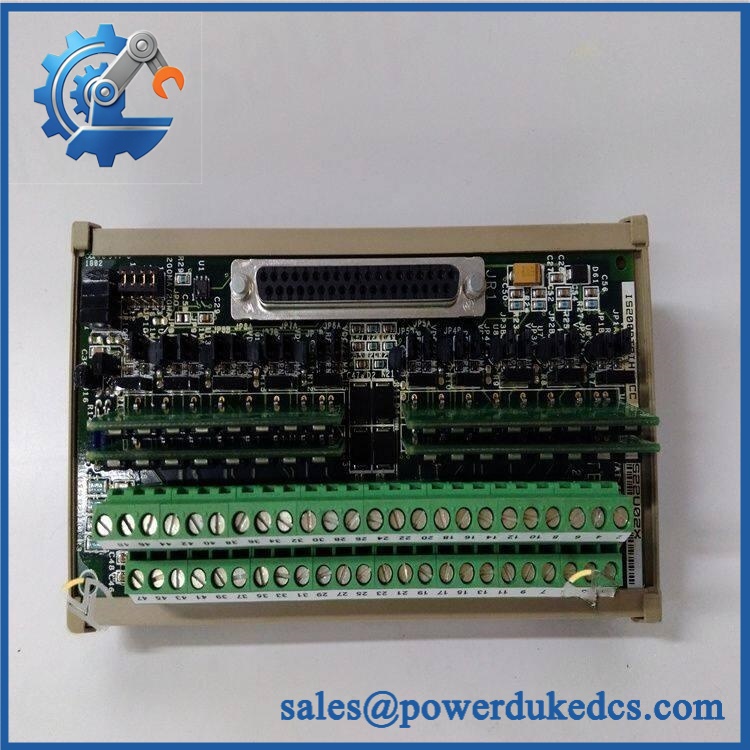
GE IS200DTAIH1ACC
Module 5: Quality Assurance & Testing SOP
- OEM anti-counterfeit visual inspection — verify GE markings, complete IS200DTAIH1ACC identification, board layout, terminal blocks, JR1 connector, labels, and traceability.
- Part-number and revision audit — record the complete board number and visible ACC revision marking.
- Jumper-state documentation — photograph and record all 21 jumper positions before testing or configuration changes.
- Mechanical inspection — examine DIN-rail mounting hardware, terminal blocks, connector housings, PCB edges, and mounting points for damage or deformation.
- PCB condition inspection — check for corrosion, contamination, overheated components, cracked solder joints, damaged traces, and unauthorized modifications.
- Electrical pre-screening — verify continuity, grounding, isolation, and signal-path resistance before energization.
- Power-on self-test (POST) — install the board with the appropriate Mark VI analog I/O processor and verify expected system initialization.
- Analog-input simulation — apply calibrated representative voltage and current signals to the required input channels and verify correct acquisition at the associated I/O processor.
- Channel-scaling verification — test low-, mid-, and high-range values on each active analog input and confirm correct engineering-unit scaling.
- Analog-output testing — exercise both analog outputs and verify commanded current response across representative values.
- Jumper-function verification — confirm output and input behavior matches the recorded original jumper configuration.
- Field-loop continuity test — verify each required terminal path from the TB1 screw terminal through the board interface to the processor connection.
- Noise and stability test — monitor representative analog channels for drift, intermittent connections, cross-channel coupling, or unstable readings.
- Fault simulation — where supported by the application, simulate open-loop and short-loop conditions and verify the expected diagnostic response.
- Extended energized run — monitor analog values, terminal temperature, connector stability, and intermittent faults.
- Final QC release — photograph the full identification and jumper arrangement, retain channel test data, package for ESD and mechanical protection, and preserve traceability.
The documented physical configuration includes the 48-terminal TB1, 37-pin JR1 connector, and jumper network. Those items should be checked individually because a board can power up correctly while still having an incorrect field-interface configuration.
Module 6: Procurement & Lifecycle FAQ
Q1. Is GE IS200DTAIH1ACC genuinely in stock, and what is the cutoff for emergency shipping?
Exact availability should be confirmed against IS200DTAIH1ACC, quantity, condition, and destination before PO release. Current industrial listings show stock claims for this exact part, including short stated delivery windows, but emergency fulfillment should be based on confirmed physical inventory and the daily dispatch cutoff.
Q2. How do you verify the condition and authenticity of an obsolete ?
Require complete part-number verification, OEM marking inspection, PCB and connector examination, terminal inspection, jumper documentation, electrical continuity checks, analog-input simulation, analog-output testing, and verification through the associated VAIC interface. The board should remain traceable to its QC record.
Q3. Are there firmware compatibility issues engineers should check before issuing the PO?
The main concern is I/O configuration, not firmware on the terminal board itself. Engineers should confirm the connected VAIC processor, board jumper positions, field-terminal assignments, analog input/output ranges, and the Mark VI application configuration before commissioning.
Q4. Can another DTAI board replace ?
Not automatically. The exact DTAI revision, jumper arrangement, terminal assignment, processor interface, and simplex architecture should be matched. Similar-looking boards may belong to different Mark VI I/O configurations.
Q5. What warranty and return terms should procurement require?
Require a written warranty period, DOA criteria, return-authorization procedure, serial/part-number traceability, and exclusions for incorrect jumper settings, field wiring errors, electrical overstress, or unauthorized modification. The quotation should explicitly identify and the supplied condition.



 Start Chat