

Description
- Model & Brand: IS200EDISG1AAA | GE General Electric
- Series: Mark VI / EX2100 Excitation Control
- Part Type: Exciter Power Distribution Board
- Functional Acronym: EDIS
- Physical Dimensions: Approx. 11.0 × 7.0 in (279 × 178 mm) for the board assembly; verify actual revision before freight planning
- Estimated Net Weight: Approx. 0.5–0.8 kg, depending on installed hardware
- Estimated Shipping Weight: Approx. 1.0–1.5 kg with ESD packaging and rigid carton
- What’s in the Box: IS200EDISG1AAA PCB; ESD shielding bag; protective packaging; mounting hardware only when expressly included
- Primary Application: EX2100 generator excitation system
- Power Architecture: Distribution of 125 VDC source power to designated excitation/control loads
- Mounting: Internal cabinet/control-system PCB assembly
- Hardware Identification: IS200 / EDIS / G1 / AAA revision structure
GE and specialist technical records identify IS200EDISG1AAA as an EX2100 Exciter Power Distribution Board / Power Distribution Module used within the Mark VI excitation architecture.
Product Introduction
The EDIS board is positioned in the excitation system’s power-distribution chain, where an incorrect replacement can affect several downstream assemblies at once. GE IS200EDISG1AAA is an Exciter Power Distribution Board associated with the EX2100 generator excitation system. Its function is to receive and distribute electrical power to designated excitation-system hardware rather than perform the control algorithm itself. Specialist records identify a 125 VDC power supply for this board configuration.
The board belongs to the legacy IS200 Mark VI hardware family and carries the EDIS functional designation. GE excitation-system documentation distinguishes older Mark VI hardware from newer Mark VIe/EX2100e architectures, so the complete board number must be checked before approving a substitution.A direct replacement should preserve the existing excitation cabinet’s power-routing arrangement, connector assignments, and protection scheme (this is a power-distribution component, not simply a generic DC terminal board).
Core Technical Specifications
| Parameter | Value |
|---|---|
| Manufacturer | GE General Electric |
| Part Number | IS200EDISG1AAA |
| Series | Mark VI IS200 |
| Functional Acronym | EDIS |
| Product Type | Exciter Power Distribution Board |
| System | GE EX2100 Excitation Control |
| Primary Application | Generator excitation power distribution |
| Nominal Input Supply | 125 VDC |
| Functional Role | Power distribution to excitation-system assemblies |
| PCB Family | IS200 |
| Functional Revision | G1 |
| Hardware/Artwork Identification | AAA |
| Board Construction | Industrial PCB assembly |
| Processor | None as a standalone power-distribution board |
| Application Firmware | None as a standalone function |
| Mounting | Internal excitation/control cabinet |
| Communication Function | No primary communication function |
| Lifecycle | Legacy / obsolete Mark VI spare |
| Storage Temperature | Supplier records report approximately -40 to +70 °C |
| Redundancy | Dependent on the complete EX2100 system architecture |
One specialist record identifies 125 VDC as the power supply and describes IS200EDISG1AAA as a Mark VI/ power-distribution board.Public listings are inconsistent regarding exact mechanical dimensions, so the actual board should control final packing and cabinet-fit measurements.
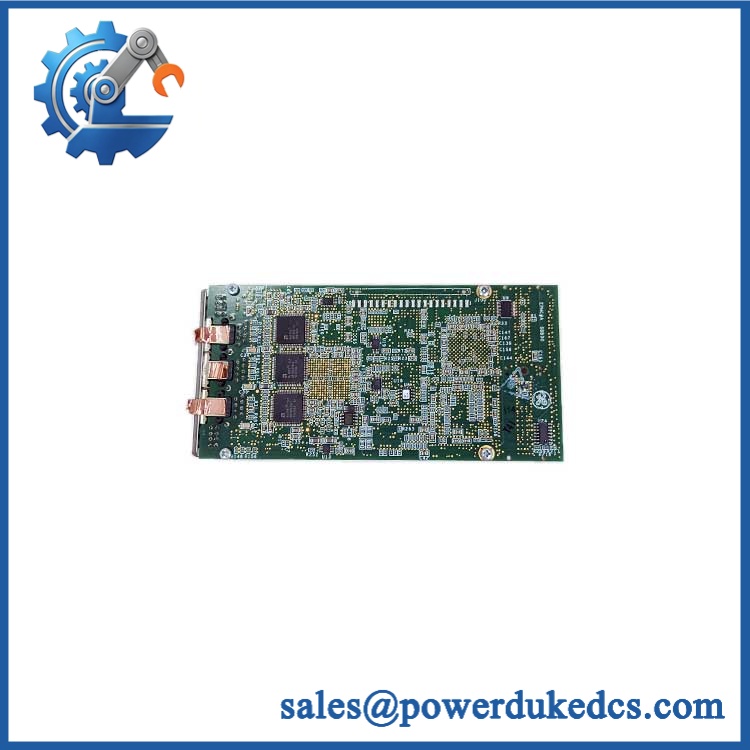
GE IS200EDISG1AAA
🚨 Global Compliance & Industry Certifications
The is an internal excitation-system component. Compliance claims should therefore be tied to the complete installation and the actual board revision.
- CE Mark: No standalone CE declaration specific to was established from the reviewed records.
- UL/cUL: No exact-board UL/cUL listing was independently established.
- ATEX/IECEx: No standalone ATEX or IECEx certificate specific to was established.
- Marine Approvals: No -specific DNV, ABS, or Lloyd’s Register certificate was established.
- System-Level Compliance: The complete cabinet, excitation assembly, enclosure, wiring, and installation conditions determine applicable certification.
- EMC: Correct grounding, cable routing, shielding, and cabinet installation remain important because the board participates in a high-energy excitation system.
- Hazardous Locations: Do not infer hazardous-area approval from the Mark VI product family alone.
This distinction matters during audits because a component can belong to a certified control system without carrying an independent hazardous-area certificate of its own.
Verify specific lot certifications with OEM.
🚨 Long-Term Storage & Asset Preservation Guide
Keep inside an ESD shielding bag. The PCB includes semiconductor devices, capacitors, connectors, and power-distribution circuitry. Bare-board storage exposes the connector surfaces to dust, moisture, and accidental electrostatic discharge.
Control humidity aggressively. A practical warehouse target is below 60% RH, with no condensation cycles. Keep the board away from corrosive atmospheres, chemical vapors, and areas subject to large temperature swings.
Protect all power and signal connectors mechanically. Do not place the board face-down on conductive shelving or allow heavy parts to rest on the PCB. Connector deformation can produce intermittent excitation-system faults that are difficult to reproduce during commissioning.
Record the complete revision before storage. Photograph the label, board artwork, connector arrangement, mounting holes, and visible component condition. Retain the photographs with the warehouse asset record.
Do not invent a capacitor-reforming schedule. A board-specific reforming interval was not established in the reviewed documentation. Before deployment, use a controlled electrical inspection and approved bench test instead.
Physical Installation Prerequisites
The is an internal excitation-control PCB, not a DIN-rail power supply.
Before installation:
- Confirm the host system is the correct excitation architecture.
- Verify the complete part number and revision markings.
- Isolate the excitation system and verify absence of hazardous DC voltage before touching the board.
- Discharge and verify the relevant DC bus according to the site procedure.
- Photograph all connectors and cable positions before removing the existing board.
- Inspect mating connectors for bent, recessed, oxidized, or contaminated contacts.
- Confirm the 125 VDC supply requirement against the installed system documentation before energization.
- Verify polarity before applying DC power.
- Preserve the original grounding and bonding arrangement.
- Use the original mounting hardware and standoffs; do not stress the PCB while securing it.
- Maintain adequate cabinet airflow around heat-generating excitation components.
- Do not impose an arbitrary 50 mm clearance around the PCB; follow the cabinet layout and manufacturer’s ventilation requirements.
- Keep power conductors separated from sensitive signal wiring where the cabinet design permits.
- Perform polarity, continuity, and insulation checks before restoring power.
Buyer’s FAQ
Q1. What HS tariff code should be used for GE ?
A: The final classification depends on the importing country’s tariff schedule and the customs description. Because this is a dedicated printed-circuit power-distribution component, HS heading 8538 may be considered when classified as a part of electrical control equipment. The importer or customs broker should confirm the final country-specific code before export documentation is issued.
Q2. Does Country of Origin mean the country where the supplier currently stores the board?
A: No. COO is determined under the applicable origin rules for the physical product, not the warehouse location. For compliance records, retain the actual board identification, manufacturer or supplier origin declaration, commercial invoice, and Certificate of Origin when required.
Q3. How should I package and insure for international freight?
A: Use an ESD shielding bag, protect all PCB edges and connectors, immobilize the board inside a rigid carton, and add moisture-resistant protection suitable for the route. Because published weights vary, use the actual packed weight and dimensions for freight booking. For an excitation-system spare, insurance should cover the declared replacement value and documented transit risks.
Q4. Does contain the latest firmware pre-loaded?
A: No firmware should be expected on this board as a standalone function. is a power-distribution board, not a controller. The relevant system software and control processing reside in other /Mark VI assemblies.
A: No. This board is connected to the excitation power-distribution system and must be treated as energized high-voltage DC equipment. Follow the approved shutdown and isolation procedure, verify the DC bus is de-energized, document the existing connections, install the replacement under ESD controls, and complete polarity and electrical checks before restoring excitation power.


 Start Chat