

Description
- Model & Brand: GE General Electric IS220PDIAH1BE
- Associated Part Number: 336A5026ADP4
- Product Type: PDIA Discrete Input I/O Pack
- Control Platform: GE Mark VIe / Speedtronic turbine-control architecture
- Physical Dimensions: Approximately 83 × 42 × 121 mm (W × H × D); verify the actual housing revision before cabinet or shipping documentation is finalized.
- Estimated Shipping Weight: Approximately 0.5 kg for logistics planning; use the actual packed weight for the commercial invoice and freight booking.
- What’s in the Box: IS220PDIAH1BE I/O pack, ESD shielding bag, protective connector covering, cushioning, shipping carton, and available inspection/test documentation.
- Front Hardware: Status LEDs and Ethernet communication interfaces are provided on the faceplate (retain the connector caps and protective hardware during storage).
Product Introduction
Turbine control cabinets combine heat, vibration, electrical transients, and dense field wiring in a relatively small enclosure. The GE IS220PDIAH1BE is built for that environment as a 24-channel discrete input I/O pack, accepting contact signals and transferring processed status information through the Mark VIe I/O network. Published technical data specifies a 24 VDC nominal supply and operation from approximately -30°C to +65°C.
This is an I/O pack, not a conventional standalone PLC input card. Its compatibility depends on the complete terminal-board and I/O-network architecture, including the specific IS200STCIH and TBCIH families identified for the PDIA application. The module also provides contact-wetting capability on designated channels, while dual Ethernet interfaces support IONet communications (the exact system topology must be checked before replacement).
Core Technical Specifications
| Parameter | Value |
|---|---|
| Manufacturer | GE General Electric |
| Model | IS220PDIAH1BE |
| Part Number | 336A5026ADP4 |
| Product Type | Discrete Input I/O Pack |
| Platform | Mark VIe / Speedtronic |
| Discrete Input Channels | Up to 24 |
| Nominal Supply Voltage | 24 VDC |
| Maximum Module Supply | 28.6 VDC |
| Maximum Contact Input Voltage | 32 VDC |
| Contact-Wetting Output | 31 VDC, up to 110 mA DC on specified channels |
| Operating Temperature | -30°C to +65°C |
| Communication | Dual 10/100 Ethernet / IONet |
| Front Indicators | Seven status indicators reported |
| Soft-Start Circuit | Yes |
| Hazardous-Area Classification | Class I, Division 2; ATEX Zone 2 reported |
| Compatible Terminal Boards | Includes IS200STCIH1A, IS200TBCIH2C, IS200TBCIH4C and related variants |
| Physical Size | Approx. 83 × 42 × 121 mm |
| Estimated Unit Weight | Approx. 0.5 kg |
| Heat Dissipation | Provide unobstructed cabinet airflow; exact thermal loss should be taken from controlled GE installation data |
The 32 VDC maximum contact-input rating is a critical field-wiring limit. Transient suppression may be necessary where long field runs share an environment with VFDs, contactors, or other inductive loads.
Do not infer memory limits from this product number. The PDIA is principally a distributed I/O pack rather than a general-purpose processor, so firmware/storage details are revision- and architecture-dependent; record the installed firmware before replacement rather than treating storage capacity as a generic specification.
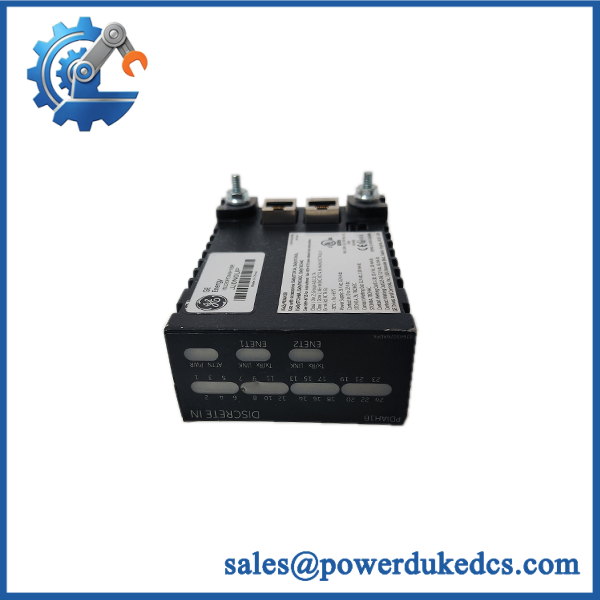
GE IS220PDIAH1BE
Global Compliance & Industry Certifications
Published technical records associate the IS220PDIAH1BE with hazardous-location use, including Class I, Division 2, Groups A/B/C/D, and ATEX Zone 2 applications. UL approval has also been reported for hazardous and non-hazardous locations.
For procurement, distinguish the certification of the original GE equipment configuration from the condition of an individual replacement unit. A refurbished or surplus module should not be represented as carrying a certification that has not been verified for the actual lot, revision, and intended installation.
CE Mark requirements may apply to the completed equipment or system placed on the applicable market. UL/cUL status is significant because it can affect acceptance within North American industrial control installations, while ATEX/IECEx evidence becomes important where the complete installation enters a hazardous-area classification. Marine projects may impose separate requirements, including DNV-type approvals, that are not automatically established by a standard industrial I/O certification.
Verify specific lot certifications with OEM.
Long-Term Storage & Asset Preservation Guide
Keep the IS220PDIAH1BE inside its original ESD shielding bag or an equivalent static-control package. Do not leave the exposed connector and PCB assembly on an ordinary warehouse shelf, especially where conductive dust or metal particles are present.
Control humidity and prevent condensation. A practical warehouse target is below 60% relative humidity, with stable temperature and no repeated cold-to-warm cycling; moisture at Ethernet and field connectors can create oxidation that is difficult to detect until the module is energized.
Record the full model, 336A5026ADP4 identification, serial number, hardware revision, and firmware revision before long-term storage. Inspect the connector surfaces periodically, and replace deteriorated ESD packaging rather than resealing a damaged bag.
For a critical turbine spare, preserve one verified terminal-board compatibility record with the module. A physically clean spare is of little value if the warehouse record cannot establish which field interface it was validated against.
Physical Installation Prerequisites
Install the PDIA pack only with the specified Mark VIe terminal-board/interface architecture. Confirm the terminal-board part number before mounting; similar-looking I/O assemblies can have materially different channel mappings and electrical interfaces.
Maintain clear cabinet airflow around the module. A practical installation allowance is at least 50 mm of unobstructed space around major airflow paths, unless the approved GE cabinet drawing specifies another clearance. Do not block the ventilation path with wire bundles or adjacent heat-producing equipment.
Verify the 24 VDC supply, polarity, protective grounding, and shield termination before energization. The maximum contact-input voltage of 32 VDC should also be respected during commissioning; transient excursions above this level require a separate field-protection assessment.
Inspect the Ethernet connectors and terminal interface before insertion. Confirm IONet addressing, redundancy/topology, terminal-board identity, and the intended control-system configuration before returning the turbine to service.
Buyer’s FAQ
Q: Which HS Tariff Code should be declared for ?
A: The classification depends on the importing country’s tariff schedule and the demonstrated function of the I/O pack. Use the final customs classification approved by your broker or trade-compliance team rather than copying an unverified supplier code.
Q: Why does Country of Origin matter for this module?
A: COO can affect duty treatment, import documentation, origin marking, and eligibility under preferential trade programs. The COO should be supported by the actual inventory lot documentation.
Q: Do I need shipping insurance?
A: For a critical turbine I/O spare, yes. Use ESD protection, connector protection, impact-resistant cushioning, and pre-shipment photographs so a freight-damage claim has a documented physical baseline.
Q: Does the module include the latest firmware pre-loaded?
A: Not necessarily. The installed firmware should be verified against the target Mark VIe configuration and terminal-board arrangement; request the actual firmware revision and configuration status as part of the purchase record rather than assuming that “latest” is compatible.


 Start Chat