

Description
- Model: IS400STAIS2AED
- Base GE Part Number: IS400STAIS2A
- Brand: GE
- Series: Mark VIeS
- Part Type: Safety Analog Simplex Terminal Board / S-Type Terminal Board
- Core Function: Provides field termination and signal routing for the Mark VIeS safety analog I/O architecture.
- Analog Inputs: 10
- Analog Outputs: 2
- Terminal Style: 4-inch S-type terminal board
- Associated I/O Pack: IS220YAICS1A and compatible Mark VIeS YAIC generations, subject to exact revision
- Board Assembly: IS400STAIS2A
- Cover Assembly: 151X1202YE04PP01BL
- Terminal Block: 48-point TB, GE part 64G6940-224L
- Architecture: Simplex
- Firmware: None; the terminal board is an interface assembly rather than a programmable processor
GE’s Mark VIeS documentation identifies IS400STAIS2A as a simplex, 10-analog-input/2-analog-output, 4-inch S-type terminal-board assembly and lists it as an accessory for the IS220YAICS1A safety analog I/O pack.
Product Introduction
The GE IS400STAIS2AED is associated with the Mark VIeS safety analog termination architecture, where the physical terminal board provides the interface between field wiring and the safety analog I/O electronics. GE system documentation identifies the underlying IS400STAIS2A board as a simplex 10 AI / 2 AO, 4-inch S-type terminal board.
This is not an analog input processor by itself. The board works with the appropriate Mark VIeS analog I/O pack, including IS220YAICS1A and later compatible YAIC configurations. GE certification documentation specifically lists IS400STAIS2A among the approved accessory terminal boards for the IS220YAICS1A.
The ED suffix should be preserved exactly during procurement. Public GE documentation consistently identifies the core board as IS400STAIS2A; the complete IS400STAIS2AED marking appears to be a board/revision or assembly-specific designation rather than a separately documented electrical architecture. Therefore, do not silently substitute an without comparing the physical label and cabinet bill of materials.
Core Technical Specifications
| Parameter | Specification |
|---|---|
| Manufacturer | GE |
| Complete Marking | IS400STAIS2AED |
| Core Board Number | |
| Product Family | Mark VIeS |
| Functional Group | Safety Analog I/O |
| Product Type | Simplex Analog Terminal Board |
| Architecture | Simplex |
| Analog Inputs | 10 |
| Analog Outputs | 2 |
| Terminal Board Form Factor | 4-inch S-type |
| Terminal Block | 48-point terminal block |
| Terminal Block Part | 64G6940-224L |
| Cover Part | 151X1202YE04PP01BL |
| Associated I/O Pack | IS220YAICS1A |
| Other Compatible YAIC Family | ISx2yYAICS1B with applicable STA IS2A accessory configuration |
| Firmware | None |
| Processor | None |
| Mounting/Application | Mark VIeS distributed safety I/O |
| Hazardous-Location Qualification | Approved combinations exist with specified Mark VIeS safety analog I/O packs; certification is combination-dependent |
| Revision Suffix | ED; exact meaning should be confirmed from the physical GE label/BOM |
The GE Mark VIeS system guide explicitly identifies the board, its 48-point terminal block, and the associated IS220YAICS1A/YAIC architecture.
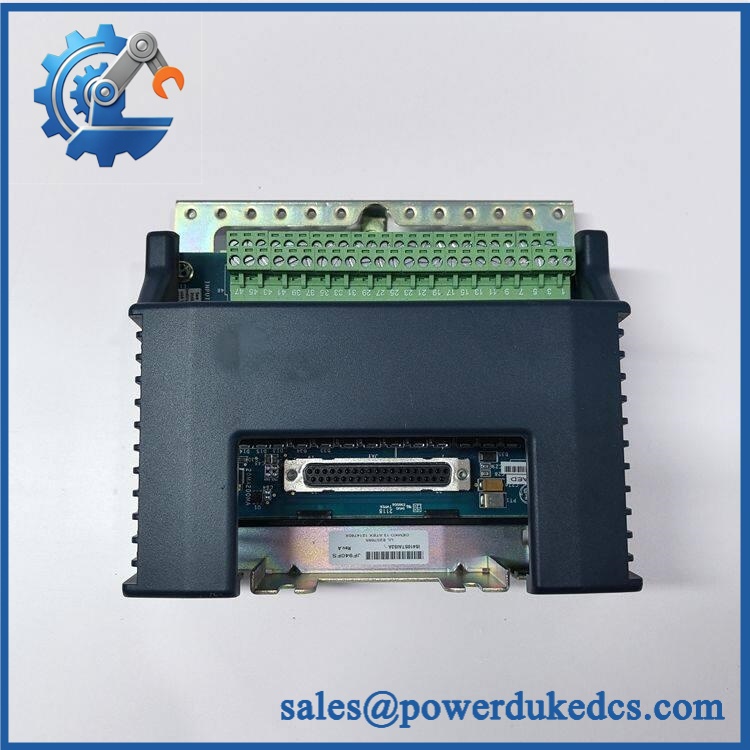
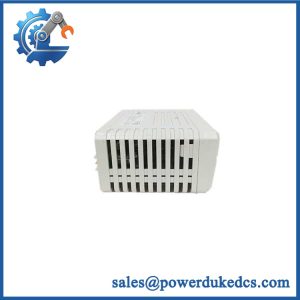
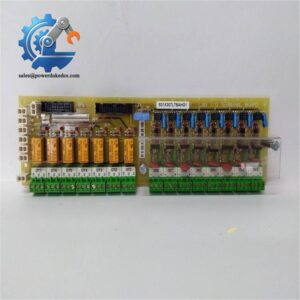
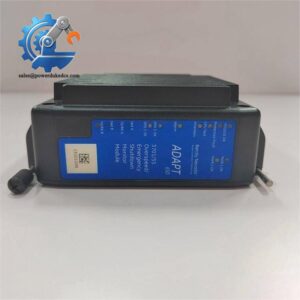
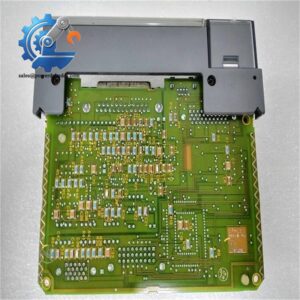
GE IS400STAIS2AED
Application Scenarios & Pain Points
Turbine Safety Analog Signals
The board is designed for analog field termination in Mark VIeS safety applications. With 10 analog inputs and 2 analog outputs, it can accommodate multiple process measurements and associated analog-control signals on a single simplex terminal assembly.
Generator and Auxiliary Equipment Monitoring
Typical safety-control installations can include pressure, level, temperature, valve-position, or other continuously varying process signals. A poor terminal connection can produce intermittent values that resemble a sensor or I/O-pack fault, so field termination should be checked before replacing the processor.
Legacy Mark VIeS Cabinet Maintenance
Sites maintaining older Mark VIeS installations often encounter multiple board-generation identifiers. The architecture remains explicitly documented as an accessory for the safety analog I/O pack, but similar-looking STAI/STAIS assemblies are not automatically interchangeable.
Hazardous and Classified Areas
GE’s published Mark VIeS documentation lists as an approved accessory for in specified classified-location configurations. The certification applies to the defined equipment combination and installation conditions—not simply to an isolated loose terminal board.
High Cabinet Temperature
For cabinets operating around 50°C or above, terminal torque, connector condition, conductor heating, and enclosure ventilation deserve specific inspection. Thermal problems at the termination layer can become intermittent long before the board exhibits an obvious physical failure.
Common Error Symptoms & Diagnostic Checks
Symptom: Several analog channels show invalid or unstable measurements
→ Diagnosis: Check the common terminal-block connections, field supply/reference wiring, connector engagement, and associated YAIC I/O pack before replacing individual transmitters.
→ Action: Replace module after confirming field wiring and the associated I/O pack are healthy.
Symptom: One analog channel is consistently open, shorted, or out of expected range
→ Diagnosis: Trace the affected loop from the field device through the 48-point terminal block and into the I/O pack. A loose terminal or damaged conductor can create the same symptom as an electronics failure.
→ Action: Replace module after confirming the sensor/transmitter and wiring.
Symptom: Analog output does not reach the commanded value
→ Diagnosis: Verify the output-loop wiring, load, field device, and the associated safety analog I/O pack. The terminal board itself contains no independent control firmware.
→ Action: Replace module after isolating the fault to the terminal assembly.
No reliable GE numeric fault-code list was identified specifically for IS400STAIS2AED, so assigning unsupported codes would be misleading.
Cross-Reference & Lifecycle Migration
The strongest documented cross-reference is , which GE lists as the underlying board used in the Mark VIeS simplex analog terminal assembly. GE’s system guide describes the complete assembly as “Simplex, 10 Analog in / 2 Analog out, 4-inch S-type TB, with cover and TB plugs.”
For the safety analog architecture, GE documents these relevant combinations:
- with IS200STAIS1A, IS400STAIS1A, IS200STAIS2A, , IS200TBAIS1C, or IS400TBAIS1C.
- Later ISx2yYAICS1B safety analog I/O packs use corresponding ISx0ySTAIS1A, ISx0ySTAIS2A, or ISx0yTBAIS1C assemblies.
This is an important distinction for migration: is an accessory/termination board, not the I/O processor itself. A replacement must match the installed YAIC generation and the actual safety-system configuration.
The public documentation reviewed does not establish a definitive OEM EOL date specifically for the IS400STAIS2AED marking. For a live Mark VIeS safety installation, maintain exact-part-number traceability and avoid treating nearby STA/STAIS variants as interchangeable solely because the connector arrangement appears similar.
Spare-stock recommendation: For a safety-critical Mark VIeS cabinet still dependent on this board, retain at least one tested spare with the complete suffix recorded. Store a photograph of the original label and terminal arrangement with the inventory record.
Field Engineer’s Tech Notes
Tech Note 1 — Treat the 48-point terminal block as part of the assembly.
GE documentation identifies the board with 64G6940-224L, a 48-point terminal block. During replacement, do not assume a bare board and a complete field-ready assembly are equivalent. Confirm what is actually being supplied.
Tech Note 2 — Verify the YAIC generation before installation.
The is specifically documented with the Mark VIeS safety analog architecture. GE separately defines accessory combinations for later ISx2yYAICS1B equipment. Verify the exact I/O-pack model and revision before treating another STAIS board as a substitute.
Strict QA & Testing SOP
Step 1 — Inbound Inspection
Verify the complete marking, core board number, revision/suffix, GE labels, serial information, terminal block, cover, mounting hardware, and connector condition.
Step 2 — Mechanical and PCB Inspection
Inspect the 48-point terminal interface, PCB surface, connector pins, mounting features, protective coating, and evidence of corrosion, contamination, cracked solder joints, or previous repair.
Step 3 — Channel-by-Channel Analog Verification
Connect the board to the correct Mark VIeS analog I/O test arrangement and use calibrated signal sources to exercise the ten analog-input paths individually. Record the applied signal and the value reported by the associated safety I/O system.
Step 4 — Analog Output Verification
Exercise both analog-output channels with the proper load configuration. Measure the resulting signal at the field-side termination and compare it with the commanded test value.
Step 5 — Wiring and Terminal Integrity Test
Perform continuity checks on each required terminal path and verify that no adjacent channels are shorted or cross-connected.
Step 6 — I/O-Pack Integration Test
Test the board with the intended YAIC I/O pack. Confirm stable communication, correct channel mapping, and expected signal scaling.
Step 7 — Extended Run Test
For critical spare inventory, operate the assembly under representative analog loads for 24 hours or longer, monitoring input stability, output behavior, connector temperature, and intermittent channel faults.
Step 8 — Final QC and Packaging
Record part number, suffix, revision, terminal-block identification, channel test data, and photographs. Apply ESD protection, protect the 48-point terminal interface against impact, and use traceable packaging.
QC Documentation: Retain the electrical test report and available test video with the spare record so the board has documented evidence of functional acceptance before deployment.
Buyer’s FAQ
Q1. What is GE ?
It is a Mark VIeS safety analog simplex terminal-board assembly, based on the GE board. The documented configuration provides 10 analog inputs and 2 analog outputs through a 4-inch S-type terminal arrangement.
Q2. Is the actual analog I/O processor?
No. It is the terminal/interface assembly. The processing function is provided by the associated Mark VIeS safety analog I/O pack, such as or the applicable later YAIC generation.
Q3. Can replace directly?
The core board is documented as , but the complete ED suffix should still be verified against the installed board, BOM, and cabinet drawing. Do not remove the suffix during procurement unless GE documentation confirms that the suffix is non-functional.
Q4. What should be confirmed before purchasing?
Confirm the , the associated YAIC I/O-pack model, terminal-block configuration, physical assembly contents, revision, and required hazardous-location certification. GE specifically documents as an approved accessory in defined Mark VIeS safety analog configurations.


 Start Chat