

Description
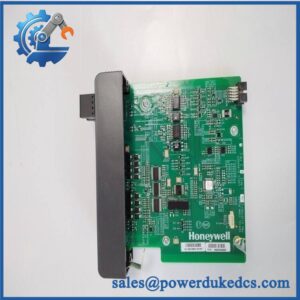
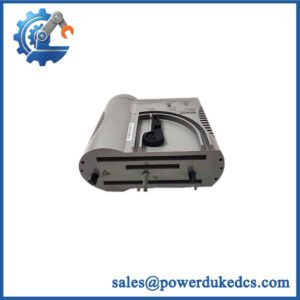
- Brand / Model: Honeywell TC-OAV081
- Product Type: 8-point analog output module
- System Family: Honeywell Experion / Series C I/O architecture
- Channels: 8 analog output channels
- Output: 0–21 mA or ±10.4 V
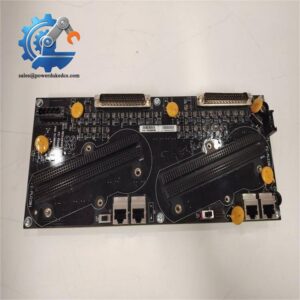
- Terminal Block: TC-TBNH, 20-position terminal block
- Physical Dimensions: Approximately 5.8 × 5.5 in. (14.7 × 14.0 cm); the published dimensional data does not provide a meaningful third dimension. Verify the mechanical drawing before cabinet planning.
- Estimated Shipping Weight: Approximately 0.2 kg / 0.44 lb for the module itself. One supplier lists approximately 1.5 kg as shipping weight, indicating that packaging can substantially change gross freight weight.
- What’s in the Box: TC-OAV081 module; TC-TBNH terminal block only if supplied as part of the ordered configuration; OEM documentation and accessories depend on condition and packaging.
- Alternate Part Number: 97062778 is reported by a surplus automation supplier as an alternate part number for TC-OAV081. Verify the physical nameplate before treating the two identifiers as interchangeable.
Honeywell documentation identifies TC-OAV081 as an 8-point, 4–20 mA/10 V non-isolated analog output module. The underlying technical specification gives the actual output range as 0–21 mA and ±10.4 V.
Product Introduction
Architecture hook: TC-OAV081 belongs in the Honeywell I/O architecture rather than being treated as a generic universal analog-output card. The module interfaces through the TC-TBNH 20-position terminal block, with the field wiring and cabinet backplane arrangement determining the physical installation envelope.
Eight output channels are available. Each channel supports current or voltage output within the specified ranges, making the module suitable for analog command signals to control equipment such as actuators and other final-control devices. Honeywell’s published system material specifically describes TC-OAV081 as an 8-point analog output, 4–20 mA/10 V non-isolated module.
The module dissipates up to 6.9 W. That figure matters during cabinet thermal calculations (especially when several I/O modules are installed in a confined enclosure).
Core Technical Specifications
| Parameter | Value |
|---|---|
| Manufacturer | Honeywell |
| Model | TC- |
| Alternate P/N | 97062778 reported by third-party supplier |
| Product Type | Analog Output Module |
| Number of Channels | 8 |
| Voltage Output Range | ±10.4 V |
| Current Output Range | 0–21 mA |
| Voltage Resolution | 320 µV/count |
| Current Resolution | 650 µA/count |
| Output Overvoltage Protection | 24 VAC/VDC continuous at room temperature |
| Open/Short-Circuit Protection | Electronically limited to ≤21 mA |
| Voltage Drive Capability | >2,000 Ω |
| Current Drive Capability | 0–750 Ω |
| Accuracy at 25°C | Better than 0.05% of range |
| Module Update Rate | 25 ms, all channels |
| Output Settling Time | <2 ms to 95% final value with resistive loads |
| User-to-System Isolation Test | 2,550 VDC for 1 second |
| Maximum Power Dissipation | 6.9 W |
| Terminal Block | TC-TBNH, 20-position |
| Reported Module Weight | Approximately 0.2 kg |
| Reported Status | Discontinued by some aftermarket suppliers |
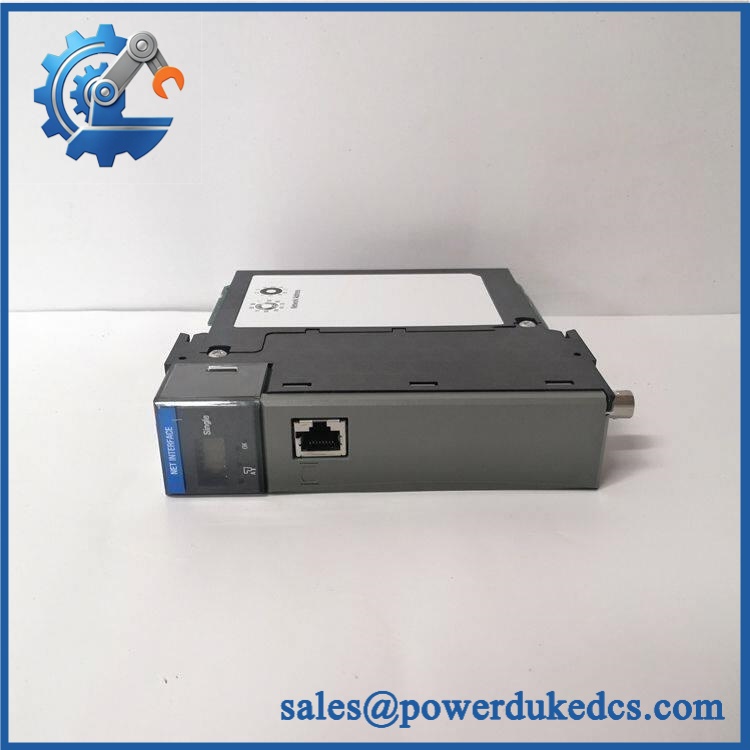
- Honeywell TC-
The core electrical values above are consistent with the Honeywell Experion LS I/O technical documentation reproduced by an automation documentation provider.
Important distinction: Some aftermarket listings describe the module as having isolated outputs, while Honeywell’s system documentation identifies TC- as non-isolated. For engineering and audit purposes, the Honeywell specification should take precedence over reseller descriptions.
? Global Compliance & Industry Certifications
For this class of industrial DCS I/O module, the asset file may encounter the following regulatory or market-access markings:
- CE Mark — potentially applicable to the relevant Honeywell system configuration and European market requirements.
- UL / cUL / CSA — North American safety approvals may apply depending on the exact hardware revision and system certification.
- ATEX / IECEx — do not assume hazardous-area certification merely because the module is used in an oil, gas, or chemical facility. The complete certified system configuration must support the intended installation.
- Marine approvals, including DNV — applicable only where the exact hardware/system configuration carries the relevant marine certificate.
- RoHS / environmental compliance — may depend on manufacturing date, product revision, and applicable market requirements.
The TC- should not be assigned a hazardous-area or marine approval solely from a reseller listing. Certification is configuration- and revision-dependent.
For plant safety, hazardous-area certification is significant because it controls whether electrical equipment can be installed in classified locations where flammable gases, vapors, or dust may be present.
Verify specific lot certifications with OEM.
For an audit package, retain the nameplate photograph, serial/date code, hardware revision, certification markings, COO documentation, and supplier Certificate of Conformance where available.
? Long-Term Storage & Asset Preservation Guide
- Keep the module inside its original ESD shielding bag. The exposed connector and PCB assembly should not be handled repeatedly during shelf inspection. A visually clean board can still have ESD damage that only appears after installation.
- Control humidity and condensation. Keep storage below approximately 60% RH where practical and avoid rapid transitions between cold storage and warm humid environments. Moisture contamination is particularly undesirable around the connector contacts and PCB surface.
- Do not store the module with the terminal block loosely attached. Keep the TC-TBNH terminal hardware protected from impact and contamination (small connector damage can become an intermittent field fault). Record the module’s date code and revision independently of the carton label.
Because this is an electronic I/O module rather than a high-power AC/DC supply, capacitor reforming is generally not the primary warehouse preservation concern. ESD control, moisture control, connector protection, and traceable identification are the priorities.
Physical Installation Prerequisites
- Install TC- only within the specified Honeywell I/O architecture and compatible Series C/Experion configuration.
- Verify the required backplane or mounting arrangement before installation; do not improvise a DIN-rail mounting method.
- Provide unobstructed airflow around the module and neighboring I/O hardware.
- The published maximum power dissipation is 6.9 W, so cabinet heat-load calculations should include the module when multiple cards are installed together.
- Keep field wiring physically separated from high-energy AC conductors and major electromagnetic noise sources where the cabinet design permits.
- Verify protective grounding and cabinet bonding according to the applicable Honeywell installation documentation.
- Confirm that the installed terminal block is the specified TC-TBNH 20-position assembly.
- Before commissioning, verify every channel’s configured signal type and field-device load. A current-loop output and voltage output have different external loading requirements.
Do not rely on a generic 50 mm clearance rule as though it were a Honeywell requirement. Use the applicable cabinet and I/O installation drawing for the actual spacing.
Buyer’s FAQ
Q: What HS tariff code should be declared for TC-?
A: One aftermarket supplier lists 8538907080 as its tariff code. However, this should be treated as a classification reference rather than a guaranteed customs determination. The correct HS classification can depend on the importing country’s tariff schedule and the exact function of the equipment. Have the customs broker confirm the final code before export.
Q: Does the Country of Origin have to be the seller’s country?
A: No. COO refers to the applicable manufacturing origin, not necessarily the seller’s location or shipping point. Several aftermarket listings report USA as the origin, but that information should be verified against the actual unit and available OEM documentation before a COO or commercial invoice is issued.
Q: Should shipping insurance be purchased for this module?
A: Yes, for international shipments or high-value replacement orders. The module is lightweight, but its PCB, connector, and terminal interface can be damaged by impact or electrostatic handling. Photograph the unit, ESD packaging, outer carton, and shipping label before dispatch.
Q: Does TC- arrive with the latest firmware pre-loaded?
A: Do not treat it as a firmware-controlled spare in the same manner as a CPU or controller. TC- is an analog I/O module with hardware-defined electrical characteristics. If a supplier claims a specific firmware revision, request documentary evidence and the exact hardware/software compatibility statement before accepting that claim.


 Start Chat