

Description
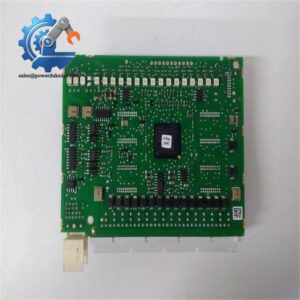
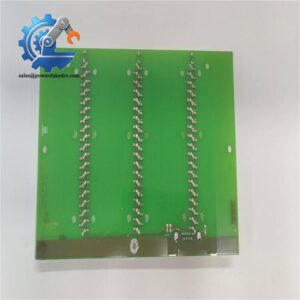
- Model: IS200VAICH1DAB
- Brand: GE General Electric
- Series: Mark VI Speedtronic
- Board Type: VAIC Analog Input/Output Board
- Functional Acronym: VAIC
- Primary Revision: D
- Secondary Revision: AB
- Application: Mark VI turbine control, simplex or TMR configuration
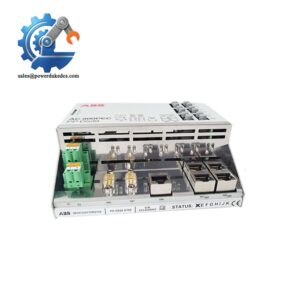
- Associated Terminal Board: TBAIH1C
- Input Architecture: Analog signals from TBAIH1C distributed to VAIC boards
- Output Architecture: Analog current generated by the VAIC control circuitry
- Scan Time: 10 ms at 100 Hz
- Approx. Dimensions: 2.0 × 18.8 × 26.1 cm reported by secondary inventory records
- Estimated Shipping Weight: ~0.36 kg reported by one secondary inventory record; verify actual packed weight before freight booking
- Mounting: Mark VI VME rack
- What’s in the Box: IS200VAICH1DAB PCB only unless the PO explicitly includes TBAIH1C, cables, PROMs, or mounting hardware
- Packaging: ESD shielding bag, rigid PCB support, connector protection, moisture-controlled outer carton
Technical records identify IS200VAICH1DAB as a Mark VI VAIC Analog Input/Output Board, with primary revision D and secondary revisions AB. The board is intended for TBAIH1C and supports both simplex and TMR architectures.
Product Introduction
Structure B — Architecture Hook
The GE IS200VAICH1DAB sits inside the Mark VI VME architecture as the active VAIC analog input/output board. In a TMR installation, the associated TBAIH1C terminal board distributes incoming analog signals to three VAIC boards installed in the T, R, and S VME racks. The VAIC boards then participate together in generating the commanded analog output, allowing the system to continue producing the required output when one channel of the TMR group is removed from service.
That architecture makes the terminal-board revision just as important as the VAIC board number. GE documentation identifies TBAIH1C as compatible with VAICH1D and later, while earlier TBAIH1A/B combinations are associated with earlier VAIC revisions. A warehouse should therefore preserve the complete IS200VAICH1DAB + compatibility record rather than issuing the board as a generic Mark VI analog card (this is especially important during legacy migration and turbine outage work).
Core Technical Specifications
| Parameter | Value |
|---|---|
| Manufacturer | GE General Electric |
| Part Number | IS200VAICH1DAB |
| Series | Mark VI Speedtronic |
| Board Acronym | VAIC |
| Product Type | Analog Input/Output Board |
| Primary Revision | D |
| Secondary Revision | AB |
| Associated Terminal Board | |
| Architecture | Simplex or TMR |
| TMR VME Locations | T, R, S racks |
| Input Signal Source | / compatible STAI architecture |
| Analog Signal Types | Current, voltage, and transmitter inputs depending on terminal-board configuration |
| Output Function | Controlled analog current output |
| Scan Time | 10 ms at 100 Hz |
| Mounting | VME rack |
| Processor | Onboard processing circuitry; exact device details revision-dependent |
| Memory | Application/configuration memory; exact usable capacity not reliably established from primary public documentation |
| Power Supply | Derived from Mark VI VME rack |
| Standalone Power Draw | Not reliably established in primary documentation |
| Heat Dissipation | Cabinet and loading dependent |
| Approx. Dimensions | 2.0 × 18.8 × 26.1 cm |
| Approx. Weight | 0.36 kg secondary inventory reference |
| Instruction Manual | GEH-6421 |
| Lifecycle Profile | Legacy Mark VI hardware |
Secondary technical records identify the board’s 10 ms scan time at 100 Hz, approximate physical dimensions, and GEH-6421 manual reference.
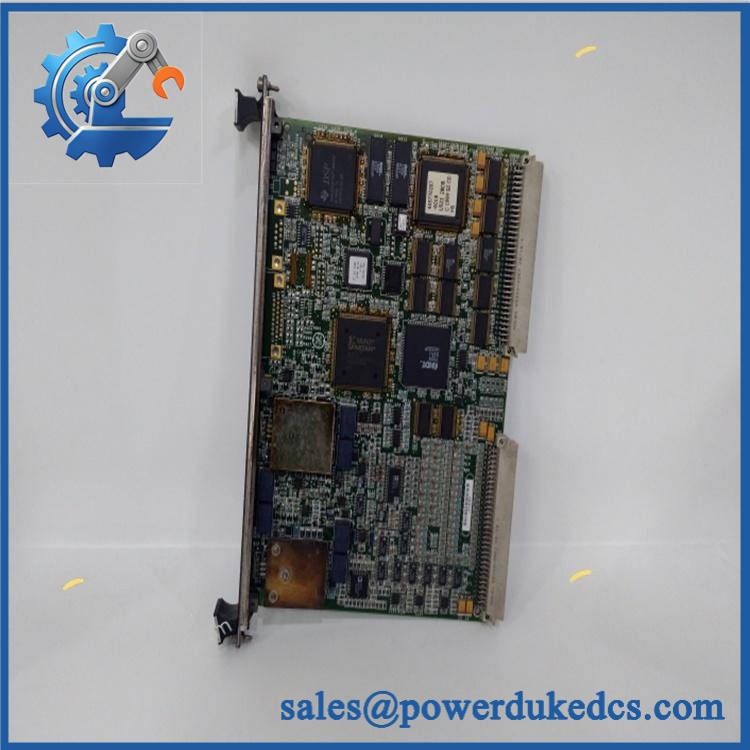
GE IS200VAICH1DAB
🚨 Global Compliance & Industry Certifications
- CE Mark: Do not claim standalone CE conformity for the PCB without the applicable GE declaration and revision record.
- UL/cUL: Verify the complete Mark VI equipment configuration and applicable cabinet certification before making a UL/cUL claim.
- ATEX / IECEx: Do not assume hazardous-area certification for the board itself. Hazardous-area suitability depends on the complete certified system and installation.
- Marine Approvals: Do not claim DNV or other marine approval without a revision-specific certificate for the installed Mark VI configuration.
- Functional Safety: The VAIC can participate in a TMR architecture, but that is not equivalent to an independent SIL certification for the PCB. The safety claim belongs to the complete engineered system.
- Electrical Safety: The board is installed in an energized turbine-control VME rack. Cabinet isolation and discharge procedures must be completed before handling.
- Environmental Compliance: Secondary commercial records report various operating/storage conditions, but those figures should not replace GE’s controlled environmental specification.
- Audit File: Retain the complete part number, revision, terminal-board compatibility record, serial/date code, COO, test report, and applicable certification documentation.
Verify specific lot certifications with OEM.
🚨 Long-Term Storage & Asset Preservation Guide
Keep the VAIC in an ESD shielding bag. The board contains processor electronics, memory devices, VME contacts, and signal interfaces that are susceptible to static damage during handling.
Protect the card-edge connector. The VME mating contacts are not forgiving of contamination or mechanical damage. Use a protective cap where available and never place the board directly on a metal workbench.
Preserve the revision relationship. Record D/AB along with the associated compatibility in the warehouse system. GE documentation indicates that is intended for VAICH1D and later, making the revision record useful when a substitute is considered.
Control warehouse humidity. A clean, dry indoor location below approximately 60% RH is a practical preservation target where the exact OEM storage specification is unavailable. Use sealed packaging and desiccant, and inspect the VME contacts for oxidation during scheduled inventory audits.
Do not repeatedly power-cycle stored Mark VI boards merely to confirm shelf condition. Record the last qualified test date instead.
Physical Installation Prerequisites
- Host Architecture: Confirm the board is being installed in the correct Mark VI VME rack.
- Terminal Board: Verify before installation. GE documentation identifies as compatible with VAICH1D and later.
- Simplex vs. TMR: Confirm whether the site uses one VAIC or three VAIC boards across T, R, and S racks.
- Input Wiring: Verify current/voltage/transmitter configuration against the jumper and terminal arrangement.
- Output Wiring: Confirm the controlled analog-output circuit and associated field load before commissioning.
- VME Connector: Inspect all card-edge contacts for contamination, oxidation, or mechanical damage.
- Grounding: Follow the Mark VI cabinet grounding and shield-termination scheme.
- Cooling: Keep airflow through the VME rack unobstructed; do not pack ribbon cables tightly around the card.
- ESD: Use a grounded wrist strap and approved antistatic surface whenever handling the board.
- Service Clearance: Maintain access for safe board insertion and connector inspection.
- Commissioning: Confirm module recognition, analog input scaling, output behavior, and—where applicable—TMR voting/continuity before returning the turbine controller to service.
GE’s Mark VI documentation confirms that can feed three VAIC boards in a TMR arrangement and that the terminal-board revision determines VAIC compatibility.
Buyer’s FAQ
Q1. What HS tariff code should be used for GE ?
Do not classify it simply as a generic PCB. This is a dedicated Mark VI analog input/output control board. A provisional customs review may consider headings covering parts of electrical control apparatus, but the final national tariff code depends on the importing jurisdiction and the declared technical function.
For the invoice, use a precise description such as “GE Mark VI VAIC Analog Input/Output Board.”
Q2. What Country of Origin should appear on the COO?
Use the actual manufacturing origin of the physical board, supported by the nameplate and supplier traceability. One current secondary record reports USA as the origin, but that should be verified against the actual serial-numbered unit rather than copied automatically.
Q3. Should I insure shipment of ?
Yes, when it is a turbine-critical spare. Protect the VME card edge, connector surfaces, PCB corners, and mounting hardware against impact and ESD.
Photograph the complete board, including the D/AB revision marking, serial label, card edge, and packaging before dispatch.
Q4. Does include the latest firmware pre-loaded?
Do not assume it does. The board belongs to the Mark VI application architecture, and firmware/configuration requirements depend on the installed system. Before commissioning, compare the replacement board’s revision and application configuration with the existing VAIC installation.
Q5. Can I use with any TBAI terminal board?
No. GE documentation specifically identifies as compatible with VAICH1D and later, while earlier TBAIH1A/B combinations are associated with earlier VAIC revisions. Therefore, a terminal-board mismatch can create a compatibility problem even when the VAIC PCB physically fits the VME rack.


 Start Chat