
Description
- Brand: Kollmorgen
- Full Model Number: P70360-SDN
- System/Series Family: P7000 Stepper Drive
- One-Sentence Core Function: Single-axis AC microstepping drive converting step-and-direction commands into controlled current for a two-phase hybrid stepper motor
- Top 3 Hardcore Specs: 120/240 VAC input; 2.5 A RMS continuous and 3.5 A RMS peak; 350 W maximum output
- Stock Status: New Surplus / Fully Tested Refurbished — exact P70360-SDN configuration and hardware condition verified before shipment
Module 3: Commercial-Technical Deep Dive
A stepper axis can stop without any obvious PLC fault when the drive has lost its ability to convert step commands into stable motor current. The Kollmorgen P70360-SDN is a single-axis P7000 AC high-performance microstepping drive using the SD step/direction-only function. Kollmorgen’s own P7000 documentation identifies the P70360 as the 120/240 VAC member of the family, rated at 2.5 A RMS continuous and 3.5 A RMS peak, with a maximum output power of 350 W. The SD suffix specifies the base step/direction functionality rather than the indexing or RS-485 variants.
The electrical limits translate directly into motor-selection and replacement risk. The P70360 accepts 120 or 240 VAC, produces a nominal 320 VDC bus, and the published reference guide specifies a 130 VDC bus undervoltage threshold, 440 VDC overvoltage fault level, and 420 VDC regeneration voltage. A 7 A slow-blow fuse is specified in the drive documentation, while the operating temperature is 0 to 40°C and the heatsink protection shuts the drive down above approximately 70°C. Kollmorgen also specifies a maximum motor-cable length of 20 m with 24 AWG cable in the cited configuration.
Module 4: Compatibility & Installation Traps
Migration/Compatibility
- Replacement status: Configuration-specific P7000 single-axis AC microstepping drive.
- Function: SD = Step/Direction Only. Do not substitute a PN indexing or R4 RS-485 model unless the machine architecture supports the additional functionality.
- Input voltage: 120/240 VAC nominal.
- Motor rating: 2.5 A RMS continuous; 3.5 A RMS peak; 350 W maximum output.
- Firmware/parameter requirement: A hardware replacement does not inherently require a PLC logic change, but motor current, step resolution, acceleration-related settings, and application parameters must match the original commissioning values.
- Logic rewrite: Normally unnecessary for a same-model replacement. Validate the motion controller’s step/direction scaling and enable logic after installation.
- Lifecycle: Kollmorgen currently categorizes the P70360 family as discontinued, making exact legacy replacement stock important for machines that cannot immediately migrate to another drive architecture.
⚠️ Field Traps (Watch Out)
- Wrong P7000 variant: -SDN, -PNN, and -R4N are not equivalent. The SDN version is the step/direction base drive; PN adds indexing and R4 adds RS-485 functionality.
- Current mismatch: Do not select the motor solely by physical frame size. The drive is limited to 2.5 A RMS continuous and 3.5 A RMS peak; exceeding the drive’s current capability can produce faulting or inadequate torque.
- Bus-voltage hazard: The 120/240 VAC input produces a DC bus around 320 VDC nominal. Wait for the specified discharge period and verify the bus is at a safe voltage before servicing.
- Thermal loading: The published operating range is 0 to 40°C, with heatsink shutdown at about 70°C. Mount the drive upright on an appropriate cold plate/heatsink and maintain the required airflow.
- Motor-cable length: The reference guide specifies a maximum motor cable length of 20 m using 24 AWG cable for the cited configuration. Long or improperly shielded motor cables can increase noise and affect current regulation.
- Step-pulse wiring: Preserve the original step, direction, enable, and signal-common wiring. Check the controller’s signal-voltage compatibility before reconnecting the interface.
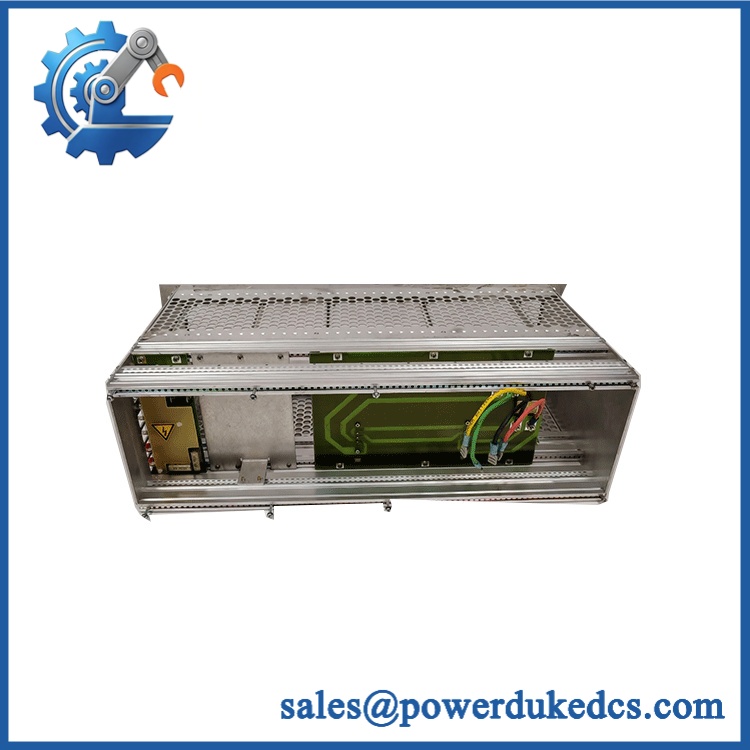
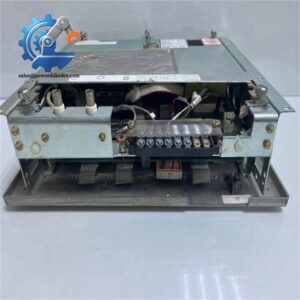
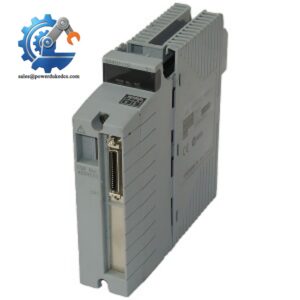
Kollmorgen P70360-SDN
Module 5: Quality Assurance SOP
Our pre-shipment inspection for a Kollmorgen -SDN focuses on power-stage operation, command inputs, thermal behavior, and exact configuration:
- OEM anti-counterfeit visual inspection — verify Kollmorgen/P7000 markings, complete designation, serial/revision labels, connector arrangement, front-panel identification, and PCB construction.
- Model-code verification — confirm P7 / 03 / 6 / 0 / SD / N configuration against the order requirement. The code identifies the family, 2.5 A class, 120/240 VAC input, no electrical option, SD functionality, and no feedback.
- PCB and connector inspection — inspect the power terminals, motor connector, 26-position D-sub interface, heatsink, capacitors, and PCB for contamination, corrosion, cracking, or thermal damage.
- Power-input verification — apply the appropriate controlled 120 or 240 VAC input through the approved protective test setup.
- Power-on self-test (POST) — verify startup, status indication, fault monitoring, and absence of abnormal input current.
- DC-bus verification — measure the DC bus during controlled operation and compare the result with the expected nominal level for the selected AC input.
- Step-input test — generate controlled step and direction commands and verify reliable command recognition.
- Enable-input verification — confirm enable behavior and correct drive response to enable/disable transitions; the reference design uses an internally filtered and debounced enable input.
- Motor-output test — connect an approved two-phase stepper motor or equivalent load and verify phase-current regulation under controlled conditions.
- Current-limit verification — test representative operating points without exceeding the specified 2.5 A RMS continuous / 3.5 A RMS peak limits.
- Microstepping verification — confirm the configured step resolution and stable motor motion using the appropriate setup procedure.
- Protection test — where the test fixture permits, verify representative fault responses without exceeding manufacturer limits, including thermal and bus-voltage protection.
- Thermal endurance test — operate under representative load while monitoring heatsink temperature, output stability, and fault behavior.
- Extended motion test — execute repeated step/direction profiles and monitor for missed commands, current instability, or unexpected faults.
- Configuration record — document model code, revision, input voltage used, motor/load type, command-test results, thermal readings, and photographs.
- Final ESD and mechanical packaging — protect the 26-pin connector, power terminals, heatsink, and electronics from ESD, impact, dust, and moisture.
The acceptance criteria are based primarily on Kollmorgen’s own nomenclature and reference material rather than generic reseller descriptions.
Module 6: CRO-Driven Buyer FAQ
1. Is the Kollmorgen -SDN obsolete?
The family is listed by Kollmorgen under discontinued drives remains relevant as an installed-base replacement because its electrical and command-interface configuration may be embedded in older machine designs.
2. What is the difference be and -PNN?
Both are AC drives, but SD denotes Step/Direction Only, while PN adds motion-node indexing functionality. The ordering documentation also identifies R4 as the variant adding RS-485 capability.
3. What motor curren provide?
The published rating is 2.5 A RMS continuous with 3.5 A RMS peak for the AC drive. Its maximum output power is specified as 350 W. Motor selection should be based on the actual RMS phase-current requirement rather than only the motor’s nominal wattage.
4 be hot-swapped?
No routine hot-swap should be assumed. The drive operates from 120/240 VAC and develops a DC bus of approximately 320 VDC. Kollmorgen’s manual also specifies a post-power-removal hazard period; isolate the drive, wait the required discharge interval, verify the bus voltage, and follow the machine’s LOTO procedure before servicing.
5. What communications doe support?
The SDN version is the base step/direction-only configuration. It does not provide the RS-485 functionality identified by Kollmorgen for the R4 version. Serial accessories exist for the family, but the drive’s motion command interface remains step/direction in the SDN configuration.
6. What warranty and technical support should I expect?
Warranty duration should be stated on the quotation for the exact physical drive supplied. Technical support should cover model-code verification, motor-current matching, 120/240 VAC input checks, step/direction wiring, parameter verification, thermal testing, and documented pre-shipment QA. It should not substitute for machine motion engineering, electrical-safety validation, or final commissioning.


 Start Chat