

Description
- Brand: MOTOROLA
- Full Model Number: AP-4 01-W3394F-03G
- System/Series Family: MVME2400 Series VME Embedded Computer
- One-Sentence Core Function: 6U VMEbus PowerPC processor board for embedded control and real-time computing applications
- Top 3 Hardcore Specs: PowerPC 750 350 MHz; 64 MB ECC SDRAM; 6U VME processor architecture
- Stock Status: New Surplus / Fully Tested Refurbished — verify board label and memory configuration before shipment
Module 3: Technical Product Introduction
A processor-board failure in a legacy VME control chassis can stop the entire application even when the backplane, I/O cards, and field wiring remain serviceable. The MOTOROLA AP-4 01-W3394F-03G is listed in industrial inventory records as an AP-4 module, but a stronger cross-reference identifies the exact 01-W3394F-03G part number with the Motorola MVME2432-1 VME processor module. That record specifies a PowerPC 750 processor at 350 MHz and 64 MB ECC SDRAM, making identity verification important before publishing it as a communications or signal-processing card.
For replacement planning, the VME architecture is the key engineering detail. The MVME2400 family is a single-slot VME processor platform with PCI integration and support for PMC expansion; the cited configuration provides 32 KB instruction cache, 32 KB data cache, and 1 MB backside L2 cache. The documented memory family ranges from 32 MB to 512 MB depending on configuration, while this exact part record specifies 64 MB ECC SDRAM.
Module 4: Application Scenarios & Field Realities
- In legacy VME-based process-control cabinets, the AP-4 / 01-W3394F-03G can serve as the central embedded computing element where deterministic processor access to VME I/O remains part of the installed architecture. Before replacement, confirm the chassis type and board position rather than treating it as a generic plug-in controller.
- When a VME system becomes unstable after a processor fault, check board seating, backplane contacts, memory configuration, and PMC interfaces before concluding that the application software is responsible. The MVME2400 architecture uses the VME bus together with PCI-connected onboard peripherals, so a marginal backplane interface can create symptoms that resemble processor failure.
- For shutdown maintenance on older embedded-control systems, the exact memory variant matters. The 01-W3394F-03G record is specifically associated with 64 MB ECC SDRAM; do not accept a visually similar MVME2400 board without confirming its full assembly number and installed memory.
- Where expansion cards are fitted, inspect the PMC sites before ordering a replacement board. The MVME2400 family was designed with two PMC expansion positions, so the replacement should match the existing mezzanine-card arrangement and front-panel hardware.
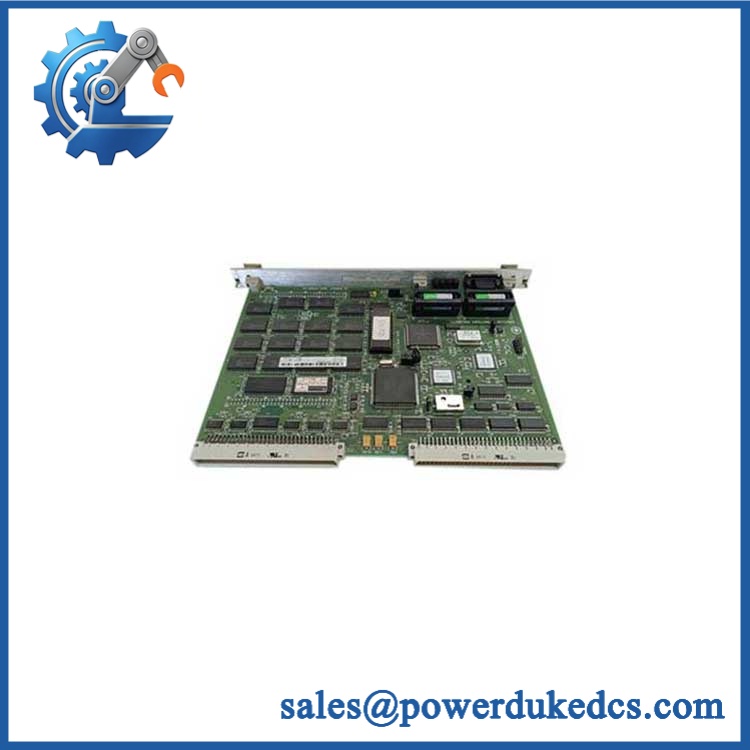
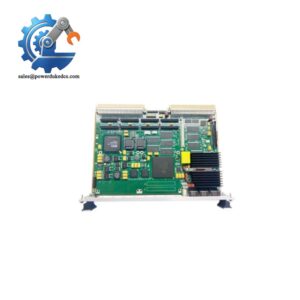
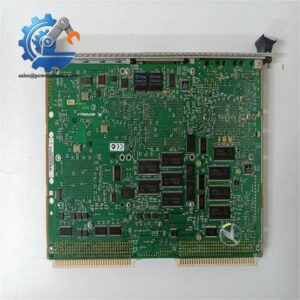
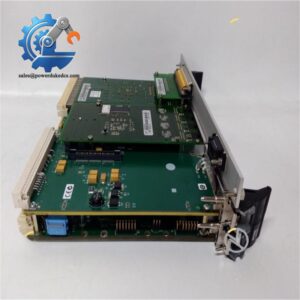
MOTOROLA AP-4 01-W3394F-03G
Module 5: Migration, Compatibility & Installation Traps
Replacement Matrix
| Replacement Type | Assessment |
|---|---|
| Drop-in Replacement | Conditional — suitable only when the chassis, board revision, memory configuration, PMC arrangement, and software image match |
| Software Compatible | Conditional — application compatibility depends on the installed operating system, board support package, firmware, and application image |
| Hardware Modification Required | Normally no for an exact MVME2432-1 / 01-W3394F-03G replacement; connector, PMC, and front-panel configuration must be verified |
⚠️ Field Traps — Watch Out
1. The AP-4 classification is not sufficiently reliable by itself.
One industrial listing labels as a Motorola AP-4 communication/signal-processing unit, while an independent equipment record maps the exact part number to MVME2432-1, a VME processor module. The exact physical label should therefore control the procurement decision.
2. Do not confuse part number with series designation.
The safer engineering cross-reference is 01- → MVME2432-1 based on the exact part-number match. Confirm the assembly number, PCB revision, memory size, and faceplate before installation.
3. VME power and chassis compatibility must be checked.
The MVME2400 family uses a VME backplane and associated chassis power rails. Verify the installed backplane, board guide positions, connector condition, and approved supply configuration before inserting a replacement board.
4. Preserve the existing software environment.
A processor replacement does not automatically restore the application. Check the boot media, operating system, firmware revision, VME address configuration, and application image before removing the failed board.
Module 6: Quality Assurance SOP
- OEM anti-counterfeit visual inspection — inspect Motorola/Emerson identification, board labels, assembly markings, PCB revision, connector construction, and visible manufacturing identifiers.
- Exact part-number verification — confirm character-for-character against the purchase order and physical board label.
- Model cross-reference verification — where applicable, document the exact-board relationship between and MVME2432-1 using the board label and approved technical documentation.
- Memory inspection — verify the installed memory configuration. The cited exact-part record specifies 64 MB ECC SDRAM. Record the memory type and installed capacity before functional testing.
- Mechanical inspection — check VME P1/P2 connectors, board guides, ejector hardware, PMC positions, front-panel connectors, and PCB surfaces for bent contacts, corrosion, contamination, or impact damage.
- Power-up self-test (POST) — energize the board in a compatible VME test chassis and record startup behavior, status LEDs, current draw, and abnormal heating.
- Processor and memory verification — run a controlled CPU, RAM, cache, and board-diagnostic test appropriate to the platform. Record failures by test stage rather than using a simple pass/fail label.
- VME bus verification — confirm stable access to the VME backplane and verify that required onboard peripherals are visible to the test environment.
- Communication handshake verification — test Ethernet, serial, PMC, or other installed interfaces only when required by the confirmed board configuration. Do not claim a network test for an unconfigured spare.
- Application-level validation — where the customer’s test fixture is available, boot the intended software environment and verify the expected VME I/O or control application behavior.
- Final QC and packaging — record serial/assembly information, memory configuration, diagnostic results, photographs, ESD protection, and packaging condition before shipment.
Engineering note: The most defensible identification for the supplied MOTOROLA AP-4 01- is the exact part-number match to the MVME2432-1 VME processor module, with the cited configuration specifying a 350 MHz PowerPC 750 and 64 MB ECC SDRAM. Some secondary listings use a different AP-4 description, so the physical nameplate should be treated as the final authority.



 Start Chat