

Description
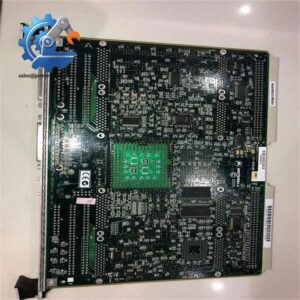
- Motorola MVME2400 | PowerPC Board, Verified Spare Asset
Unboxing & Physical Snapshot
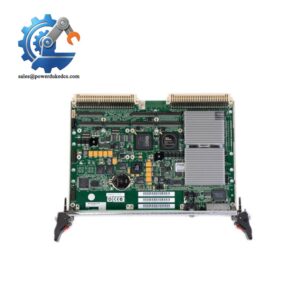
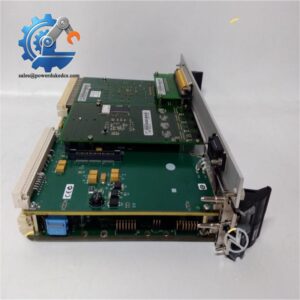
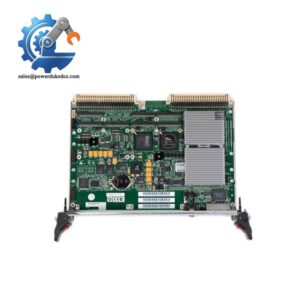
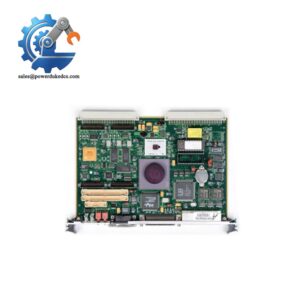
- Model & Brand: Motorola MVME2400 VME Processor Module
- Approximate Physical Dimensions:
- Board depth: approximately 6.3 in. (160 mm)
- Front panel height: approximately 10.3 in. (261.7 mm)
- Front panel width: approximately 0.8 in. (19.8 mm)
- 6U VME form factor
- Estimated Shipping Weight: Approximately 2.5–4.0 lb (1.1–1.8 kg), depending on packaging and installed PMC accessories
- What’s in the Box:
- Motorola MVME2400 single-board computer
- ESD shielding bag
- Protective foam packaging
- Front panel assembly
- VMEbus connectors
- Documentation or test report (when supplied)
Product Introduction
The MVME2400 mounts directly into a 6U VME chassis backplane as a single-slot processor module. It becomes the embedded computing core of the VME system, communicating through the VMEbus interface while supporting additional PMC expansion hardware (which is important in legacy industrial control and test systems where replacement hardware must match existing rack architecture).
This board belongs to an earlier generation of industrial computing hardware, but many installations continue operating because the VME ecosystem was designed for long service periods. Inspect the edge connectors carefully. Oxidized contacts, damaged guide rails, or loose retaining screws can create intermittent faults that are difficult to reproduce during troubleshooting.
Core Technical Specifications
| Parameter | Value |
|---|---|
| Manufacturer | Motorola |
| Model | MVME2400 Series |
| Product Type | VMEbus Single Board Computer |
| Processor | PowerPC MPC750 |
| Processor Speed | 233 MHz or 350 MHz variants depending on model |
| Form Factor | 6U VME single-slot module |
| System Memory | 32 MB, 64 MB, 128 MB, or 256 MB ECC SDRAM |
| Cache Memory | 1 MB L2 cache |
| Boot Flash Memory | Up to approximately 9 MB |
| Non-Volatile Memory | 8 KB NVRAM with RTC and battery backup |
| VME Interface | VME64 compatible architecture |
| PCI Interface | 32/64-bit PCI at 33 MHz |
| PMC Expansion | Two IEEE P1386.1 PMC slots |
| Ethernet | 10Base-T / 100Base-TX |
| Serial Interface | 16550-compatible asynchronous serial port |
| Typical Power Requirement | Approximately 7.5 W per slot maximum (configuration dependent) |
| Cooling Method | Forced-air chassis cooling |
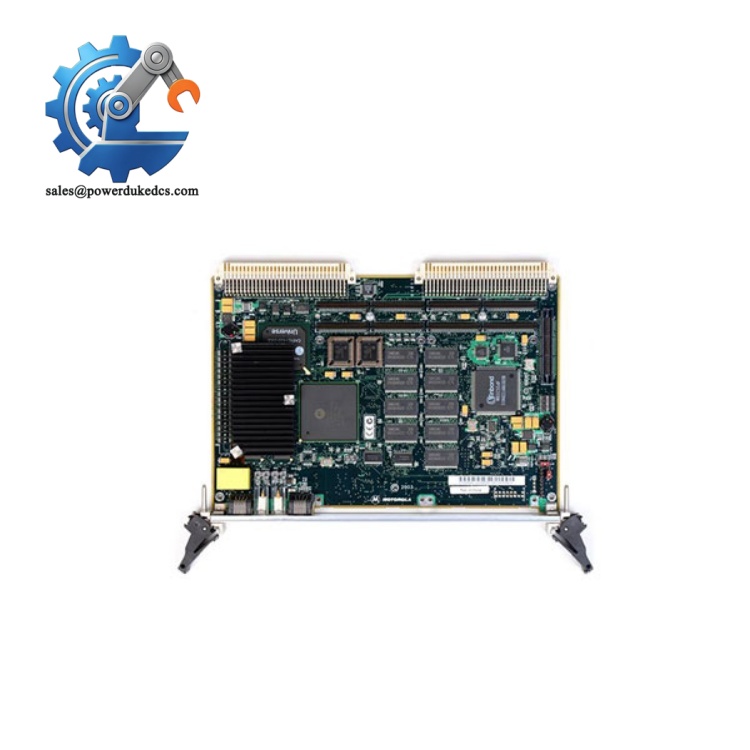
Motorola MVME2400
Global Compliance & Industry Certifications
Expected regulatory considerations for the Motorola MVME2400 include:
- CE Mark applicability when incorporated into a compliant system enclosure
- UL/cUL recognition may apply to the complete equipment assembly rather than the standalone board
- RoHS status depends on manufacturing revision and production date
- VME system-level compliance may reference ANSI/VITA VME standards
- ATEX/IECEx certification is generally not applicable to the bare processor board unless installed inside a certified hazardous-area system
- Marine approvals such as DNV GL require project-specific qualification and enclosure certification
For industrial installations, system-level certification matters. A processor board installed inside a certified control cabinet must maintain the required grounding, enclosure, and environmental protection methods to preserve the approved safety classification.
Verify specific lot certifications with OEM.
Long-Term Storage & Asset Preservation Guide
Keep the inside its original anti-static (ESD) shielding bag during storage. The exposed gold-plated edge fingers and PMC connectors are vulnerable to contamination and oxidation when left uncovered.
Maintain warehouse humidity below 60% RH. Long storage periods can affect connector surfaces, battery-backed memory components, and electrolytic capacitors on aging boards (especially units stored for decades rather than years).
Inspect the onboard battery-backed RTC/NVRAM area before deployment. Replace aging battery components where required, and record the maintenance action in the spare asset history.
Physical Installation Prerequisites
- Install only in a compatible 6U VME chassis with the correct backplane configuration.
- Confirm VMEbus slot assignment before insertion because system controller requirements vary by rack design.
- Maintain chassis airflow clearance according to the rack manufacturer’s cooling design.
- Leave approximately 50 mm clearance around ventilation paths where cabinet layout permits.
- Verify chassis grounding before applying power.
- Inspect the VME edge connectors and retaining hardware before installation.
- Ensure PMC cards are fully seated and secured using the retaining screws.
Buyer’s FAQ (Logistics & Compliance Focus)
Q: Which HS Tariff Code should be used when exporting a Motorola ?
A: VME processor boards are commonly evaluated under HS classifications for electronic assemblies, computer processing units, or control equipment categories depending on the destination country’s customs interpretation. Many shipments are reviewed under headings related to electronic computing modules. Confirm the final HS classification with your customs broker before export.
Q: Does Country of Origin affect acceptance for legacy automation spare parts?
A: Yes. The Country of Origin affects customs declarations, contractual requirements, and import documentation. For older Motorola hardware, confirm the manufacturing label, serial record, and supplier documentation before shipment.
Q: Should shipping insurance be purchased for an board?
A: Recommended. Legacy VME processor boards are difficult to replace and sensitive to shock, electrostatic discharge, and improper packaging. Use anti-static protection, impact-resistant packing, and insured transportation for high-value inventory transfers.
Q: Does the include the latest firmware pre-loaded?
A: Not automatically. Firmware revision depends on the board history, installed boot ROM, and previous maintenance activity. Verify the Motorola boot firmware version, operating system compatibility, and application software requirements before placing the board into an operational VME rack.



 Start Chat