

Description
Identity warning: Current web references are inconsistent. Some supplier catalogs identify 2211 as a Triconex analog-input module, while other Tricon documentation identifies 2211 as a CIM (Communications Integration Module) Media Adapter.
For inventory control, the physical nameplate and assembly photograph should take precedence over an unqualified online listing.
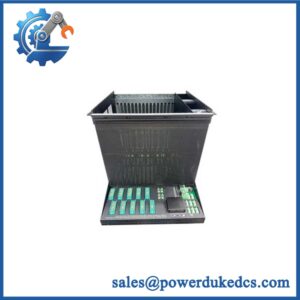
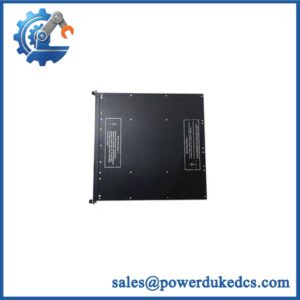
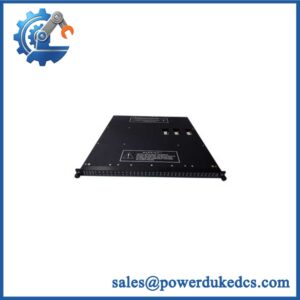
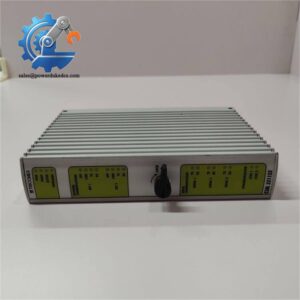
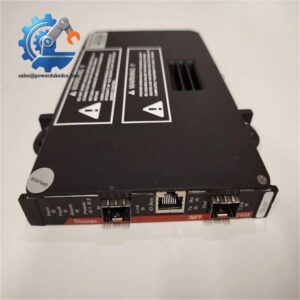
Unboxing & Physical Snapshot
- Manufacturer: TRICONEX / Invensys
- Part Number: 2211
- Potential product identity: CIM Media Adapter / Communications Integration hardware; requires physical verification.
- Alternative catalog identity encountered: Some current suppliers list 2211 as an analog-input module.
- Physical dimensions: Not reliably established for the exact 2211 variant.
- Estimated shipping weight: One supplier lists approximately 1.36 kg, but this figure should not be treated as an OEM specification.
- What’s in the box: 2211 assembly, mounting/interconnect hardware, and documentation only when explicitly included on the packing list.
- Critical receiving check: Photograph the front label, rear connectors, PCB/assembly markings, and all secondary part numbers before assigning a functional description.
Product Introduction
The TRICONEX 2211 requires unusually careful identification because the same four-digit number appears in conflicting commercial catalogs. A Trident technical product guide identifies 2211 as a Communications Integration Module baseplate kit, while other supplier catalogs identify a Triconex 2211 as an analog-input product.
That discrepancy is significant for a safety-system inventory. Do not release a 2211 based solely on the four-digit number. Verify the complete assembly number, physical connector arrangement, chassis family, and associated termination/baseplate hardware (this is the kind of legacy-part ambiguity that can create an incorrect emergency replacement).
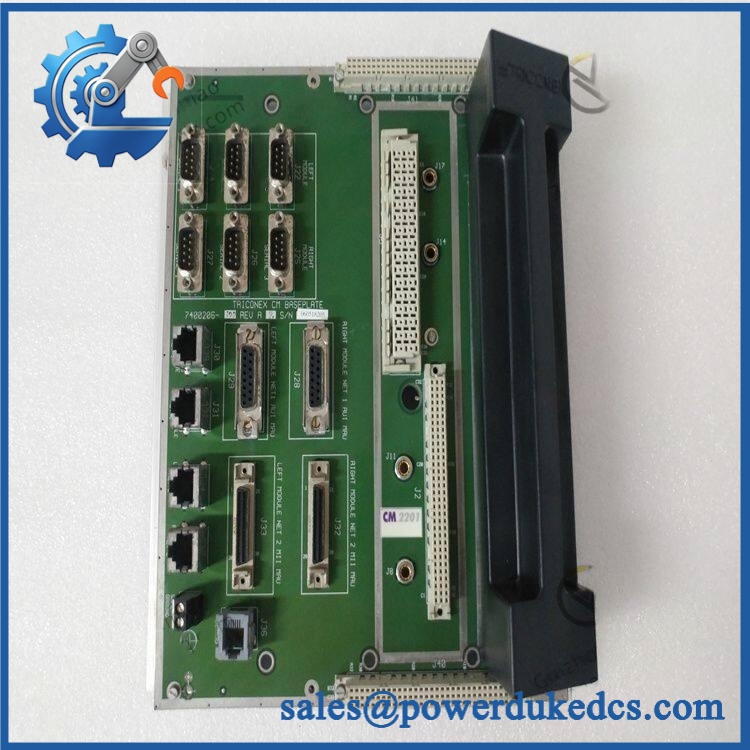
TRICONEX 2211
Core Technical Specifications
| Parameter | Value |
|---|---|
| Manufacturer | TRICONEX / Invensys |
| Part Number | 2211 |
| Product Family | Triconex / Tricon-related hardware |
| Functional Identity | Requires physical/OEM verification |
| Possible Identity | CIM Media Adapter / Communications Integration hardware |
| Alternate Commercial Identity | Analog Input Module |
| Chassis Compatibility | Must be verified |
| Connector Arrangement | Must be physically verified |
| Electrical Rating | Must be verified |
| Communication Protocol | CIM function must be confirmed |
| Number of I/O Channels | Do not assume |
| Dimensions | Not reliably established |
| Weight | Approximately 1.36 kg reported by one supplier; unverified |
| Firmware | Not established |
| Installation Position | Requires exact assembly identification |
| Certification | Requires exact variant/revision |
The Trident technical guide is particularly useful because it lists 2211 as a Communications Integration Module baseplate kit, with associated interconnect hardware.
By contrast, several commercial listings describe a 2211 analog-input module, with one claiming 32 differential analog inputs. Those claims conflict with the Trident documentation and should therefore not be entered into a controlled technical database without confirming the physical unit.
? Global Compliance & Industry Certifications
Because the exact 2211 hardware identity remains unresolved, certification claims should remain controlled:
- CE Mark: Verify against the exact OEM assembly and revision.
- UL/cUL: Confirm the applicable certificate for the identified Triconex hardware.
- ATEX/IECEx: Do not assume hazardous-area approval from the TRICONEX brand or part number.
- Marine approvals: DNV or equivalent approval must be supported by documentation for the exact assembly.
- Functional safety: Do not assign a SIL claim until the exact function and certified Tricon architecture have been established.
- EMC: Verify the complete system installation, including grounding, communication wiring, and cabinet configuration.
This matters for audit purposes because a CIM communication assembly and an analog-input module have materially different functions and installation requirements. A generic Triconex certificate cannot automatically establish compliance for both.
Verify specific lot certifications with OEM.
? Long-Term Storage & Asset Preservation Guide
Keep the 2211 in ESD shielding packaging. Until the functional identity is confirmed, handle it as sensitive Triconex electronic hardware and protect every connector from dust, moisture, and mechanical impact.
Maintain warehouse RH below 60% where practical. Avoid condensation and corrosive atmospheres; legacy communication connectors and PCB contacts can develop oxidation that is not obvious during a visual inspection.
Do not perform an uncontrolled power-up test. First identify the hardware variant and applicable test procedure. Applying an incorrect supply or installing an unidentified assembly into a live Tricon chassis is an unacceptable warehouse test method.
Retain photographs of the original packaging and label with the inventory record. Record the serial number, secondary assembly number, revision, date code, and connector configuration.
Physical Installation Prerequisites
- Do not install the 2211 until the exact functional variant has been confirmed.
- Verify the associated Tricon/Trident chassis or baseplate.
- Confirm the rear connector and interconnect arrangement against the OEM drawing.
- Verify the correct power source and electrical ratings.
- If the unit proves to be the CIM-related assembly, verify the appropriate Communications Integration Module baseplate and interconnect assembly before installation.
- If the physical unit proves to be an analog-input module, discard the CIM description and verify its actual I/O termination architecture.
- Maintain chassis protective-earth continuity.
- Preserve adequate airflow around electronic assemblies.
- As a preliminary cabinet practice, allow approximately 50 mm around ventilation paths, unless the applicable OEM drawing specifies another clearance.
- Do not modify connectors or wiring to force apparent compatibility.
- Complete the applicable system diagnostic and communication/I/O checks before returning the safety system to service.
Buyer’s FAQ
Which HS tariff code should be used?
Do not assign a final HS code from “2211” alone. If the physical unit is a communications adapter, its classification may differ from an analog-input module. Obtain the OEM functional description first, then have the customs broker validate the tariff classification.
What should I use for Country of Origin?
Use the COO supported by the physical unit and traceability documentation. Some supplier listings claim USA origin, but that should be independently verified before appearing on a commercial invoice.
Should I insure the shipment?
Yes, when the part supports a critical Tricon/Trident installation. Use ESD shielding, impact cushioning, moisture protection, and a rigid carton. Photograph the identification label and connectors before dispatch.
Does 2211 contain the latest firmware?
Cannot be determined from the four-digit number. If this is the CIM-related assembly, firmware/software compatibility must be evaluated at the communication-system level. If it is an analog-input variant, the relevant hardware and system compatibility checks are different.
Asset-control recommendation
Create the inventory record as “TRICONEX 2211 — FUNCTION/VARIANT TO BE VERIFIED” until the physical unit is inspected. Do not populate it as an analog-input module or CIM adapter solely from an online catalog.
This is a case where part-number discipline is more important than filling every database field. The conflicting references are sufficient reason to quarantine the identification until the nameplate and assembly markings are confirmed.



 Start Chat