

Description
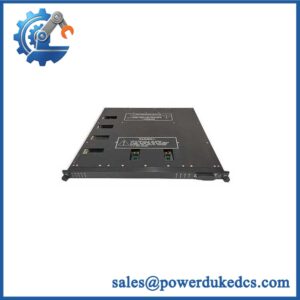
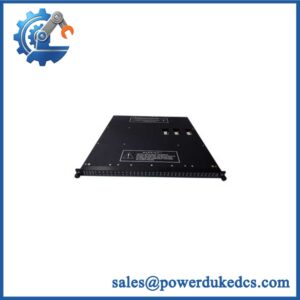
Unboxing & Physical Snapshot
- Manufacturer: Triconex / Invensys
- Model: 2301
- Product type: Triconex Tricon-series I/O module; exact signal function should be verified against the module nameplate and applicable hardware manual.
- System architecture: Tricon Triple Modular Redundant (TMR) control architecture.
- Physical dimensions: OEM verification required. Do not reuse dimensions from 2101, 3511, or 3721.
- Unit weight: OEM verification required.
- Estimated packed shipping weight: Establish by actual measurement before freight booking.
- What’s in the box: Triconex 2301 module; termination panel/cable, mounting hardware, and documentation only when specifically listed with the supplied lot.
- Receiving inspection: Record the full part number, serial number, hardware revision, date code, status LEDs, connector condition, keying, and ESD packaging.
Product Introduction
Architecture hook: The Triconex 2301 is a component of the Tricon fault-tolerant control architecture. Its installation therefore depends on the correct chassis, system generation, termination arrangement, and approved application configuration rather than physical fit alone.
The model number 2301 should not be treated as sufficient evidence for assigning a digital-input, digital-output, analog-input, or analog-output function without source verification. That distinction matters in safety-system inventory because an incorrect I/O classification can lead to the wrong field wiring, termination hardware, and maintenance procedure (a visually similar module is not necessarily functionally interchangeable).
Data-quality control
Do not populate the 2301 asset record with specifications from Triconex 2101, 3511, 3721, or another Tricon module.
The available identification is not sufficient here to establish a reliable electrical specification. For an auditable warehouse master, “OEM verification required” is preferable to an unsupported voltage, channel count, power figure, or dimensional value.
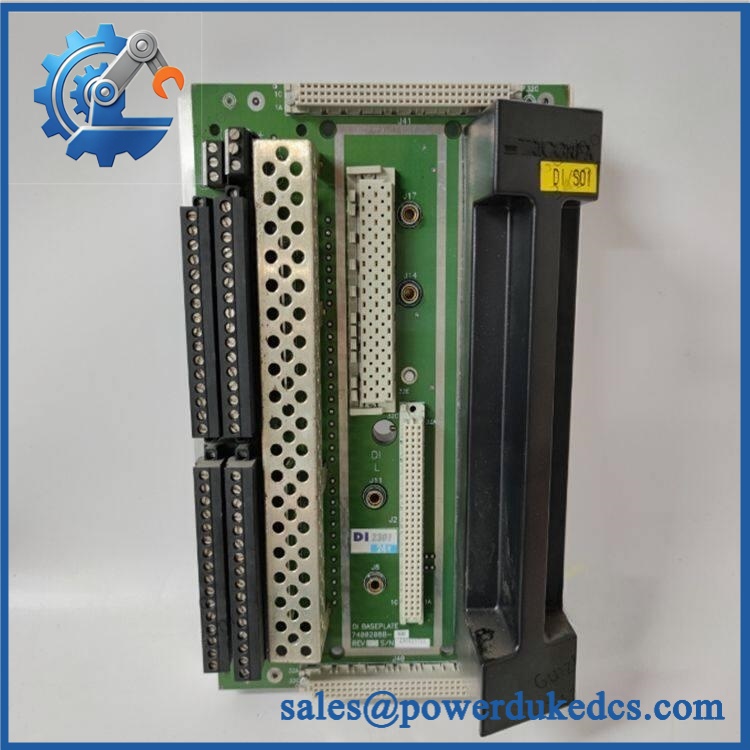
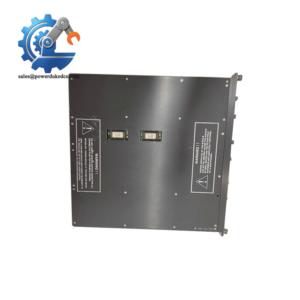
Triconex 2301
Global Compliance & Industry Certifications
Certification must be traced to the specific Tricon hardware revision and applicable system certificate.
- IEC 61508: Verify applicable functional-safety certification for the Tricon system and hardware revision.
- IEC 61511: Applicable to the SIS lifecycle and application; do not treat the individual module as independently satisfying an entire SIS safety function.
- CE Mark: Verify the applicable Triconex/Schneider Electric declaration.
- UL/cUL: Verify the exact certification record.
- FM/CSA: Confirm hazardous-location approval where applicable.
- ATEX/IECEx: Do not assume hazardous-area approval based on the Triconex brand.
- Marine approvals: DNV/DNV GL, ABS, or other marine certifications require separate verification.
For safety-system equipment, certification is more than a procurement checkbox. The approved hardware revision, system architecture, diagnostic behavior, and installation conditions all contribute to the validity of the safety design.
Verify specific lot certifications with OEM.
Long-Term Storage & Asset Preservation Guide
Keep the 2301 in its original ESD shielding bag. Protect the PCB, backplane connector, and field interface from static discharge and mechanical damage.
Maintain controlled warehouse conditions. Avoid condensation, salt air, corrosive gases, oil mist, and conductive dust. A practical long-term target is below 60% RH, with stable temperature and no condensation.
Preserve the complete identification record. Photograph the nameplate, serial number, date code, revision, certification labels, and connector arrangement. Legacy Tricon hardware can have revision-specific compatibility requirements, so these records should remain attached to the asset history.
Physical Installation Prerequisites
- Identify the exact Tricon chassis and slot compatibility before installation.
- Verify the 2301’s electrical function from authoritative documentation.
- Confirm the correct field termination panel and cable assembly.
- Inspect the backplane connector and module guides for contamination or mechanical damage.
- Use appropriate ESD controls.
- Confirm the field supply voltage before connecting external wiring.
- Verify protective grounding and cabinet bonding.
- Maintain the chassis manufacturer’s specified airflow and clearance.
- Do not substitute a generic 50 mm clearance requirement.
- Confirm hardware/system revision compatibility before commissioning.
- Follow the approved Tricon maintenance procedure for module removal and replacement.
- After installation, verify module status indicators, system diagnostics, field signals, and fault reporting.
- Any change to a safety-related configuration should follow the site’s approved Management of Change process.
Buyer’s FAQ
Q: What HS tariff code should be used for Triconex 2301?
A: Wait until the module’s exact electrical function is confirmed. HS classification depends on the component’s documented function and the destination country’s tariff schedule. A customs broker should validate the final code before export.
Q: Is the Country of Origin automatically the United States?
A: No. Triconex brand ownership does not establish COO. Use the actual nameplate, manufacturer documentation, or supplier Certificate of Origin for the specific unit.
Q: How should the freight weight be calculated?
A: Weigh the actual packaged asset. Include the ESD bag, cushioning, carton, termination accessories, and any documentation or mounting hardware supplied with the unit. Do not copy the weight of another Tricon module.
Q: Does the 2301 have the latest firmware?
A: Do not assume it does. First establish the exact hardware function and revision, then compare the module against the target Tricon system’s approved hardware/software baseline.
Asset-Control Warning
TRICONEX 2301 should remain under technical-identification control until the exact module function is verified. Do not infer its signal type, voltage, dimensions, weight, or certification from another Triconex model.
For procurement, customs, and maintenance release, the physical nameplate, hardware revision, serial number, and authoritative OEM documentation should take precedence over reseller-generated specifications.



 Start Chat