

Description
- Brand: TRICONEX / Schneider Electric
- Full Model Number: 3009X
- System/Series Family: Tricon CX Safety Instrumented System
- One-Sentence Core Function: Main processor module for executing the safety application and maintaining one channel of the Tricon CX TMR controller
- Top 3 Hardcore Specs: QorIQ P1021 dual-core 800 MHz CPU; 256 MB DRAM + 2 MB battery-backed SRAM; 1 Gbps TriBus
- Stock Status: Exact hardware revision and stock condition to be confirmed
Module 3: Technical Product Introduction
A Tricon CX controller does not depend on one processor to carry the safety application. The TRICONEX 3009X is one of three main processor modules installed in the 8120X Main Chassis, with each processor operating independently and communicating with its own I/O subsystem. The three processor channels continuously compare control-program data and operating results, while the proprietary TriBus provides interprocessor communication and hardware majority voting. That architecture is the core of the Tricon CX TMR design.
The published 3009X specification identifies a QorIQ P1021 dual-core processor at 800 MHz, 256 MB non-battery-backed DRAM, 2 MB battery-backed SRAM, 128 MB Flash PROM, and a 32-bit CRC-protected TriBus operating at up to 1,000 Mbps. The processor also provides an optically isolated RS-232 diagnostic interface and an SFP-based I/O-processor communication path. Logic power is specified at less than 15 W.
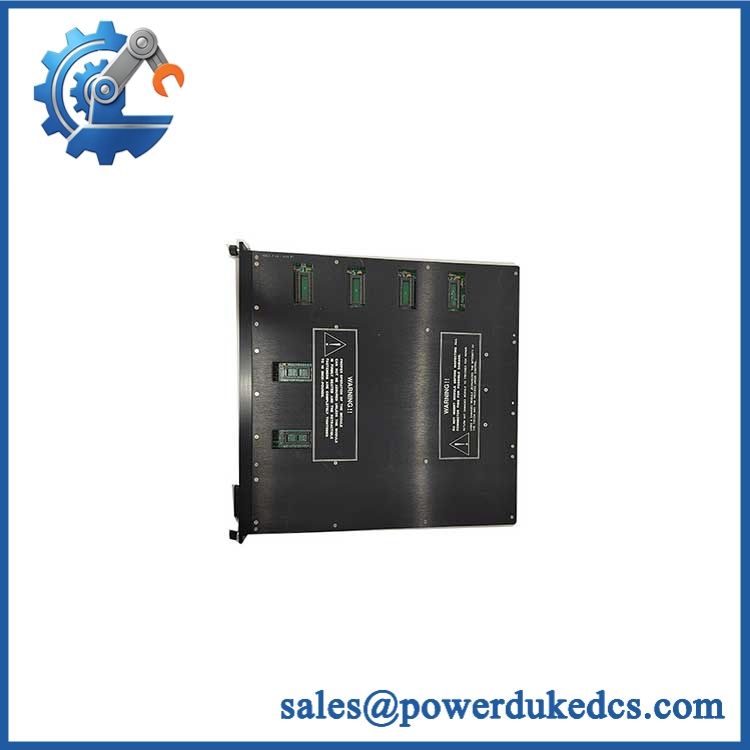
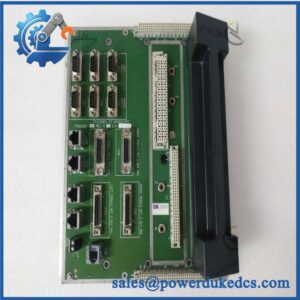
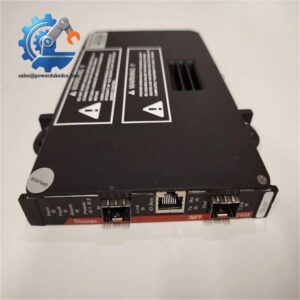
TRICONEX 3009X
Module 4: Application Scenarios & Field Realities
- Inside an 8120X Tricon CX chassis, three 3009X processors form the three independent controller channels. During a spare replacement, identify all three processor positions and compare their hardware revisions before removing one unit. A mixed revision set should never be accepted merely because every board carries the same 3009X family marking.
- For process shutdown and critical protection systems, the processor executes the control application while the TMR architecture provides continuous comparison between the three channels. This makes processor diagnostics particularly important; capture the existing diagnostic condition before replacing hardware so a chassis, communication, or application problem is not mistaken for a processor failure.
- Where the controller communicates with an I/O expansion chassis, the 3009X uses an SFP-based Ethernet I/O-processor bus, with the published specification supporting distances up to approximately 20 km depending on the optical implementation. Verify the SFP type, fiber infrastructure, and approved system topology before commissioning a replacement processor.
- During a legacy Tricon upgrade, do not confuse 3009X with the earlier 3009 processor. The product lifecycle documentation identifies 3009X as the Tricon CX main processor, while 3009 belongs to the earlier Tricon platform. They should therefore be treated as platform-specific processor generations, not interchangeable suffix variants.
Module 5: Migration, Compatibility & Installation Traps
Replacement Matrix
Replacement Classification: Drop-in Replacement Within the Matching Tricon CX 8120X Configuration
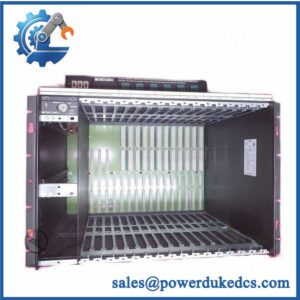
A like-for-like 3009X replacement is appropriate when the existing controller is a Tricon CX system using the 8120X Main Chassis, with compatible processor firmware, chassis hardware, I/O-processor interface, and application configuration. Tricon CX documentation explicitly identifies the 8120X as accepting three 3009X Main Processor modules.
3009X → 3009: Hardware Modification Required. The 3009 belongs to the earlier Tricon v9–v11 platform, while 3009X is specified for the Tricon CX architecture. Treating the two as interchangeable processor boards can result in an incompatible chassis and communication architecture.
3009X → 3008: Hardware Modification Required. Product lifecycle documentation associates 3008 with older Tricon v9–v10 systems and 3009X with Tricon CX. The platform boundary matters more than superficial similarities in processor-module function.
⚠️ Field Traps — Watch Out
1. Platform mismatch: A 3009X belongs to the Tricon CX architecture and is designed for the 8120X Main Chassis. Do not install it into a legacy Tricon chassis simply because both parts are labeled “Main Processor.” The chassis, bus architecture, and I/O interfaces differ by platform.
2. TMR channel consistency: Three 3009X processors operate as separate channels. Before replacement, document the three processor identifiers, firmware information, diagnostic status, and chassis positions. The replacement must be validated as part of the complete TMR set rather than tested only as an isolated board.
3. I/O bus interface configuration: The 3009X uses an SFP Ethernet-based I/O-processor bus. Verify the installed optical module and expansion-chassis interface before startup; a processor can pass its own POST while still failing to establish the expected I/O communication path.
Module 6: Quality Assurance SOP
The 3009X should be tested as a Tricon CX main processor, with emphasis on processor diagnostics, TMR participation, and I/O-bus communication.
- OEM identification visual inspection: Verify TRICONEX / Schneider Electric markings, 3009X part number, serial number, hardware revision, front-panel legend, connectors, ejectors, and SFP interface.
- Processor verification: Confirm the installed QorIQ P1021 dual-core, 800 MHz processor configuration where identification is accessible.
- Memory verification: Verify detection of 256 MB DRAM, 2 MB battery-backed SRAM, and 128 MB Flash PROM during the approved diagnostic procedure.
- Mechanical inspection: Examine the PCB, chassis connector interfaces, ejector mechanisms, heatsink or thermal hardware, SFP cage, and front-panel indicators for damage, contamination, oxidation, or evidence of repair.
- Power verification: Install the processor in an approved 8120X test chassis and verify stable operation within the documented <15 W logic-power requirement.
- Power-on self-test (POST): Confirm normal processor initialization, status indications, diagnostic behavior, and expected programming-mode state.
- TriBus communication test: Verify processor communication through the 32-bit CRC-protected TriBus and confirm expected operation at the applicable system bus rate.
- TMR synchronization test: Install the processor in a controlled three-channel test configuration and verify correct interprocessor comparison, synchronization, and voting behavior.
- I/O-processor communication test: Verify the SFP Ethernet I/O-processor interface and confirm successful communication with the approved Tricon CX I/O expansion hardware.
- Diagnostic-port verification: Test the optically isolated RS-232 diagnostic interface using the authorized maintenance procedure.
- Firmware/configuration verification: Record the processor firmware, application revision, chassis identification, and configuration data before release. Do not overwrite customer-specific information without an approved recovery procedure.
- Extended stability test: Operate the processor under controlled load while monitoring TMR status, I/O communication, diagnostic events, processor temperature, and system alarms.
- Final QC record: Retain identification photographs, hardware revision, firmware information, memory test results, TriBus results, TMR synchronization results, I/O communication results, diagnostic-port results, thermal observations, and final QC approval.
The TRICONEX 3009X is specifically a Tricon CX main processor, with three processors forming the controller’s TMR processing architecture. Its defining replacement characteristics are the QorIQ P1021 dual-core 800 MHz processor, 256 MB DRAM, 2 MB battery-backed SRAM, 128 MB Flash, 1 Gbps-class TriBus, and SFP-based I/O-processor interface. The 3009X belongs to the 8120X/Tricon CX platform and should not be substituted across older Tricon chassis generations without a documented migration path.



 Start Chat