

Description
- Brand: TRICONEX
- Full Model Number: 3101
- System/Series Family: Trident v1.2 Triple-Modular Redundant Safety Controller
- One-Sentence Core Function: Main processor module that executes the Trident control application and participates in TMR input/output voting
- Top 3 Hardcore Specs: Dual Motorola MPC860 processors; 50 MHz; 16 MB SX DRAM + 16 MB IOX DRAM
- Stock Status: New Surplus / Fully Tested Refurbished — verify firmware, hardware revision, and Trident system version before shipment
Module 3: Technical Product Introduction
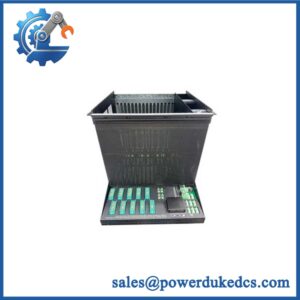
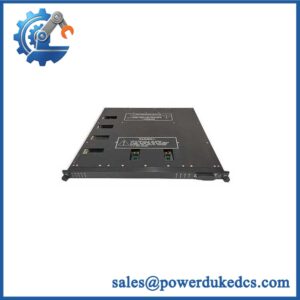
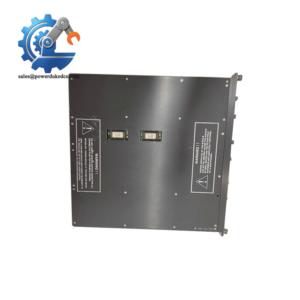
A processor fault in a Trident safety controller affects one channel of the TMR architecture, making accurate replacement control essential. The TRICONEX 3101 is the Main Processor Module (MP) for the Trident platform. Triconex documentation identifies model 3101 as the processor responsible for executing the control application and voting on input and output data; a standard Trident controller uses three MP modules on one MP baseplate.
Internally, the module separates application execution from I/O management. The SX processor uses a Motorola MPC860, 32-bit, 50 MHz processor with 6 MB Flash PROM, 16 MB DRAM, and 8 KB CRC-protected NVRAM. A second MPC860-based IOX processor provides another 16 MB DRAM area and communicates with the SX through 128 KB shared memory. The diagnostic bus is 2 Mbps HDLC, while logic power is specified at 24 VDC with an operating range of 19.2–30 VDC and maximum logic consumption of 8 W.
Module 4: Application Scenarios & Field Realities
- Inside a Trident safety controller, three 3101 modules operate as the main processing channels of the TMR architecture. The processor executes the application while the three channels participate in voting, so replacing one MP should be approached as a controlled redundancy-restoration task rather than a generic CPU swap.
- When a Trident system reports an MP diagnostic fault, inspect the processor status, baseplate connections, and system diagnostics before replacing I/O modules. The 3101 is a system-level processor, while models such as 3301 are separate 32-point digital-input modules.
- During a shutdown or approved online maintenance activity, verify the controller generation before installation. The published Trident v1.2 planning documentation identifies 3101 as the Main Processor Module, while later Triconex platforms use different processor families.For legacy spare inventories, retain the complete module identity and firmware/revision information. Commercial records consistently identify 3101 as a Trident Main Processor Module, but hardware and firmware compatibility still depend on the installed controller version.
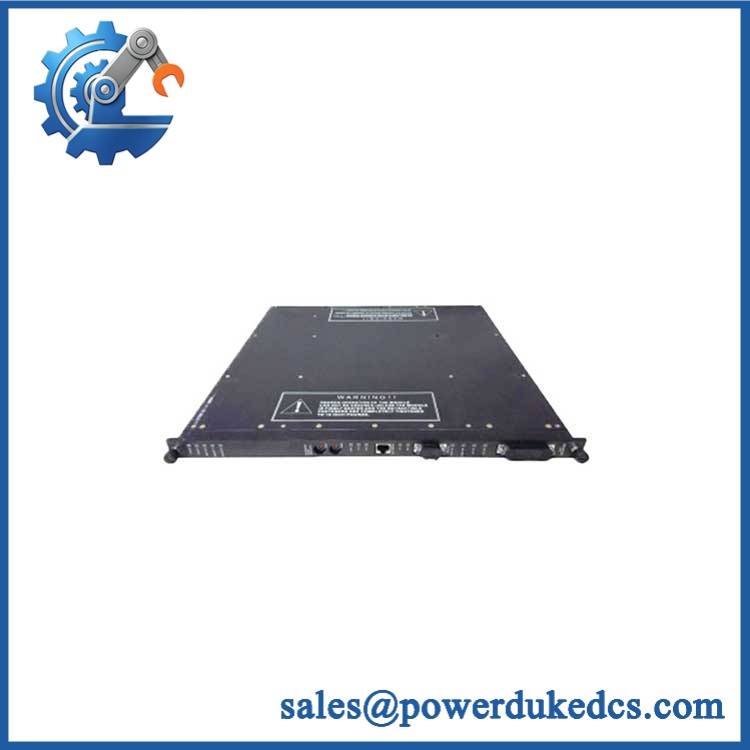
TRICONEX 3101
Module 5: Migration, Compatibility & Installation Traps
Replacement Matrix
| Replacement Type | Assessment |
|---|---|
| Drop-in Replacement | Conditional — suitable for an exact 3101 replacement in a compatible Trident v1.2 architecture |
| Software Compatible | Conditional — verify firmware revision, Trident software version, application configuration, and TriStation environment |
| Hardware Modification Required | Normally no for a like-for-like 3101 replacement; MP baseplate, chassis, and processor-channel configuration must match |
⚠️ Field Traps — Watch Out
1. Do not confuse 3101 with the Tricon 3008.
Both are Triconex main processors, but 3101 belongs to the Trident platform. Tricon and Trident use different system architectures and should not be treated as interchangeable processor families. The Trident planning guide identifies 3101 specifically as the Trident MP.
2. TMR channel replacement requires system verification.
A Trident controller’s minimum architecture uses three MP modules on one baseplate. After installing one replacement, verify that all three channels reach the expected healthy and synchronized state before returning the system to service.
3. Check the power rail before blaming the processor.
The published operating range is 19.2–30 VDC, based on the nominal 24 VDC input. A marginal DC supply can produce processor diagnostics that resemble an internal board failure.
4. Preserve application and firmware information.
The 3101 contains protected application and retained-data memory. Record the existing controller software environment and processor revision before replacement; a hardware-only swap does not guarantee application recovery.
Module 6: Quality Assurance SOP
- OEM anti-counterfeit visual inspection — inspect TRICONEX identification, model 3101 marking, assembly labels, PCB revision, connectors, ejector hardware, and visible manufacturing information.
- Exact part-number verification — confirm 3101 against the purchase order and the physical module label.
- Platform verification — confirm that the intended system is a Trident controller and that the installed architecture matches the documented 3101 application.
- Revision and firmware record — photograph and record hardware revision, firmware information, serial number, and all visible configuration identifiers.
- Mechanical inspection — inspect board connectors, ejectors, guide surfaces, PCB condition, and baseplate mating contacts for damage, oxidation, or contamination.
- Power-on self-test (POST) — energize the module in an approved Trident test environment using the specified 24 VDC supply range. Record startup diagnostics, status indications, current draw, and temperature behavior.
- SX processor verification — test the application-processor path using the approved Trident diagnostic procedure and verify access to the documented 6 MB Flash PROM, 16 MB DRAM, and retained-memory resources.
- IOX processor verification — validate the secondary MPC860-based I/O processor and its communication path through the documented 128 KB shared memory architecture.
- Diagnostic bus verification — establish the 2 Mbps HDLC diagnostic connection with a compatible Trident test environment and verify stable communication with the required I/O diagnostic resources.
- TMR synchronization verification — install the tested processor with compatible healthy MP modules and confirm expected channel synchronization, processor status, and voting behavior.
- Application-level validation — load an approved test application and verify control-program execution, I/O data exchange, diagnostics, and sequence-of-events handling.
- TriStation communication handshake verification — establish the supported engineering connection, verify module identification and diagnostic access, and confirm approved configuration functions before release.
- Final QC and packaging — record part number, firmware/hardware revision, diagnostic results, TMR test status, photographs, ESD protection, and packaging condition.
Engineering note: The TRICONEX 3101 is documented as the Trident Main Processor Module, with three MPs forming the controller’s TMR processing architecture. The technical data identifies dual 50 MHz Motorola MPC860 processors, 16 MB SX DRAM, 16 MB IOX DRAM, 6 MB Flash PROM, 8 KB NVRAM, 24 VDC nominal input, 8 W maximum logic power, and a 2 Mbps HDLC diagnostic bus.



 Start Chat