

Description
- Brand: TRICONEX / Schneider Electric
- Full Model Number: 3211
- System/Series Family: Trident v3 Communications Integration Module
- One-Sentence Core Function: Communications Integration Module providing serial and Ethernet interfaces between a Trident controller and external systems
- Top 3 Hardcore Specs: 3 serial ports; dual Ethernet/SFP network interfaces; 24 VDC logic supply, 11.5 W maximum without SFPs
- Stock Status: Stock condition and hardware revision to be confirmed
Module 3: Technical Product Introduction
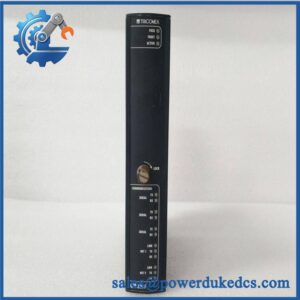
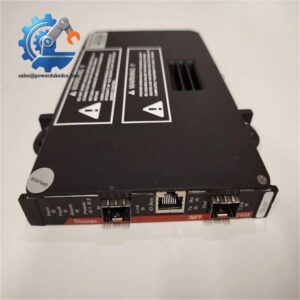
A communication-interface failure can isolate an otherwise healthy Trident safety controller from the DCS, operator workstation, historian, or peer controller. TRICONEX 3211 is the Communications Integration Module (CIM) used with the Trident platform. It provides three serial communication ports and two network interfaces, allowing the controller to exchange data through protocols such as Modbus, TriStation 1131, TCP/IP, TSAA, peer-to-peer communications, and time-synchronization services. Trident documentation identifies Model 3211 as the CIM used in the 5211 Communications Integration Module TriPak.
The electrical and interface details are specific enough to matter during replacement. The Trident v3 guide specifies 24 VDC nominal logic power, with an operating range of 19.2 to 30 VDC plus 5% AC ripple; the CIM itself requires up to 11.5 W without SFPs, with an additional 1.0 W per 100 Mb SGMII-type SFP. The CIM exposes three serial ports, while each network port supports multiple TCP/IP and UDP/IP protocols. The system also supports a maximum of 16 Modbus TCP ports on the CIM.
Module 4: Application Scenarios & Field Realities
- When a Trident controller must exchange process data with a DCS, the 3211 provides the communication layer rather than executing the safety application itself. Check the existing Modbus master/slave arrangement, IP configuration, and port assignments before replacing the CIM; a physically correct spare can still fail integration if the communication parameters were not preserved.
- For peer-to-peer controller communication, the 3211 supports standard and enhanced communication services. Trident systems using Model 3211 CIMs can participate in Enhanced Peer-to-Peer communication, including communication with compatible Tri-GP and later Tricon controllers. That capability is tied to the controller and communication-module generation, so migration should be checked at the project level.
- In plants using optical Ethernet connections, the SFP interfaces become a key spare-parts consideration. The CIM’s power consumption changes with installed SFPs, and the correct optical module must match the network design. Do not substitute an arbitrary SFP simply because the connector is mechanically compatible.
- During legacy Trident maintenance, distinguish the 3211 CIM from the 3201 Communication Module. Tricon lifecycle documentation lists 3211 specifically as the Trident Communications Integration Module, while 3201 is the separate Communication Module product. The 3211 also arrived with Trident system version 3.0 support.
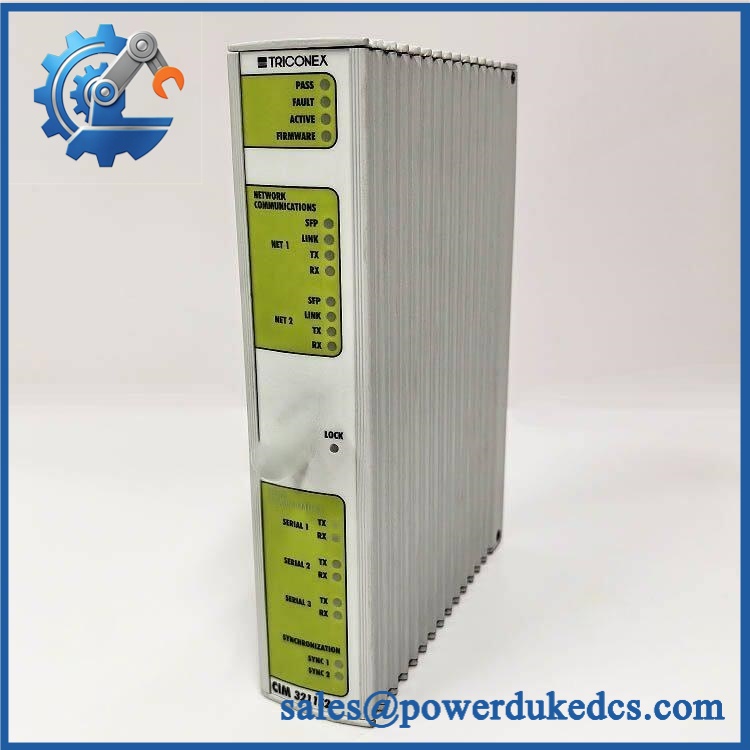
TRICONEX 3211
Module 5: Migration, Compatibility & Installation Traps
Replacement Matrix
Replacement Classification: Drop-in Replacement Within the Matching Trident v3 CIM Architecture
A like-for-like TRICONEX 3211 replacement is appropriate when the installed controller is a compatible Trident v3 system using the 3211 Communications Integration Module and matching CIM baseplate. Tricon configuration documentation explicitly states that Trident system version 3.0x introduced support for Model 3211.
3211 → 3201: Hardware Modification Required. The 3211 is the Trident CIM, whereas the 3201 is the separate Trident Communication Module. Their supported interfaces and communication capabilities are not identical.
3211 → 3211S2: Configuration and baseplate check required. The lifecycle documentation identifies 3211S2 as the CIM assembly associated with Tri-GP systems, while 3211 is associated with Trident. They should not be treated as interchangeable solely because the core model number is similar.
⚠️ Field Traps — Watch Out
1. Trident versus Tri-GP architecture: Model 3211 is documented for the Trident CIM, while 3211S2 is listed for Tri-GP. Verify the controller family and CIM baseplate before inserting the spare. A model-number match without an architecture match is not sufficient.
2. Communication settings are part of the replacement: Preserve Modbus addressing, baud rate and serial settings, IP configuration, port assignments, and peer-to-peer parameters before removing the existing module. The 3211 supports a broad communications stack, so a default configuration may not reproduce the installed plant interface.
3. SFP configuration and power: The CIM’s stated 11.5 W maximum excludes the additional power consumed by installed SFPs. Verify the SFP type and quantity together with the cabinet power budget before commissioning.
Module 6: Quality Assurance SOP
Each TRICONEX 3211 should undergo a communication-focused inspection and functional test before shipment.
- OEM identification visual inspection: Verify TRICONEX / Schneider Electric markings, 3211 model designation, serial number, hardware revision, front-panel legends, connectors, SFP cages, and mechanical condition.
- Platform verification: Confirm that the unit is intended for the Trident CIM / 5211 Communications Integration Module architecture and record the customer’s controller system version.
- Mechanical inspection: Examine the PCB, baseplate connector, front-panel indicators, serial connectors, SFP interfaces, ejector hardware, and mounting points for impact, corrosion, contamination, or evidence of repair.
- Power verification: Install the CIM in an approved Trident test configuration and apply 24 VDC within the documented 19.2–30 VDC operating range. Confirm stable startup behavior.
- Power-on self-test (POST): Confirm normal PASS/FAULT/ACTIVE/FIRMWARE indications and verify that the CIM completes startup without unexpected diagnostics.
- Serial interface test: Test all three serial ports using approved loopback or communication fixtures. Verify representative Modbus RTU and ASCII communication where applicable.
- Ethernet interface test: Exercise both network interfaces and verify link, transmit, receive, and packet-transfer behavior using the approved test network.
- Protocol verification: Confirm representative operation of applicable services including Modbus TCP, TriStation 1131 LINK, TSAA, peer-to-peer, and time synchronization. Do not enable protocols that are outside the customer’s approved configuration.
- SFP verification: Where optical interfaces are supplied, identify each SFP, verify compatibility with the CIM, and confirm stable network operation under the intended optical configuration.
- Enhanced communication test: Where the customer’s system uses Enhanced Peer-to-Peer communications, verify the 3211 participates correctly with the authorized Trident test configuration.
- Thermal and stability test: Run an extended communications load test while monitoring diagnostic status, network stability, serial communication, and SFP operation.
- Final QC record: Retain complete part-number photographs, hardware revision, system-version compatibility check, serial-port results, Ethernet results, protocol test results, SFP identification, thermal observations, and final QC approval.
The TRICONEX 3211 is specifically a Trident Communications Integration Module, not an analog I/O card or main processor. Its replacement-critical attributes are the Trident v3 architecture, three serial ports, dual network interfaces, supported Modbus/TCP/IP/TSAA communication services, and the documented 24 VDC / 11.5 W CIM power requirement before SFP additions. Verify the controller generation and complete communication configuration before releasing a warehouse spare.



 Start Chat