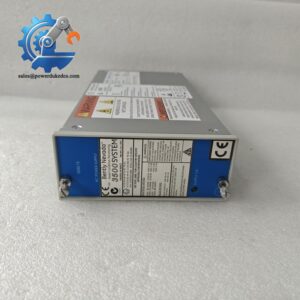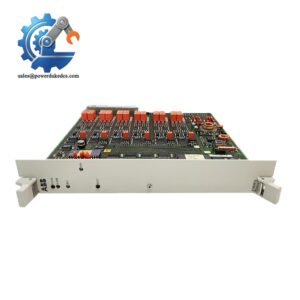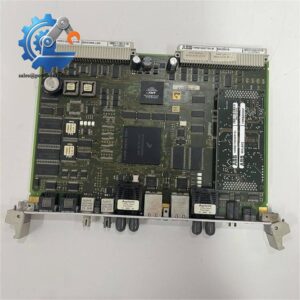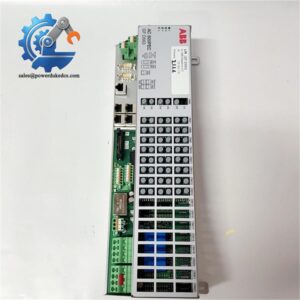
Description
-
Brand: TRICONEX
-
Full Model Number: 3674
-
Lifecycle Status: Legacy-generation Tricon hardware. Confirm current OEM support, repair options, and availability for the installed system.
-
Core Function: Dual digital output (DDO) module for controlling discrete field devices in compatible Tricon safety instrumented systems.
-
Top 3 Technical Specs:
-
Output capacity: 32 commoned digital output points.
-
Operating voltage: Nominal 24 VDC; recommended range 16–30 VDC; 36 VDC maximum.
-
Output current: Up to 2 A per point, with a 10 A surge rating for 10 ms. Maximum load leakage is 2 mA.
-
-
Stock & Condition: Physical inventory, condition, hardware revision, testing records, warranty, and dispatch lead time require confirmation.
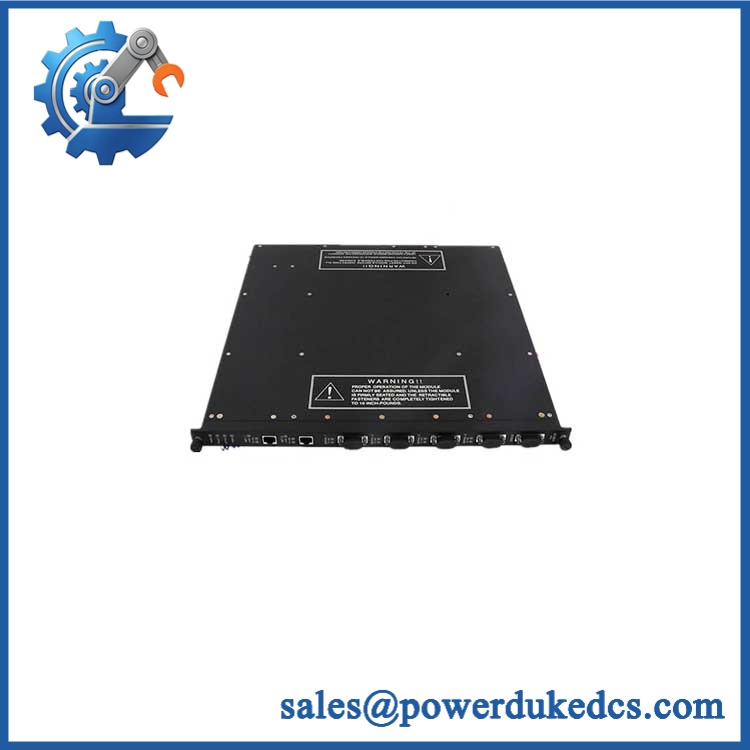
The TRICONEX 3674 is documented as a dual digital output module with a dual, serial output configuration. Its specifications also include module status indicators, individual output-state indicators, and a field load/fuse alarm. The manufacturer’s system documentation cautions against using the 3674 in energize-to-trip applications because certain hardware faults can leave outputs de-energized. Confirm the application’s required safe state before selecting a replacement.
Obsolescence and Supply Chain Deep Dive
The TRICONEX 3674 serves discrete output functions in compatible Tricon control systems. It commands field devices such as relays, solenoids, and other discrete loads through its output circuitry. Because it is part of a safety-related control architecture, replacement planning must account for the connected field termination panel (ETP), interface cable, chassis configuration, field power supply, output loading, and application logic. The system’s mechanical keying helps prevent installation in an incompatible chassis position, but it does not replace a full compatibility check. The 3674 supports a dual-module architecture with hot-spare capability where the installed system is configured accordingly.
Lifecycle planning should distinguish an immediate spare requirement from a broader migration decision. For an installed base containing older Tricon hardware, a verified replacement can help limit downtime and avoid unnecessary changes to validated control logic. The total cost of ownership includes the component price, traceability review, incoming testing, engineering labor, shutdown planning, and commissioning. Before approving a replacement, compare the module label, revision, output configuration, termination assembly, and current safety requirements against the installed equipment records. (Supply-chain note: a matching model number does not prove the unit’s condition or authenticity.) Avoid substituting a different output module solely because its connector or electrical ratings appear similar.
Compatibility and Replacement Matrix
|
Evaluation Item |
Preliminary Assessment |
Estimated Planning Allowance |
Field Traps |
|---|---|---|---|
|
Model and revision |
Confirm 3674 identification and applicable hardware documentation |
30–60 minutes |
Unverified revision or incorrect module family |
|
Chassis installation |
Confirm chassis generation, slot, and mechanical keying |
30–60 minutes |
Similar form factor does not establish interchangeability |
|
Termination interface |
Verify the required ETP and connecting cable |
30–90 minutes |
Incorrect termination assembly or cable assignment |
|
Field voltage |
Confirm nominal 24 VDC supply and operation within 16–30 VDC recommended range |
30–60 minutes |
Supply excursions or incompatible field-device ratings |
|
Output loading |
Check each output’s load against the 2 A point rating and surge limitations |
1–2 hours |
Inrush current, excessive simultaneous loading, or wiring faults |
|
Safety application |
Review the required de-energized state, application logic, and trip philosophy |
Engineering-dependent |
The 3674 is not recommended for energize-to-trip applications |
|
Replacement and validation |
Follow approved replacement procedures and test affected output circuits |
2–4 hours for a straightforward planned task |
Site permits, isolation, fault-finding, and proof testing may add time |
The time allowances are preliminary planning estimates, not OEM service specifications. Compatibility is conditional on the installed Tricon generation, hardware revision, termination interface, and application design.
TRICONEX 3674
Quality Assurance and Testing SOP
The following procedure defines a proposed incoming inspection and functional test process. It does not imply that a specific TRICONEX 3674 unit has already been tested.
Incoming inspection
-
Record the model number, serial number, hardware revision, and available traceability information.
-
Photograph the product label, connector interfaces, keying features, and visible indicators.
-
Inspect the enclosure and connector surfaces for corrosion, cracked components, contamination, and evidence of unauthorized repair.
-
Confirm that the supplied unit matches the approved bill of materials and the specified condition.
-
Verify that the required termination panel and cable are identified for the installation.
Electrical and functional verification
-
Confirm test-fixture compatibility and the approved power-up procedure before energizing the module.
-
Check the documented module status indicators: PASS, FAULT, and ACTIVE. Record any abnormal indication or diagnostic report.
-
Test output points with an approved fixture and representative loads, verifying commanded ON/OFF states across all required channels.
-
Confirm operation within the documented voltage and output-current limits. Check for abnormal voltage drop, leakage, or unexpected output behavior.
-
Exercise applicable diagnostic and load-alarm functions using approved procedures. Verify expected behavior for simulated fault conditions without connecting the unverified unit to a live safety circuit.
-
Record test equipment identification, calibration status, applied conditions, observed results, and acceptance criteria.
Safety and release controls
Triconex documentation identifies a specific risk for the 3674 in energize-to-trip applications: certain hardware faults may leave an output de-energized. The test plan must therefore account for the required safe state and the consequences of an output failure. A successful bench test is not proof of suitability for every safety application.
Release the unit for site installation only after identification, inspection, and agreed functional checks are complete. Follow the site’s management-of-change process, maintenance procedures, and required functional or proof testing before returning affected safety functions to service.
Procurement and Lifecycle FAQ
Is the TRICONEX 3674 a digital input/output module?
The documented classification is a dual digital output module, not a combined digital input/output module. It provides 32 commoned output points and is designed for compatible Tricon systems.
What voltage and current ratings should procurement verify?
The documented nominal supply is 24 VDC, with a recommended operating range of 16–30 VDC and a maximum of 36 VDC. The maximum current rating is 2 A per point, with a 10 A surge rating for 10 ms. Confirm the actual load profile and installation requirements before approving a replacement.
Can the 3674 be used in an energize-to-trip safety application?
The system documentation does not recommend the 3664/3674 family for energize-to-trip applications because certain hardware faults can leave outputs in the de-energized state. Review the system safety design and required trip philosophy before selecting the module.
Does replacing the 3674 require a matching termination assembly?
The dual digital output architecture uses a separate external termination panel and connecting cable. Confirm the installed ETP, cable interface, and chassis arrangement before ordering. Do not assume that an existing termination assembly will suit a different module revision or family.
What information should I provide for an urgent replacement quotation?
Provide the full model number, required quantity, installed Tricon system generation, hardware revision, termination-panel details, shipping destination, and required delivery date. Request confirmation of physical availability, unit condition, available test records, warranty, and dispatch timing. This information helps reduce procurement delays and the risk of an unsuitable replacement.