

Description
- Brand Triconex / Invensys
- Full Model Number DI3301 / Model 3301
- System/Series Family Trident Safety Instrumented System
- Core Function 32-point commoned 24 VDC digital input acquisition with continuous channel diagnostics
- Top 3 Hardcore Specs 32 input points | 24 VDC nominal | 15–30 VDC operating range
- Stock Status New Surplus — verify exact hardware revision, baseplate, and termination arrangement before shipment
Module 3: Technical Product Introduction
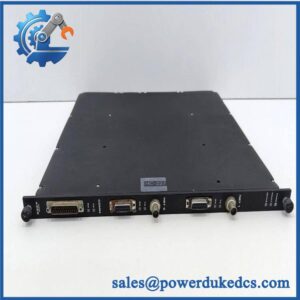
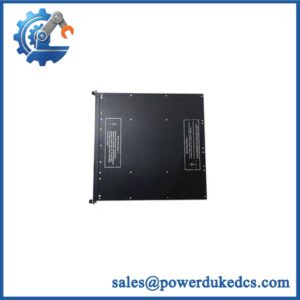
A failed digital input channel can create uncertainty around a permissive, interlock, switch status, or field alarm long before the controller itself becomes unavailable. Triconex DI3301 / Model 3301 is the 32-point Digital Input Module documented for the Trident safety system. The module accepts commoned 24 VDC inputs and processes the input data through three independent channels before the system’s processors evaluate the information. The Trident planning documentation specifies a nominal 24 VDC input and a 15–30 VDC operating range.
At the electrical level, the module has an input delay of less than 10 ms for both On-to-Off and Off-to-On transitions. The documented input threshold places 0–5 VDC in the Off region, 6–14 VDC in transition, and 15–30 VDC in the On region. Each point also participates in Force-to-Value Diagnostic testing, with the documented diagnostic test taking less than 2 ms. Those figures make the exact module identification important when replacing an older Trident input card.
Module 4: Application Scenarios & Field Realities
- At a process shutdown panel, DI3301 can monitor discrete field states such as limit switches, permissive contacts, valve-position feedback, and other 24 VDC status signals. The 32-point commoned architecture is suited to cabinets where many discrete signals share the same reference arrangement.
- When a field contact becomes intermittent, the Trident architecture’s three-channel processing and diagnostic functions provide additional information for fault isolation. A technician should still check the field contact, wiring, terminal assembly, and baseplate before replacing the input module itself.
- For high-density digital status monitoring, 32 points per module can reduce the number of individual input cards required in the Trident cabinet. During maintenance, however, channel-to-tag mapping must be preserved exactly; moving one wire by a single position can generate a believable but incorrect process status.
- During an emergency replacement, do not rely on the generic “DI3301” label alone. The Trident documentation identifies Model 3301 as a 32-point module, while secondary supplier listings sometimes publish conflicting descriptions or point counts. The module nameplate and controlled Trident documentation should determine the procurement baseline.
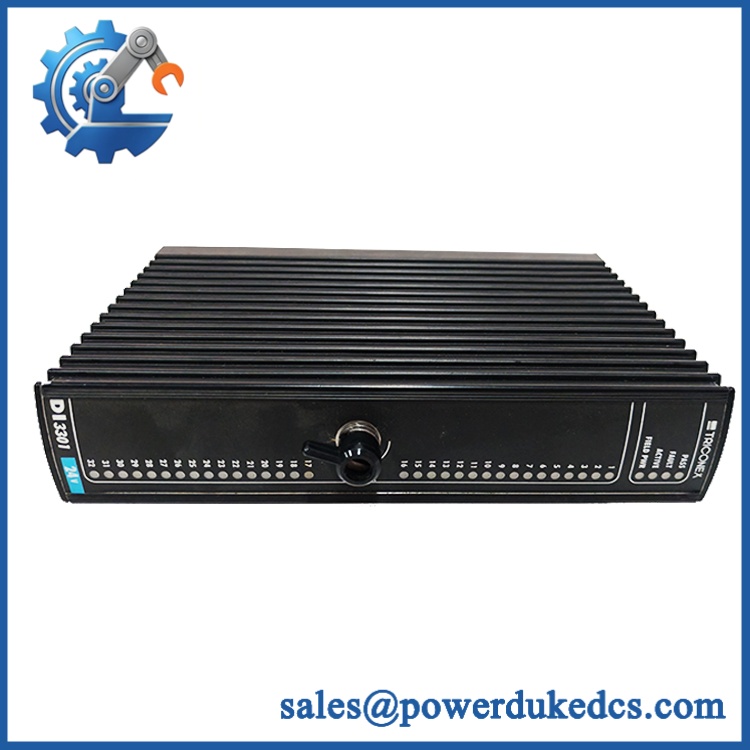
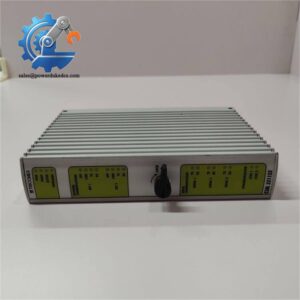
Triconex DI3301
Module 5: Migration, Compatibility & Installation Traps
Replacement Matrix
| Replacement Status | Engineering Assessment |
|---|---|
| Drop-in Replacement | Yes, for a like-for-like DI3301 / Model 3301 installation in the correct Trident baseplate and termination configuration. |
| Software Compatible | Generally yes for an exact module replacement, but the Trident configuration, channel assignments, diagnostics, and approved controller revision must be verified. |
| Hardware Modification Required | Normally no for an exact DI3301 replacement. Changes may be required when moving to another input family, changing baseplates, or altering field termination architecture. |
⚠️ Field Traps: Watch Out
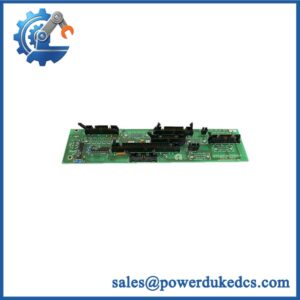
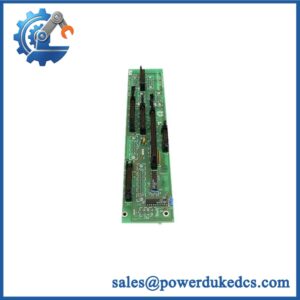
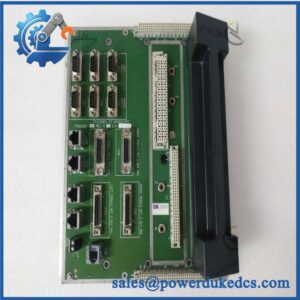
Verify the baseplate before ordering. The Trident documentation identifies 2301 as the Digital Input Baseplate associated with Model 3301. The module and baseplate form an electrical interface, so a spare should not be evaluated independently of the installed rack hardware.
Check the input voltage at the card terminals. The specified On region begins at 15 VDC, while 6–14 VDC is a transition region. A weak 24 VDC supply, excessive field-cable resistance, or a deteriorated contact can therefore create unstable status indications without an actual module failure.
Do not substitute another 3301 revision without checking the approved configuration. Secondary references discuss , DI3301S2, and DI3301S3 as possible hardware revisions, but interchangeability should be established from the applicable Trident documentation rather than assumed from the shared base number.
Respect the commoned-input architecture. Model 3301 is documented with 32 commoned points. Rewiring a point without confirming the common/reference arrangement can produce multiple apparent input faults from one wiring error.
Module 6: Quality Assurance SOP
A surplus should be tested channel-by-channel in a controlled Trident-compatible fixture before shipment. Visual inspection alone is not sufficient for a safety-system input module.
- OEM anti-counterfeit visual inspection: Verify Triconex/Invensys identification, / Model 3301 marking, PCB revision, connector arrangement, front-panel labeling, and manufacturing identifiers against controlled references.
- Part-number and traceability check: Record the exact model, hardware revision, serial number, date code, and any associated baseplate or termination reference.
- Mechanical inspection: Examine the backplane connector, enclosure, ejector hardware, PCB, connector pins, and mounting interfaces for bent contacts, corrosion, contamination, cracks, or unauthorized modification.
- Power-on self-test (POST): Install the card in an approved Trident test arrangement and confirm normal initialization and expected module/channel diagnostic indications.
- 24 VDC input verification: Apply controlled DC signals within the documented 15–30 VDC operating range and monitor module current and status behavior.
- 32-channel functional test: Exercise all 32 input points individually at representative Off, transition, and On voltages, confirming the expected state thresholds.
- Threshold verification: Confirm that 0–5 VDC is interpreted as Off, 6–14 VDC falls within the transition region, and 15–30 VDC is interpreted as On.
- Response-time verification: Apply controlled On-to-Off and Off-to-On transitions and verify the documented input response of less than 10 ms under the applicable test conditions.
- Force-to-Value Diagnostic test: Execute the approved FVD procedure and verify the expected diagnostic response. The documented FVD test duration is less than 2 ms per test.
- Input impedance verification: Check representative channels against the documented input impedance characteristics: greater than 30 kΩ without the baseplate and approximately 3 kΩ with the baseplate.
- Channel isolation and wiring check: Verify the intended common/reference arrangement and confirm that no unintended cross-channel connection exists.
- Baseplate recognition test: Confirm correct communication between the input module and the Trident processing architecture through the approved baseplate arrangement.
- Communication handshake verification: Verify successful module-to-controller data exchange and correct channel-state reporting through the Trident diagnostic environment. The input module itself is not an Ethernet or Modbus communications interface.
- Fault-diagnostic test: Introduce approved controlled input faults and confirm that the relevant channel or module diagnostics respond as expected.
- Extended-run test: Operate all channels under representative switching activity while monitoring input stability, diagnostics, supply current, and intermittent state changes.
- Final QC record: Document hardware revision, 32-channel test results, threshold measurements, response-time results, FVD behavior, baseplate compatibility, diagnostic status, traceability information, and packing condition.
Technical Identification Note: Trident planning documentation identifies Model 3301 as a 32-point, commoned 24 VDC Digital Input Module, with a 15–30 VDC operating range, less than 10 ms input delay, and Force-to-Value Diagnostics. Secondary listings sometimes describe with different point counts or architecture classifications, so the controlled Trident documentation and the physical module label should govern the replacement record.



 Start Chat