

Description
- Brand Triconex / Invensys
- Full Model Number MP3008 / Model 3008
- System/Series Family Tricon v9.6–v10.x Safety Instrumented System
- Core Function Triple-redundant main processor executing the user safety application and exchanging data with the Tricon I/O subsystem
- Top 3 Hardcore Specs Motorola MPC860 32-bit 50 MHz | 16 MB DRAM + 32 KB battery-backed SRAM | 25 Mbps TriBus
- Stock Status New Surplus — verify firmware version, hardware revision, battery condition, and system compatibility before shipment
Module 3: Technical Product Introduction
A failed main processor in a Tricon safety system is not an ordinary PLC CPU replacement. MP3008 is the Model 3008 Main Processor used with Tricon v9.6 and later systems, and a complete Tricon chassis requires three main processors operating as independent channels. Each processor executes the user-written control program and exchanges I/O data with its associated subsystem, while the Tricon architecture uses hardware majority voting to mask transient faults and identify persistent failures.
The Model 3008 specification is well defined: a Motorola MPC860, 32-bit, 50 MHz main processor, 16 MB DRAM, 32 KB battery-backed SRAM, and 6 MB Flash PROM. Inter-processor TriBus communication runs at 25 Mbps with 32-bit CRC protection and isolated DMA. The module also includes an optically isolated RS-232 diagnostic interface, an RS-485 communication interface, and the Tricon fault-tolerant I/O bus.
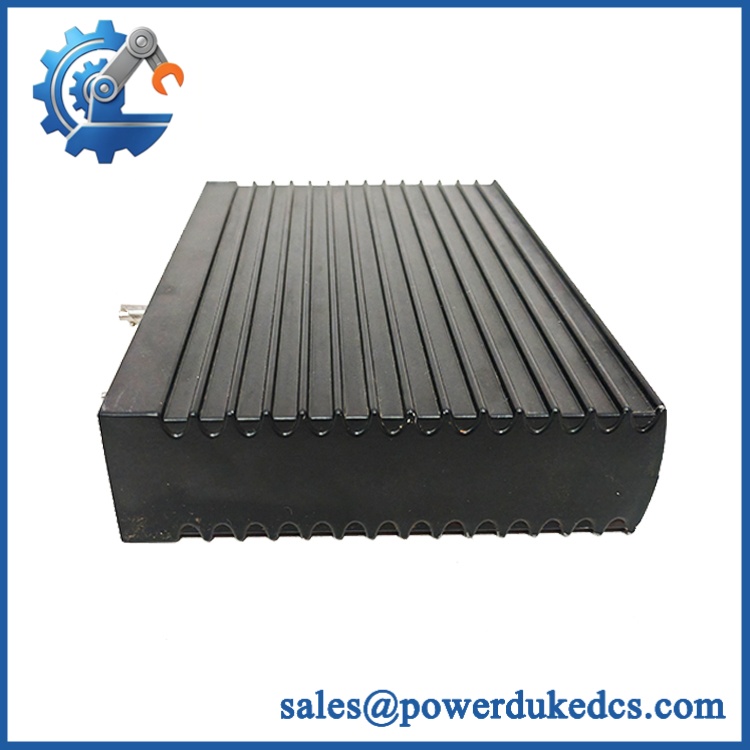
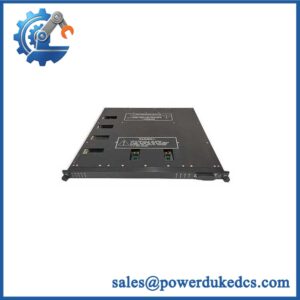
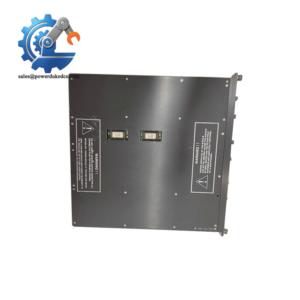
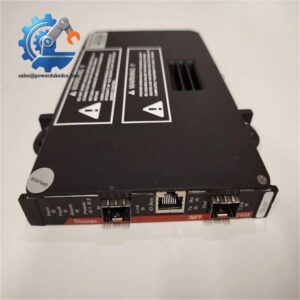
Triconex MP3008
Module 4: Application Scenarios & Field Realities
- In a refinery emergency-shutdown system, MP3008 provides one of the three independent processing channels responsible for executing the safety application. When one processor develops a persistent fault, the Tricon architecture is designed to diagnose the affected channel while maintaining the safety function through the remaining processors.
- For process plants running Tricon v9.6–v10.x, the Model 3008 is the correct processor generation for that system range. It is not a generic substitute for earlier 3006/3007 hardware or later 3009 processors; the compatibility table distinguishes 3008 for versions 9.6–10.x and 3009 for version 11.x.
- Where sequence-of-events records are important, the main processors monitor designated discrete variables and timestamp detected events. When multiple Tricon systems communicate through NCMs, the time-synchronization function maintains a common time base for SOE records.
- During an online maintenance event, the replacement procedure needs to follow the approved Tricon maintenance process. Schneider Electric describes Tricon as a TMR safety platform with diagnostics and maintenance procedures covering main processors, I/O, and communication hardware; the objective is to replace the faulty processor without disturbing the validated safety configuration.
Module 5: Migration, Compatibility & Installation Traps
Replacement Matrix
| Replacement Status | Engineering Assessment |
|---|---|
| Drop-in Replacement | Yes, for a like-for-like MP3008 / Model 3008 replacement in a compatible Tricon v9.6–v10.x chassis, subject to firmware, hardware revision, and approved configuration requirements. |
| Software Compatible | Generally yes for an exact processor replacement, but the installed firmware revision, application image, retained configuration, and controller release must be verified before return to service. |
| Hardware Modification Required | Normally no for an exact MP3008 replacement. Hardware changes are required when migrating between processor generations or changing the Tricon chassis architecture. |
⚠️ Field Traps: Watch Out
Do not substitute a 3006/3007 or 3009 simply because the processor is physically similar. The documented compatibility matrix assigns 3008 to Tricon 9.6–10.x, while 3009 is associated with version 11.x. Match the processor generation to the actual controller release.
Firmware version is a critical inspection point. Schneider Electric’s security archive specifically identifies Triconex MP3008 firmware versions 10.0–10.4 as affected by a disclosed security issue. Before deploying a surplus processor, record its firmware version and compare it with the customer’s approved cybersecurity and system-maintenance baseline.
Battery-backed SRAM must be checked. The Model 3008 uses 32 KB battery-backed SRAM. A replacement processor with a degraded battery can introduce retained-data or startup problems even when the processor passes an initial power-up test.
Do not assume one processor proves the chassis is healthy. Three MPs are required in the Main Chassis. After replacement, verify inter-processor communication, voting behavior, I/O exchange, diagnostics, and the health of all three channels rather than testing only the newly installed module.
Module 6: Quality Assurance SOP
A surplus should undergo processor-level inspection followed by a controlled Tricon system test. A successful front-panel startup is not enough evidence for a safety-system spare.
- OEM anti-counterfeit visual inspection: Verify Triconex/Invensys markings, / Model 3008 identification, PCB revision, connector geometry, front-panel labels, serial number, and visible manufacturing marks against controlled references.
- Part-number and traceability check: Record the complete module designation, hardware revision, serial number, firmware version, date code, and battery identification.
- Mechanical inspection: Examine the backplane connector, ejector hardware, front panel, PCB, connectors, and enclosure for bent contacts, corrosion, contamination, cracking, or unauthorized repair.
- Power-on self-test (POST): Install the processor in an approved Tricon test chassis and confirm expected initialization, front-panel diagnostic states, and module health indications.
- Processor and memory verification: Execute the approved processor test sequence and verify the 16 MB DRAM, 32 KB battery-backed SRAM, and 6 MB Flash PROM are correctly recognized and accessible.
- TriBus verification: Confirm communication with the companion main processors over the 25 Mbps TriBus, including CRC-protected data exchange and the expected diagnostic behavior.
- I/O-bus verification: Verify communication between the processor and the associated I/O communication path using the Tricon diagnostic procedures. The technical documentation specifically calls for verification of shared-memory interfaces and handshake/interrupt signals.
- Diagnostic-port verification: Test the optically isolated RS-232 diagnostic interface using the approved diagnostic procedure; the Model 3008 specification identifies this port for diagnostic analysis.
- Communication-interface verification: Test the documented RS-485 communication interface and confirm stable communication at the applicable configured rate.
- Time and NVRAM verification: Check the TriClock function, retained SRAM, and battery-backed data. Record the battery condition before shipment.
- Application boot verification: Where authorized, load or boot the approved customer application environment and verify correct startup, program retention, and configuration recognition.
- TMR channel verification: Test the processor as part of a three-MP configuration and verify the expected cross-channel diagnostics and majority-voting behavior.
- Fault-injection verification: Under a controlled service procedure, simulate the approved processor or communication fault condition and confirm that diagnostics identify the affected channel without creating an unintended loss of the safety function.
- Communication handshake verification: Confirm processor-to-processor TriBus exchange, processor-to-I/O communication, and communication-channel diagnostics rather than relying solely on front-panel status LEDs.
- Extended-run test: Operate the module in a representative Tricon configuration while monitoring processor health, memory faults, TriBus errors, diagnostic events, temperature, and unexpected resets.
- Final QC record: Document hardware revision, firmware version, memory test results, battery condition, TriBus test, I/O communication test, diagnostic-port test, TMR validation, extended-run results, traceability information, and packaging status.
Technical Identification Note: TRICONEX / Model 3008 is the Tricon main processor generation documented for v9.6 and later, with the established compatibility range covering v9.6–v10.x. The technical specification identifies a 50 MHz Motorola MPC860, 16 MB DRAM, 32 KB battery-backed SRAM, 6 MB Flash PROM, and 25 Mbps TriBus. Schneider Electric’s cybersecurity archive also specifically identifies firmware 10.0–10.4 in a historical security notification, making firmware verification an important part of surplus-stock acceptance.



 Start Chat


