

Description
- Brand: Woodward
- Full Model Number: 8237-1600
- Lifecycle Status: Discontinued / Legacy
- Core Function: ProTech-GII turbine overspeed and overacceleration protection
- Top 3 Technical Specs: Panel mount; TMR 2-out-of-3 voting architecture; 4.2 in display with 15 keys per module
- Input Configuration: 2 high-voltage inputs or 1 high-voltage + 1 low-voltage input
- Speed Inputs: Active or passive magnetic pickups
- Trip Architecture: Three independent processing modules
- Outputs: Trip relays; alarm relays; 4–20 mA speed output
- Enclosure: IP56 when properly installed
- Operating Temperature: -20 to +60 °C
- Weight: Less than 23 lb
- Stock & Condition: New Surplus / Tested Refurbished — physical stock confirmation required
Woodward’s ProTech-GII documentation identifies 8237-1600 as a panel-mount ProTech-GII model with high-voltage/high-voltage inputs and voted relays. The documented architecture uses three independent modules and 2-out-of-3 voting. (manuals.plus)
Module 3: Obsolescence & Supply Chain Deep Dive
A failed 8237-1600 affects a dedicated turbine protection function, not a conventional control-loop I/O point. The ProTech-GII continuously monitors turbine speed and can initiate a shutdown when overspeed or excessive acceleration is detected. The 8237-1600 uses three independent modules and a 2-out-of-3 voting arrangement, allowing maintenance on one module while the other two remain operational. Its documented panel-mount package also supports redundant power-input arrangements and routine speed testing using an internal frequency generator.This architecture is why a generic speed-monitoring replacement cannot be treated as an equivalent substitute.
The 8237-1600 is now listed by multiple current technical sources as a discontinued Woodward product, so procurement increasingly depends on verified legacy inventory rather than ordinary factory ordering.For an installed ProTech-GII system, a tested replacement can preserve the existing protection cabinet, speed-sensing arrangement, trip wiring, and plant shutdown logic. That can be substantially less expensive than an unplanned protection-system migration involving engineering review, trip testing, documentation updates, and commissioning. —For critical turbine service, inventory condition and revision control should be established before the outage window begins.
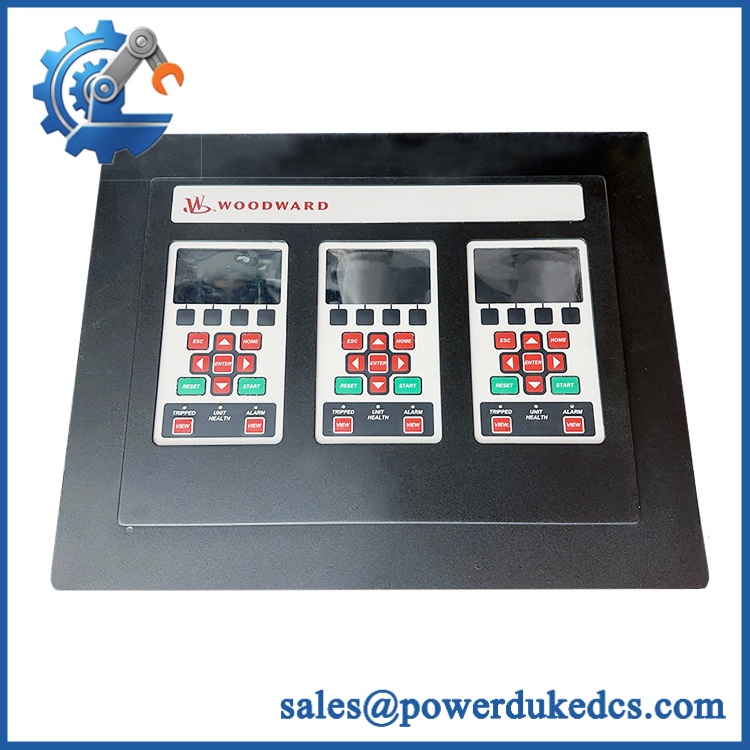
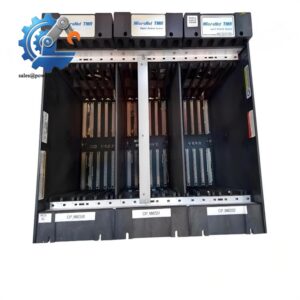
Woodward 8237-1600
Module 4: Compatibility & Replacement Matrix
| Approval Question | Assessment for Woodward 8237-1600 |
|---|---|
| Product Type | ProTech-GII panel-mount overspeed protection system |
| Replacement Type | Drop-in replacement for a matching 8237-1600 installation, subject to configuration verification |
| Safety Architecture | Triple Modular Redundant (TMR), 2-out-of-3 voting |
| Speed Inputs | Active or passive magnetic pickups |
| Power Input | 2 high-voltage inputs OR 1 high-voltage + 1 low-voltage input |
| Trip Outputs | Voted trip relays / independent trip relays depending configuration |
| Speed Output | 4–20 mA speed indication |
| Display | 4.2-inch display; 15 keys per module |
| Enclosure | IP56 when properly installed |
| Software Requirement | Application configuration required |
| Firmware Requirement | Revision-dependent; verify approved ProTech-GII release |
| Hardware Modification | Normally none for exact 8237-1600 replacement |
| Typical Field Swap | 4–8 hours, including trip-system checks |
| Engineering Effort | Low to medium for like-for-like replacement; high for platform migration |
The Woodward ProTech-GII installation documentation identifies the module arrangement as A, B, and C from left to right and provides dedicated removal/installation procedures for the panel-mount package. (manuals.plus)
Field Traps — Watch Out
- Voting configuration mismatch: Do not replace a unit without confirming the installed trip architecture. The 8237-1600 supports 2-out-of-3 voted operation, while some ProTech-GII configurations use separate non-voted trip relays. The replacement must match the approved application.
- Input-voltage configuration: Verify whether the installed system uses two high-voltage power inputs or a high-/low-voltage combination. The power arrangement must match the replacement and site wiring.
- Speed pickup compatibility: Active and passive MPUs do not produce identical signal characteristics. Confirm pickup type, wiring, signal amplitude, and configured speed range before returning the protection channel to service.
- Module revision: Do not assume every ProTech-GII replacement module has identical firmware or hardware revision compatibility. Woodward documentation identifies specific revision dependencies for later ProTech-GII upgrades.
Module 5: Quality Assurance & Testing SOP
An overspeed protection device should be tested as a safety instrument. The acceptance procedure must demonstrate correct speed detection, voting, trip behavior, and diagnostic operation.
1. Identity & Authenticity Verification
- Verify Woodward ProTech-GII identification and exact part number 8237-1600.
- Record serial number, date code, hardware revision, and visible firmware information.
- Perform OEM anti-counterfeit visual inspection of labels, module housings, connectors, terminal blocks, displays, and PCB markings.
- Photograph the complete unit and each installed module before testing.
2. Physical Inspection
- Inspect modules A, B, and C for corrosion, contamination, cracked components, loose hardware, and unauthorized repair.
- Check terminal blocks and connector interfaces.
- Inspect front-panel displays and keypads.
- Verify panel-mount hardware and rear-cover condition.
- Check grounding and protective-earth connections.
3. Power-On Self-Test
- Install the equipment in an approved ProTech-GII test environment.
- Apply the correct configured power arrangement.
- Perform power-on self-test (POST).
- Verify all three module status indications.
- Confirm correct display initialization and absence of processor, memory, or communication faults.
- Record startup diagnostics and alarm states.
4. Speed Input Testing
- Use a calibrated speed-signal generator to simulate the installed MPU inputs.
- Test normal operating frequency.
- Verify speed calculation accuracy.
- Test representative low-speed and high-speed conditions.
- Check signal-loss and invalid-input diagnostics.
- Confirm the front-panel speed indication agrees with the calibrated reference.
5. Overspeed Trip Testing
- Gradually increase the simulated speed toward the configured overspeed threshold.
- Verify the intended trip condition.
- Confirm the 2-out-of-3 voting logic produces the correct shutdown output.
- Independently test each processing module where the approved test procedure allows.
- Record trip thresholds and response behavior.
6. Acceleration Detection Testing
- Apply controlled frequency ramps to simulate excessive acceleration.
- Verify acceleration detection when this function is configured.
- Confirm the associated trip/alarm response.
- Check reset behavior after the simulated abnormal condition is removed.
7. Trip Relay & Alarm Verification
- Verify all configured trip relays.
- Check alarm relays.
- Confirm 4–20 mA speed output where fitted.
- Verify relay contact integrity under controlled test conditions.
- Record response time and state transitions.
The ProTech-GII is documented as supporting overspeed and, on configured models, acceleration detection, with trip commands transmitted through the protection system’s relay outputs.
8. Manual Speed-Test Verification
- Use the system’s internal test-frequency capability where supported.
- Verify the routine speed-test function.
- Confirm the expected diagnostic and trip behavior.
- Record the test outcome and reset state.
9. Extended Stability Test
- Operate all three modules under representative speed-signal conditions.
- Monitor module temperatures, supply stability, diagnostic status, speed readings, and relay states.
- Perform controlled module-fault simulations where permitted.
- Confirm the remaining channels maintain the required voting state.
10. Final QC Release
- Match the tested serial number to the sales documentation.
- Record firmware/hardware revisions.
- Document speed-input, trip, voting, alarm, and stability results.
- Issue a serial-number-specific QC/Test Report.
- Apply a QC identification label.
- Package with ESD and mechanical protection.
Module 6: Procurement & Lifecycle FAQ
Q1. Is Woodward 8237-1600 genuinely in stock, and what is the emergency-shipping cutoff?
Physical inventory should be verified against the exact 8237-1600 model, serial number, condition, and revision. Current supplier records show both available and unavailable stock positions, so the buyer should require confirmation of actual physical quantity before PO release. (xydplcdcs.com) For emergency turbine work, obtain the exact dispatch date and carrier cutoff in writing.
Q2. How do you verify the condition and authenticity of a surplus 8237-1600?
Require OEM marking verification, serial-number recording, inspection of all three ProTech-GII modules, controlled power-up, speed-signal simulation, overspeed trip testing, voting verification, relay testing, and extended operation. For a turbine safety device, the actual test results are more important than a cosmetic “new” description.
Q3. Are there firmware or configuration issues engineers should check before issuing the PO?
Yes. Verify the approved ProTech-GII revision, installed module configuration, input-voltage arrangement, speed-pickup type, overspeed threshold settings, trip voting arrangement, and any configured acceleration protection. Woodward documentation also identifies revision requirements for certain ProTech-GII upgrades.
Q4. Can 8237-1600 be replaced directly by another ProTech-GII model?
Not automatically. Woodward produced several ProTech-GII model variants with different input, mounting, voting, and power configurations. A replacement must match the plant’s approved configuration or follow the manufacturer’s documented conversion procedure. Woodward’s product information also lists conversion kits for moving older ProTech-GII models to newer input-voting configurations.
Q5. What warranty and return protection should apply to a surplus 8237-1600?
The quotation should state the exact model, tested condition, hardware/software revision, warranty period, return authorization process, and functional-failure coverage. For this turbine protection device, require a pre-shipment Test Report covering power-up, speed-input simulation, trip relay operation, voting logic, alarm outputs, and the serial number of the unit supplied.



 Start Chat