

Description
-
Brand: Alstom
- Full Model Number: VCS232 / 590.043158
- System/Series Family: Alstom VME-based control architecture
- Core Function: Slave-side VME configuration and control interface for an Alstom embedded control system
- Top 3 Hardcore Specs: VMEbus interface; slave-controller architecture; configuration/status data exchange
- Alternate Identifier: VC5232-1 BS / E0090.001.97
- Module Type: VME-CONFI-MANAGER-SLAVE
- Architecture: VMEbus slave electronics
- Communication Role: Receives control/configuration transactions from the VMEbus master
- Installation: VME rack or embedded industrial controller chassis
- Stock Status: New Surplus or Fully Tested Refurbished; exact board revision to be confirmed
Publicly indexed references identify VCS232 590.043158 as an Alstom VME-CONFI-MANAGER-SLAVE and separately cross-reference VC5232-1 BS / E0090.001.97 / 590.043158 as VCS 232 slave-controller electronics.
Module 3: Technical Product Introduction
A legacy VME control system depends on more than its CPU. Configuration, command distribution, and subsystem coordination can pass through dedicated slave-side electronics, and the ALSTOM VCS232 590.043158 is identified as that type of module. Available references describe it as a VME-CONFI-MANAGER-SLAVE, meaning it operates as a slave participant on a VMEbus architecture rather than as a general-purpose PLC CPU or field I/O card. In practical terms, it receives transactions from the VMEbus master and handles the configuration or status-exchange role assigned to its subsystem.
The available public documentation is much stronger on functional identity than on detailed electrical specifications. I could verify the VMEbus slave role and the associated identifiers, but I could not verify authoritative values for processor frequency, memory capacity, supply voltage, power consumption, operating temperature, or connector pinout. Those parameters should therefore be taken from the exact board revision and cabinet documentation rather than inferred from other VME products (especially important for obsolete Alstom hardware).
Module 4: Application Scenarios & Field Realities
- In an Alstom VME-based controller chassis, VCS232 can serve as the slave-side configuration and control electronics associated with the VME backplane. Its role is architectural: the master controls bus transactions, while the slave responds to the transactions assigned to it.
- During replacement of a failed legacy controller board, the complete identification is important. Public references pair VCS232 with 590.043158 and also associate the same number with VC5232-1 BS, so technicians should compare the board label, revision, and assembly number rather than matching only the short VCS232 designation.
- For cabinet refurbishment projects, inspect the VME backplane and adjacent controller cards together with the . A slave board can power up normally yet fail system communication because of an oxidized VME connector, an incorrect board position, or an incompatible neighboring controller.
- When troubleshooting configuration-transfer failures, test the as part of the complete VME transaction path. A generic power-on test is not enough to establish that the module can correctly respond to the expected master-issued configuration and status requests.
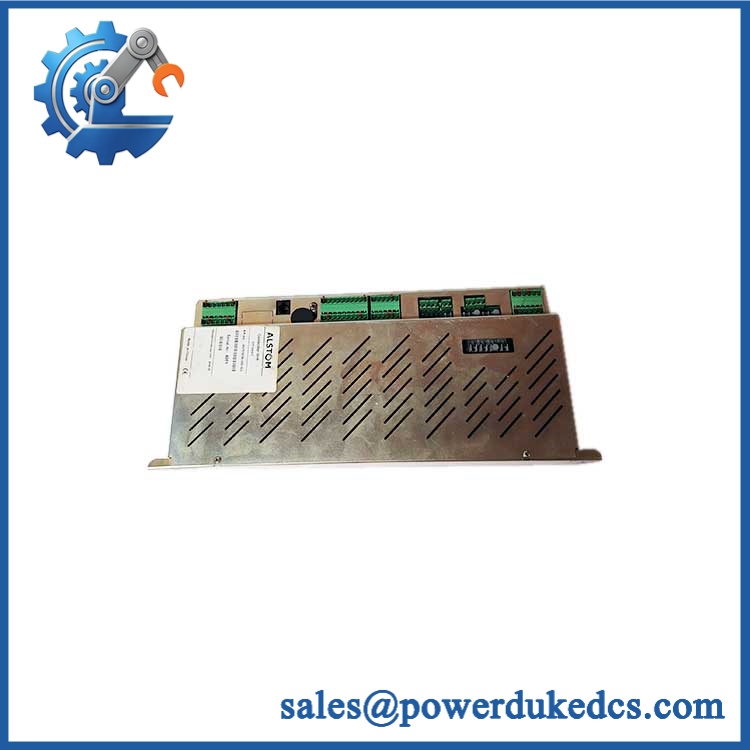
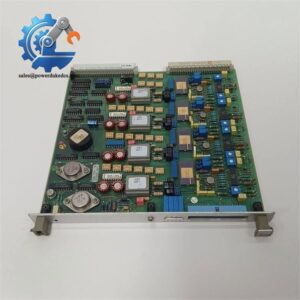
ALSTOM VCS232 590.043158
Module 5: Migration, Compatibility & Installation Traps
Replacement Matrix
Replacement classification: Drop-in Replacement only when the installed system uses the same / 590.043158 assembly, the same VME backplane architecture, matching board revision, and unchanged system configuration.
Software compatibility: Configuration verification required. As a configuration-management slave, the board participates in system-level transactions. The host controller, firmware environment, bus address assignments, and configuration data must remain compatible with the replacement hardware.
Cross-model replacement: Hardware and engineering verification required. Another VME slave module may share the same physical bus format while using different address decoding, register maps, interrupt assignments, firmware, or connector wiring. A mechanically compatible card is not automatically a functional substitute.
Field Traps — Watch Out
1. Verify the exact VME position and address configuration. VME slave modules depend on the system’s bus-address architecture. A replacement inserted into the wrong slot or with an incorrect board configuration can appear electrically healthy while remaining invisible to the master.
2. Match the complete identification chain. The available references associate 590.043158 with VC5232-1 BS / E0090.001.97. Record every identifier from the existing board before approving a spare; the short marking alone may not uniquely describe the required hardware revision.
3. Inspect the VME connector before blaming the electronics. Long-stored VME boards are particularly sensitive to connector oxidation, bent contacts, and mechanical misalignment. A marginal backplane connection can create configuration or communication faults that resemble a failed slave processor.
4. Do not assign unverified electrical specifications. Public references do not provide a sufficiently authoritative pinout or power specification for this exact revision. Do not substitute another VME board based only on nominal bus compatibility.
5. Preserve the original board configuration. Photograph jumpers, switches, address-selection hardware, and any socketed configuration devices before removal. On legacy VME systems, these physical settings can be part of the effective system configuration.
Module 6: Quality Assurance SOP
Pre-Shipment Inspection Protocol for ALSTOM 590.043158
- OEM identity inspection: Verify Alstom marking, designation, 590.043158 assembly number, board revision, serial information, and alternate identifier where present.
- Cross-reference verification: Check whether the physical board carries VC5232-1 BS / E0090.001.97 or another associated identifier documented with the 590.043158 assembly.
- Mechanical inspection: Examine the PCB, VME card guides, front-panel hardware, mounting bracket, connector shell, and board edge for cracks, deformation, corrosion, contamination, or unauthorized repair.
- VME connector inspection: Inspect all bus contacts for oxidation, bent pins, contamination, damaged plating, or abnormal wear.
- Configuration-record inspection: Photograph and document all jumpers, DIP switches, address selectors, and socketed configuration devices before laboratory testing.
- Component inspection: Check capacitors, regulators, IC packages, connectors, heat-generating components, and solder joints for discoloration, cracking, leakage, or previous repair activity.
- Power-on verification: Install the only in a verified compatible VME test chassis using the documented system power configuration rather than an assumed generic VME supply.
- POST verification: Confirm startup behavior, module indicators where fitted, current draw, bus activity, and absence of immediate fault conditions.
- VME bus handshake verification: Connect the board to a compatible VME master and verify that the module responds correctly to expected slave-address transactions.
- Configuration transaction test: Execute representative configuration-read and configuration-write sequences defined by the applicable Alstom system documentation.
- Status-data verification: Confirm that expected subsystem status information can be read by the VME master without bus errors, timeouts, or intermittent responses.
- Address verification: Confirm the board’s configured VME address and verify that it does not conflict with other cards installed in the test chassis.
- Interrupt and bus-error test: Where supported by the application, exercise the applicable interrupt and error-handling paths and verify stable recovery from controlled test conditions.
- Extended communication test: Operate the VME transaction path for an extended interval and monitor for intermittent bus errors, resets, configuration failures, or thermal instability.
- Thermal observation: Run representative transaction traffic while monitoring component temperatures and checking for abnormal heat generation.
- Final QC record: Record complete model and assembly identifiers, revision, serial number, configuration settings, test chassis, VME address, handshake results, configuration-transaction results, test duration, and inspector approval.
- ESD-controlled packaging: Place the board in an ESD-safe bag, protect the VME connector and front-panel hardware, and use mechanical cushioning to prevent connector damage, PCB flex, moisture exposure, and impact during shipment.
Procurement note: The technically supportable identity is ALSTOM 590.043158 — VME-CONFI-MANAGER-SLAVE, with public records also linking the same assembly number to VC5232-1 BS / E0090.001.97. The exact functional role as a VME slave is supported, but detailed electrical specifications such as supply voltage, memory, processor type, and pinout could not be independently verified from sufficiently authoritative public documentation. Those values should be confirmed from the physical nameplate and original Alstom system documentation before engineering substitution or customs classification.


 Start Chat