

Description
- Brand: Foxboro
- Full Model Number: FBM203
- System/Series Family: Foxboro I/A Series 200 / Foxboro Evo Compact 200
- Core Function: Eight-channel isolated RTD input acquisition for platinum and nickel resistance temperature sensors
- Top 3 Hardcore Specs: 8 RTD input channels; 0–320 Ω input range; 2- or 3-wire RTD support
- Sensor Types: Platinum and nickel RTDs
- Sensor Current: 0.19 mA DC nominal
- Conversion: Independent sigma-delta A/D conversion per channel
- Isolation: Channel-to-channel and channel-to-ground galvanic isolation
- Fieldbus: Redundant 2 Mbps module fieldbus
- Accuracy: ±0.03% of span for FBM203/203D
- Stock Status: New Surplus or Fully Tested Refurbished; exact revision to be confirmed
Module 3: Technical Product Introduction
Temperature drift becomes a control problem when the RTD input path is noisy, improperly wired, or incorrectly matched to the sensor resistance range. The Foxboro FBM203 is an eight-channel, channel-isolated RTD input module designed for platinum and nickel resistance temperature detectors. Each channel accepts a 2- or 3-wire RTD input over a 0–320 Ω range, performs its own analog-to-digital conversion, and communicates with the associated Foxboro field-control infrastructure over the redundant module fieldbus. Schneider Electric’s current specification identifies FBM203 as part of the Foxboro I/A Series and Evo process-control families.
The signal path is engineered for temperature measurement rather than generic analog resistance sensing. For FBM203, the nominal sensor excitation is 0.19 mA DC, with independent sigma-delta conversion on every channel. Published data specify ±0.03% of span analog accuracy for FBM203 and more than 125 dB common-mode rejection and 95 dB normal-mode rejection at 50/60 Hz. The standard FBM203 supports platinum RTDs such as 100 Ω at 0°C and nickel sensors such as 235 Ω at 0°C.
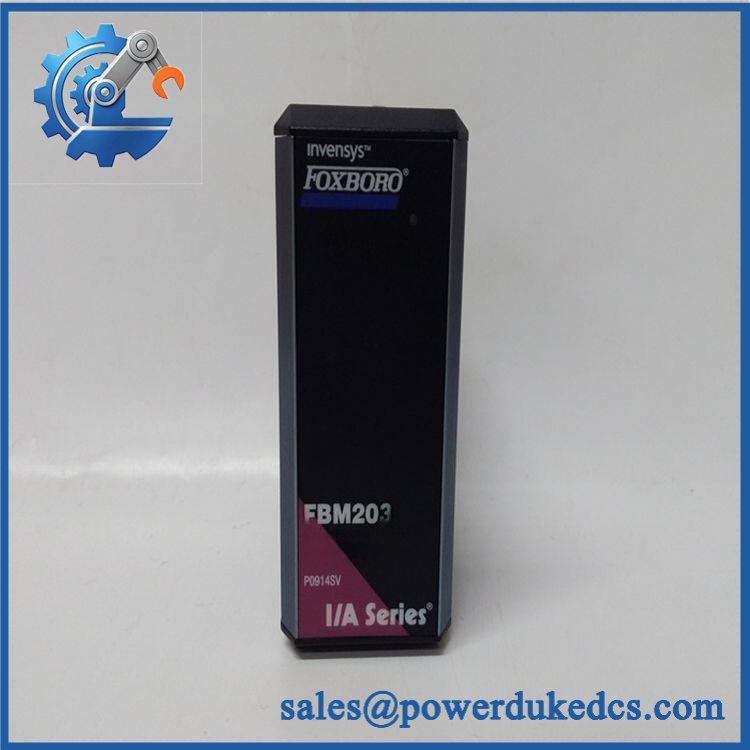
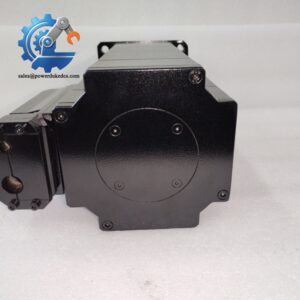
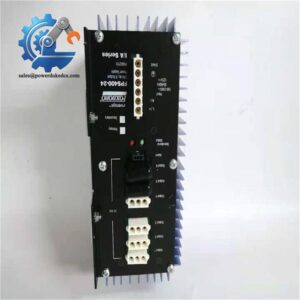
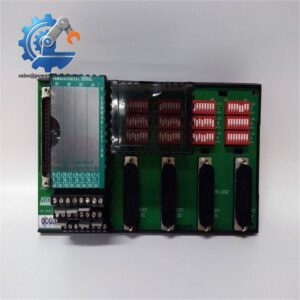
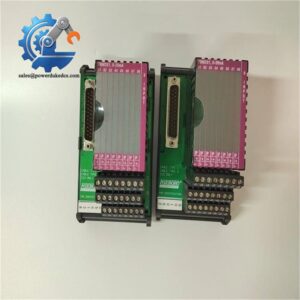
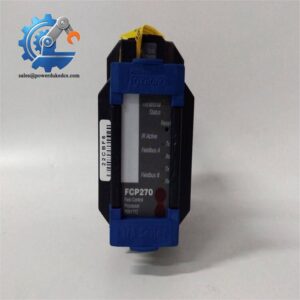
FOXBORO FBM203
Module 4: Application Scenarios & Field Realities
- On refinery temperature loops, FBM203 is suited to RTDs installed around vessels, heat exchangers, and process piping where multiple temperature points must be acquired through one fieldbus-connected I/O module. Channel isolation helps prevent a fault on one measurement circuit from directly coupling into another.
- For bearing, motor, and rotating-equipment temperature monitoring, the 2- or 3-wire RTD interface allows the module to accommodate common industrial resistance-temperature assemblies. With 2-wire wiring, however, lead resistance is not corrected, so cable resistance must remain consistent with the measurement requirement.
- Inside a compact Foxboro 200 Series cabinet, FBM203 connects to a compatible termination assembly rather than accepting arbitrary field wiring directly. Published FlexConnect documentation lists FBM203 with the P0916AE interface and an eight-channel RTD signal arrangement.
- When upgrading or maintaining a legacy I/A Series installation, distinguish the base FBM203 from FBM203B, FBM203C, and FBM203D variants. They are not identical measurement devices: the B version uses a different resistance span, C is intended for copper RTDs, and D is a 4-wire RTD variant.
Module 5: Migration, Compatibility & Installation Traps
Replacement Matrix
Replacement classification: Drop-in Replacement when the existing system uses the same FBM203 hardware family, compatible termination assembly, fieldbus architecture, and documented module revision.
Software compatibility: Configuration verification required. The module is integrated into the Foxboro control system through the module fieldbus, so the I/O database, channel type, sensor characterization, conversion parameters, and application configuration must match the installed hardware.
Cross-model replacement: Hardware and configuration changes may be required. FBM203B, FBM203C, and FBM203D differ in resistance range, sensor type, or wiring configuration. A different suffix should never be assumed to be a software-only substitution.
Field Traps — Watch Out
1. Verify the RTD type and resistance range before replacement. Standard FBM203 supports 0–320 Ω and platinum/nickel RTDs. FBM203B changes the range to 0–640 Ω, while FBM203C is for copper RTDs at 0–30 Ω. Installing the wrong variant can produce a perfectly functioning module with completely incorrect temperature readings.
2. Check whether the field wiring is 2-wire or 3-wire. The standard FBM203 supports both, but a 2-wire circuit does not compensate for lead resistance or its temperature variation. Do not replace a 3-wire installation with a 2-wire termination arrangement without recalculating the expected measurement error.
3. Match the termination assembly. Foxboro documentation identifies compatible termination assemblies for the FBM203 family, including DIN-rail and baseplate-mounted arrangements. A matching module with an incompatible termination assembly or cable can create field-wiring problems even though the electronics themselves are correct.
4. Confirm fieldbus redundancy. FBM203 communicates with its associated FCM or FCP through the redundant 2 Mbps module fieldbus. During commissioning, verify both the module connection and the applicable redundant communication path rather than relying only on individual channel readings.
Module 6: Quality Assurance SOP
Pre-Shipment Inspection Protocol for FOXBORO FBM203
- OEM identity inspection: Verify Foxboro markings, exact FBM203 designation, hardware identification, revision information, serial number, and associated assembly references.
- Variant verification: Confirm that the board is FBM203, not FBM203B, FBM203C, or FBM203D, before testing or shipping.
- Mechanical inspection: Examine the housing, PCB, mounting points, terminal interfaces, backplane connector, labels, and locking features for cracks, deformation, corrosion, contamination, or unauthorized modification.
- Connector inspection: Check the field I/O and fieldbus interfaces for oxidation, bent contacts, contamination, damaged latches, or loose mechanical hardware.
- Power-on verification: Install the module in a compatible Foxboro test environment and apply the documented supply conditions while monitoring startup behavior and abnormal current draw.
- Channel isolation check: Verify each input channel independently and confirm the expected isolation behavior between representative channels and ground.
- RTD simulation test: Connect precision resistance sources representing representative platinum and nickel RTD values across the specified 0–320 Ω range and record measured values for all eight channels.
- Wiring-mode test: Where the test fixture permits, verify both 2-wire and 3-wire configurations and compare the measured response with the applicable configuration data.
- Accuracy verification: Compare representative resistance measurements against calibrated test standards and record channel-by-channel deviation; for the applicable FBM203 version, use the published ±0.03% of span figure as the reference specification.
- Fieldbus handshake verification: Connect the module to a compatible FCM/FCP environment and verify successful communication over the module fieldbus, including the applicable redundant path.
- Diagnostic verification: Check module health, channel status, communication diagnostics, and any available alarm or fault indications.
- Thermal observation: Operate the module under representative channel activity and monitor for abnormal temperature rise, intermittent measurements, or communication instability.
- Final QC record: Record exact model and suffix, hardware revision, serial number, test equipment, eight-channel test results, communication results, test date, and inspector approval.
- ESD-controlled packaging: Place the module in an ESD-safe package and protect its connectors, housing, and mounting features against shock, moisture, contamination, and PCB flex during shipment.
Procurement note: The base FOXBORO FBM203 is an eight-channel isolated platinum/nickel RTD input module with a 0–320 Ω range and 2-/3-wire sensor support. The B, C, and D variants are materially different configurations, so the complete suffix and termination assembly should be confirmed before approving a replacement.



 Start Chat