

Description
- Brand: GE Fanuc
- Full Model Number: IC698RMX016
- System/Series Family: PACSystems RX7i
- Core Function: Redundancy Memory Xchange module for reflective-memory networking and RX7i CPU hot-standby redundancy
- Top 3 Hardcore Specs: 16 MB SDRAM user memory; +5 VDC, 1.8 A; LC fiber-optic interface
- Stock Status: New Surplus — exact hardware and firmware revision to be confirmed before shipment
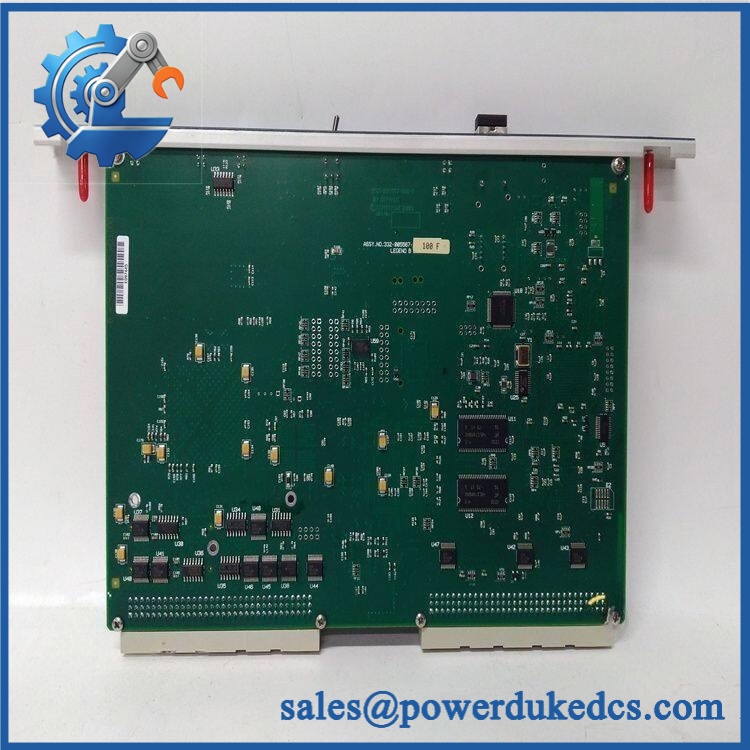
GE documentation identifies the IC698RMX016 as the RX7i Redundancy Memory Xchange (RMX) module. It can operate as a node on a reflective-memory network or as a dedicated link between CPUs in an RX7i redundant system.
Module 3: Technical Product Introduction
A failed RMX module can break the data path between redundant CPUs even when both processors and the main rack remain operational. The GE Fanuc IC698RMX016 is designed specifically for the PACSystems RX7i platform, providing reflective-memory connectivity and CPU redundancy functions over a high-speed fiber-optic network. In an RX7i hot-standby arrangement, the RMX016 is used as the redundancy link between the CPUs. GE’s documentation identifies the module as compatible with reflective-memory devices based on the VMIC 5565 family, with networks supporting up to 256 nodes.
The hardware uses 16 MB SDRAM user memory, a +5 VDC supply, and approximately 1.8 A current consumption. The optical interface uses an LC-type fiber connector with a zirconium ceramic ferrule; the published specification gives maximum insertion loss of 0.35 dB and return loss of -30 dB. The specified operating temperature is -20°C to +85°C. Firmware and hardware revisions matter: documented versions include IC698RMX016-AA, -BA, -CB, -DC, and -ED, with corresponding firmware revisions.
Module 4: Application Scenarios & Field Realities
- In an RX7i hot-standby CPU system, the RMX016 provides the dedicated redundancy-memory link between the primary and backup CPUs. GE documentation specifies two IC698RMX016 modules per redundancy link, with two links recommended for the complete redundant system.
- For deterministic data exchange between PLCs and computing devices, the module can operate as a node in a reflective-memory network. Data written to one node is automatically propagated to the other nodes, avoiding the polling behavior associated with many conventional communication architectures.
- During a controller redundancy fault, the RMX016 deserves attention alongside the CPU, rack power supply, fiber links, and configuration. A dark or unstable link indicator does not automatically mean the module itself has failed; contaminated optical connectors and incorrect fiber routing can produce similar symptoms.
- For legacy RX7i maintenance, keeping the exact RMX016 revision available is useful when the installed system depends on an established redundancy configuration. The documented installation procedure requires an RX7i CPU with firmware release 2.00 or later and compatible programming software for configuration.
GE IC698RMX016 GE IC698RMX016
Module 5: Migration, Compatibility & Installation Traps
Replacement Matrix
| Replacement Type | IC698RMX016 Assessment | Engineering Requirement |
|---|---|---|
| Drop-in Replacement | Yes, for a correctly matched RX7i RMX016 | Match catalog number, hardware/firmware revision, rack position, and redundancy configuration |
| Software Compatible | Configuration-dependent | Hardware configuration must recognize and correctly configure the RMX module |
| Hardware Modification Required | No for an exact RMX016 replacement | Different Memory Xchange generations or architectures require separate compatibility review |
Field Trap 1 — The module is not operational immediately after insertion:
The RMX module initially powers up in an unconfigured state with its optical transmitter disabled. The RX7i CPU must send the appropriate hardware configuration before the module can operate on the network.
Field Trap 2 — Rack location and redundancy topology:
RMX modules must be installed in the main RX7i Rack 0. GE recommends slots 3 and 4 because of VME interrupt priority, although those slots are not mandatory. For an RX7i redundancy system, the documented architecture uses two RMX016 modules per redundancy link.
Installation note: Do not insert or remove the module with rack power applied. GE’s installation instructions explicitly warn that live insertion/removal can stop the CPU, damage the module, or cause personal injury. After installation, connect the fiber in the prescribed TX-to-RX ring arrangement and verify the optical link before returning the redundant system to service.

GE IC698RMX016
Module 6: Quality Assurance SOP
- OEM identification inspection — Verify the GE Fanuc IC698RMX016 catalog number, faceplate markings, serial information, and visible hardware revision.
- Revision verification — Record the exact suffix where present, such as IC698RMX016-AA, -BA, -CB, -DC, or -ED. Confirm the corresponding firmware revision before allocating the module to a customer’s RX7i system.
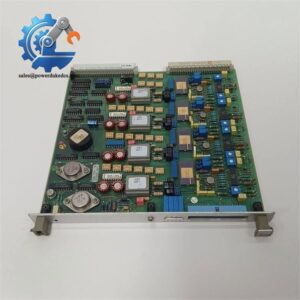
- Physical PCB inspection — Check the board, backplane connector, faceplate, optical connector, retaining hardware, and accessible components for corrosion, contamination, impact damage, bent contacts, or unauthorized modification.
- OEM anti-counterfeit visual inspection — Compare GE labeling, PCB construction, component arrangement, connector geometry, and identification markings against known RX7i RMX hardware.
- Power-on self-test (POST) — Install the module in a suitable RX7i test rack and verify startup behavior and the applicable LINK OK, LOCAL READY, LOCAL ACTIVE, REMOTE READY, and REMOTE ACTIVE status indications. The RMX016 uses five redundancy-status LEDs for these functions.
- Configuration verification — Confirm that the RX7i CPU recognizes the RMX016 and that the hardware configuration is accepted without module configuration faults.
- Communication handshake verification — Establish the fiber-optic connection and verify stable reflective-memory communication or the applicable CPU redundancy link. Check both ends of the fiber path rather than testing only the local module.
- Redundancy-function verification — Where a complete RX7i redundancy test setup is available, verify synchronization between the primary and backup CPUs and confirm correct redundancy status transitions.
- Optical interface inspection — Check the LC connector and fiber termination for contamination or physical damage. The published specification limits insertion loss to 0.35 dB maximum, making connector condition relevant to link reliability.
- Final traceability record — Photograph the complete model/revision marking, record test results and physical condition, and package the module using ESD protection before shipment.
For IC698RMX016, the critical purchasing details are not limited to the catalog number. Hardware revision, firmware compatibility, RX7i CPU version, rack location, redundancy topology, and fiber-optic condition all affect commissioning. The exact RMX016 revision should therefore be confirmed before a replacement is released for a production RX7i system.






 Start Chat