

Description
- Manufacturer: General Electric (GE)
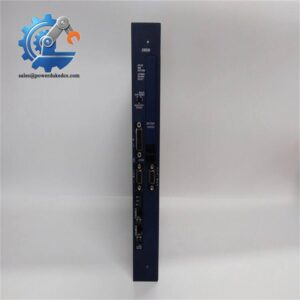
- Model: IS220PPROH1A
- Product Type: PPRO Backup Turbine Protection I/O Pack
- Platform: GE Mark VIe Control
- Primary Function: Independent backup turbine protection, including overspeed protection and backup generator synchronization checking.
- Processor Configuration: H1A uses the BPPB processor-board implementation; the later PPROS1B uses the functionally compatible BPPC processor board.
- Network Interfaces: 2 independent 10/100 Ethernet ports
- Field Interface: Interfaces with compatible SPRO, TPRO, or TREA protection terminal boards through the associated DC-37 connections.
- Front Diagnostics: PWR/ATTN, ENET1, ENET2 link/activity indicators, plus an IR service port.
- Approximate Unit Dimensions: About 83 × 42 × 121 mm is reported by one supplier; other listings provide larger packed dimensions. Use the actual mechanical drawing for cabinet engineering.
- Estimated Shipping Weight: Approximately 0.5–1.0 kg at unit level; packed shipment weight can be substantially higher.
- What’s in the Box: IS220PPROH1A I/O pack unless the purchase order specifically includes the compatible protection terminal board, cables, or documentation.
Product Introduction
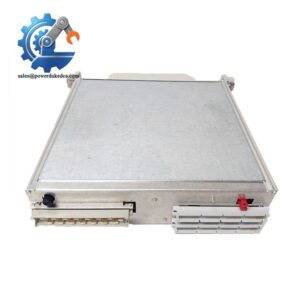
The IS220PPROH1A is not a conventional process I/O module. It is the GE Mark VIe PPRO Backup Turbine Protection I/O Pack, intended to provide an independent protection layer around turbine overspeed and related trip functions. GE’s certification documentation specifically identifies IS220PPROH1A as a Mark VIe PPRO Backup Turbine Protection device.
Architecture matters here. A typical TMR implementation uses three PPRO packs with compatible protection terminal boards, while other configurations place three PPROs directly on a suitable TREA arrangement (the exact topology depends on the turbine protection design). The PPRO also provides two independent Ethernet interfaces for IONet communication, while dedicated hardware implements overspeed-related protection functions.
Core Technical Specifications
| Parameter | Value |
|---|---|
| Manufacturer | General Electric |
| Model | IS220PPROH1A |
| Functional Acronym | PPRO |
| System | Mark VIe |
| Product Type | Backup Turbine Protection I/O Pack |
| Processor Version | BPPB |
| Ethernet Ports | 2 independent 10/100 Ethernet |
| Protection Function | Backup overspeed / turbine protection |
| Synchronization Function | Backup generator-to-grid synchronization check |
| Safety Architecture | Simplex and TMR configurations |
| Terminal Interface | DC-37 through compatible protection terminal boards |
| Voltage-Sensing Wiring Limit | Up to 1,000 ft using 18 AWG wiring, per published application guidance |
| Front Diagnostics | PWR/ATTN, ENET1, ENET2 LINK/TxRx indicators |
| Service Interface | Infrared (IR) port |
| Hardware Protection | Hardware-implemented overspeed protection |
| Local Monitoring | Processor, power, Ethernet, and temperature monitoring |
| PCB Finish | H1A version associated with conformally coated PCB construction |
| Reported Operating Range | -40°C to +70°C is reported by commercial sources; verify against the applicable GE installation documentation |
| Reported Power Input | Dual 28 VDC ±10% is stated by one commercial listing, but should be verified against the exact GE hardware manual |
| Reported Weight | Approximately 0.5–1.0 kg unit level |
One critical lifecycle point: the IS220PPROH1A uses the BPPB processor board. GE-related documentation identifies the later PPROS1B with BPPC hardware and different ControlST compatibility; therefore, do not treat the two as interchangeable merely because the functional acronym is the same.
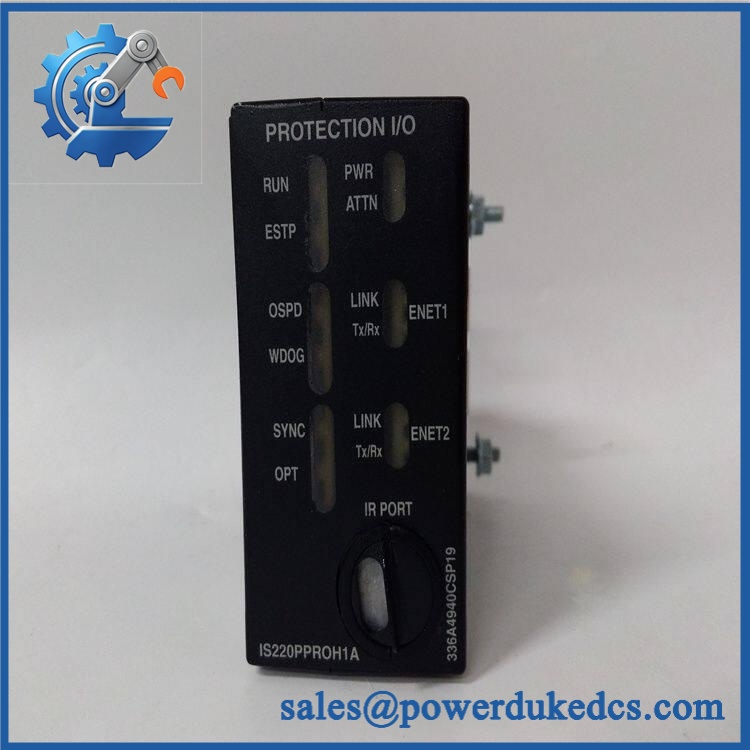
GE IS220PPROH1A
Global Compliance & Industry Certifications
The PPRO has unusually important safety documentation because it forms part of a turbine protection function.
- IEC 61508: GE has an exida certificate for the Mark VIe PPRO Protection Module, identifying SIL 3 capability, with the certificate covering systematic capability SC3 and Type B hardware. The certificate states that PFDavg and architecture constraints must be verified for each application.
- ATEX: GE’s Mark VIe type-examination certificate explicitly lists among the Mark VIe components covered by the hazardous-location certification scheme. The certificate associates the model with the applicable Ex protection method and equipment group.
- Terminal-Board Dependency: GE identifies for use with IS200TREAH1A, IS200TREAH3A, IS200SPROH1A, IS200SPROH2A, IS200TPROH1C, and IS200TPROH2C accessory terminal boards.
- UL / cUL: Verify the exact Mark VIe system certificate and configuration rather than assuming standalone approval for the PPRO PCB.
- Marine Approvals: DNV or equivalent marine certification must be confirmed against the specific system configuration and installation certificate.
- Certificate Validity: The exida certificate shown in GE’s published documentation carries a stated surveillance-audit date of December 1, 2025. Since that date has passed, obtain the current certification status before using the document as evidence for a 2026 compliance audit.
Verify specific lot certifications with OEM.
Long-Term Storage & Asset Preservation Guide
- Protect the conformal-coated electronics. Keep the PPRO inside an approved ESD bag and its original packaging whenever possible. Do not scrape the PCB coating during inspection.
- Control humidity and condensation. Store in a clean, dry environment with stable temperature. Connector oxidation is a more practical warehouse concern than visible PCB contamination.
- Record the protection revision before deployment. Photograph the nameplate, hardware revision, serial number, and connector condition before installation. For a safety-related spare, preserve the chain of custody from warehouse receipt through commissioning (this is particularly important for SIL-related asset records).
Physical Installation Prerequisites
- Verify the complete identity and BPPB hardware before issuing the spare.
- Confirm the compatible protection terminal board. GE specifically lists TREAH, SPROH, and TPROH#C families for the PPROH1A.
- Do not substitute a terminal board solely because its mounting pattern and connector appear identical.
- Inspect all DC-37 connectors for bent contacts, oxidation, foreign material, or mechanical damage.
- Use the proper ESD grounding procedure during card handling.
- Confirm the two Ethernet connections against the approved Mark VIe protection architecture.
- For TMR applications, verify that the correct number of PPRO packs and the intended TMR terminal-board topology are present before energization.
- Observe the published voltage-sensing wiring restriction: maximum cable length of 1,000 ft with 18 AWG wiring for the applicable voltage-sensing circuit.
- Validate the overspeed and trip-chain configuration with the approved turbine protection design. Do not commission a replacement based solely on successful Ethernet communication.
- Where a PPRO is replacing a different P-Pack processor generation, verify software compatibility and configuration explicitly. Published documentation warns that a BPPB-to-BPPC change cannot simply be treated as an auto-reconfiguration event.
- Perform the site’s prescribed protection-system proof test after replacement; a basic power-up test is not sufficient evidence of correct trip-system operation.
Buyer’s FAQ
Q: What HS tariff code should be used for ?
A: Commercial listings commonly quote 85389091, but that is a supplier classification rather than a binding customs determination. Have the importing-country customs broker validate the final HS code based on the PPRO’s safety-control function and whether it is being imported as a complete module or system component.
Q: What is the country of origin?
A: Commercial records frequently identify the United States, but there is inconsistent supplier metadata in the market. One listing, for example, reports Germany, demonstrating why catalog fields should not be used as sole COO evidence. Obtain a shipment-specific Certificate of Origin or manufacturer traceability document.
Q: Is suitable for hazardous-area installations?
A: GE’s published ATEX documentation explicitly includes within the Mark VIe hazardous-location certification scope. However, the certification applies within the specified equipment configuration and associated terminal-board arrangement; it should not be interpreted as unrestricted standalone hazardous-area approval.
Q: Is the still the current replacement for this function?
A: Do not assume that. Commercial technical documentation identifies IS220PPROS1B as a later PPRO implementation using BPPC hardware, while uses BPPB. A site replacement decision should therefore be based on the approved GE hardware/software compatibility matrix, not simply the functional name “PPRO.”



 Start Chat