

Description
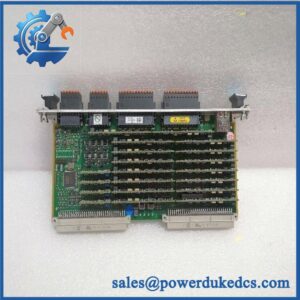
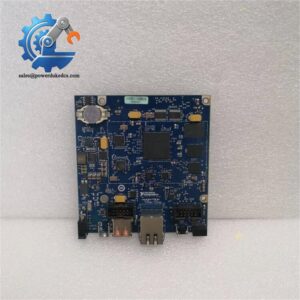
Unboxing & Physical Snapshot
- Brand / Model: National Instruments (NI) PCI-5421 Arbitrary Waveform Generator.
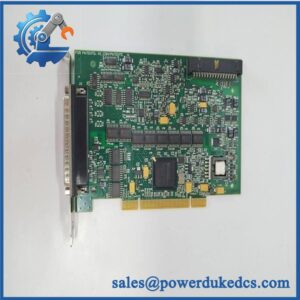
- Form factor: Standard 32-bit PCI bus plug-in instrument board; this is a desktop/industrial-PC PCI card, not a PXI module.
- Physical dimensions: Approximately 107 × 98 mm for the PCB area; allow additional clearance for the PCI bracket, cabling, and chassis installation. Confirm against the NI mechanical drawing before cabinet or rack planning.
- Estimated shipping weight: Approximately 0.5–0.8 kg packed, depending on ESD protection, documentation, and carton size. Use the actual packed weight for freight quotations.
- What’s in the box: PCI-5421 board, PCI mounting hardware/bracket, and documentation/software media only if included in the original purchase configuration.
- ESD handling: Keep the board inside its conductive/ESD shielding packaging until it reaches an ESD-controlled workstation.
- Identification: Record the PCI-5421 model, serial number, hardware revision, and calibration status before stock issuance.
Product Introduction
The PCI-5421 mounts directly into a compatible PCI expansion slot inside an industrial PC or test system. It is an arbitrary waveform generator, intended for precision stimulus generation rather than general-purpose analog I/O; the PCI connector provides the computer-side interface while the BNC output connections carry the generated analog waveform.
This distinction matters during spare selection. A PCI-5421 cannot simply be substituted with a newer PXI waveform-generation card because the mechanical interface, driver environment, chassis architecture, and system software requirements are different (especially in legacy automated test equipment).
Core Technical Specifications
| Parameter | Value |
|---|---|
| Manufacturer | National Instruments |
| Model | PCI-5421 |
| Product Type | Arbitrary Waveform Generator |
| Form Factor | PCI |
| PCI Interface | 32-bit PCI |
| Analog Output Resolution | 16-bit |
| Maximum Update Rate | 100 MS/s |
| Analog Output Channels | 2 |
| Output Connector | BNC |
| Maximum Output Voltage | Approximately ±12 V, depending on configuration/load |
| Output Impedance | 50 Ω nominal |
| Onboard Memory | Up to 16 MB, configuration dependent |
| Frequency Range | DC to approximately 20 MHz, waveform dependent |
| Clocking | Internal/external reference and sample clock capability |
| Triggering | External digital triggering |
| Waveform Types | Arbitrary, function-generator, and user-defined waveforms |
| Calibration | Factory calibration required for specification compliance |
| Host Platform | Compatible PCI-based Windows/NI test systems |
| Cooling | Forced-air chassis cooling recommended |
| Bus Power | Supplied through PCI slot |
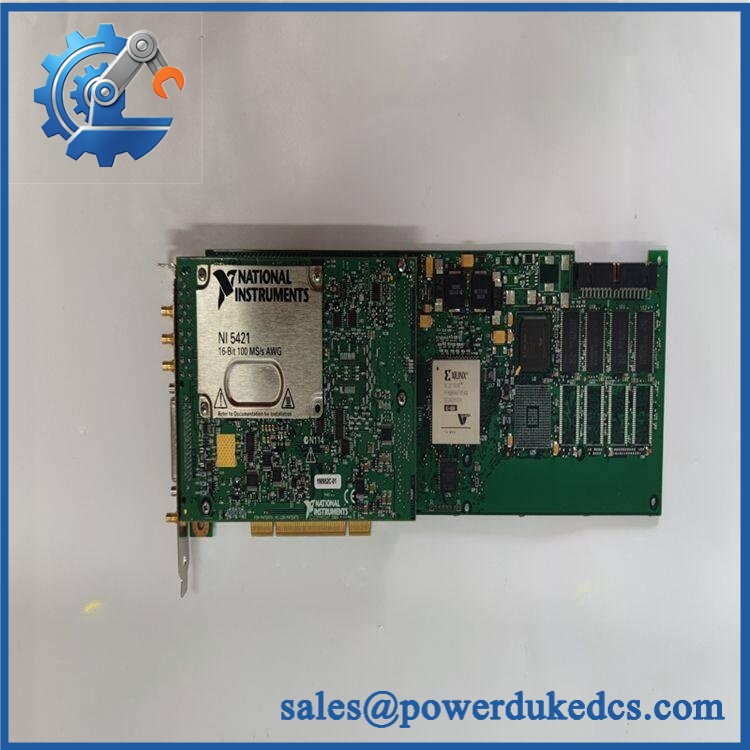
NI PCI-5421
The 100 MS/s update rate and 16-bit DAC resolution are the two parameters that should receive priority during application matching. For an old ATE rack, verify the installed NI-DAQmx/NI-FGEN software stack before assuming a replacement card will operate without driver changes.
? Global Compliance & Industry Certifications
For the , compliance documentation should be distinguished from hazardous-location certification.
- CE Mark: Expected for applicable European-market configurations; verify the exact hardware revision and Declaration of Conformity.
- UL/cUL: Do not assume a standalone hazardous-location rating. Confirm the applicable NI certification documentation for the specific revision.
- FCC/EMC: Applicable EMC and emissions requirements should be verified against the original NI compliance documentation.
- ATEX/IECEx: Do not treat the as ATEX/IECEx-certified equipment unless the exact assembly and installation arrangement has an explicit certificate. A PCI laboratory/test card is not automatically suitable for a classified hazardous area.
- Marine approvals: DNV GL or equivalent marine certification should not be presumed without a product-specific certificate.
For plant deployment, the distinction is important: an ordinary PCI card may meet EMC requirements while still being unsuitable for installation inside a hazardous-area enclosure. Verify specific lot certifications with OEM.
? Long-Term Storage & Asset Preservation Guide
Keep the in its original ESD shielding bag. The exposed edge connector is particularly vulnerable to contamination and oxidation; never store the board loose against ordinary cardboard or polyethylene packaging.
Control humidity and temperature. A clean, dry electronics cabinet with relative humidity preferably below 60% RH is appropriate for long-term storage. Avoid condensation caused by moving a cold board directly into a warm, humid maintenance area.
Protect calibration traceability. Retain the calibration certificate, calibration date, serial number, and hardware revision with the physical board. For instrumentation assets, the calibration interval can be more important than cosmetic condition (a visually perfect card with an expired calibration record may still be unusable for a controlled measurement system).
Before installation, inspect the PCI edge connector, BNC sockets, PCB surface, mounting bracket, and components for oxidation, contamination, or physical damage.
Physical Installation Prerequisites
- Install only in a compatible 32-bit PCI expansion slot with the required electrical and mechanical characteristics.
- Do not install the card in a PCI Express-only slot; the connector and bus architecture are different.
- Secure the rear mounting bracket to the chassis using the chassis retaining screw.
- Maintain sufficient clearance around the PCB and BNC cabling to prevent connector strain.
- Provide adequate forced-air circulation through the industrial PC chassis.
- Keep signal cables separated from high-current switching conductors and noisy power wiring where practical.
- Connect the chassis protective earth according to the industrial PC manufacturer’s installation requirements.
- Verify the BNC signal path and termination before applying an external load.
- Use ESD controls when inserting or removing the card; discharge the workstation and chassis before handling the PCB.
- Confirm the installed NI driver/software environment before commissioning.
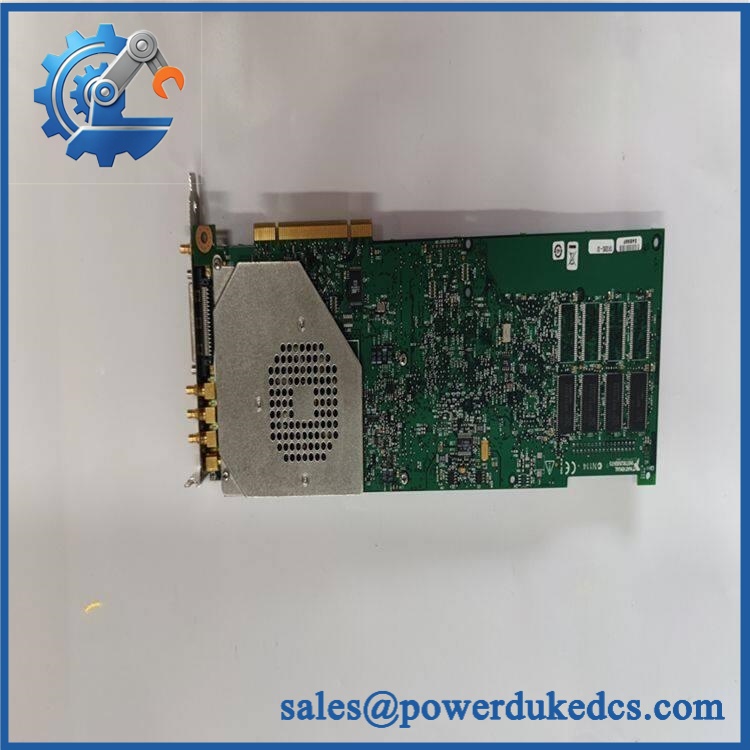
NI PCI-5421
Buyer’s FAQ
What HS tariff code should be used for the ?
Do not automatically reuse an HS code from another NI data-acquisition product. The is a specialized waveform-generation instrument, and classification can depend on the importing country’s tariff schedule and the declared principal function. Have the broker validate the final tariff classification before issuing the commercial invoice.
Does Country of Origin affect this spare?
Yes. Country of Origin (COO) should be established from the physical unit and supporting manufacturer documentation. Do not infer COO from the NI corporate headquarters or the seller’s shipping location; origin affects customs declarations, duty treatment, and certain trade-compliance records.
Is shipping insurance worthwhile?
For an obsolete or difficult-to-source instrumentation card, it usually is. Record the serial number, board condition, packaging condition, and declared value before dispatch, then retain photographs until delivery and acceptance testing are complete.
Does the include the latest firmware?
There is no reason to assume that a replacement contains the newest software environment simply because it is unused. The card’s compatibility depends heavily on the NI driver and application software versions installed on the host PC. For a legacy ATE system, verify the existing driver stack before replacing a functioning card, and preserve the current software configuration as part of the asset record.



 Start Chat