

Description
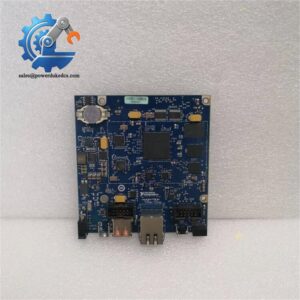
Unboxing & Physical Snapshot
- Manufacturer: National Instruments (NI)
- Model: USB-6210
- NI Part Number: 779675-01. NI currently identifies the USB-6210 as no longer available for purchase, while support, repair, and calibration services remain available; NI lists 789887-01 as the recommended replacement.
- Function: Bus-powered USB multifunction data acquisition device with 16-bit analog input, digital I/O, and two 32-bit counters.
- Physical dimensions: 16.9 × 9.4 × 3.1 cm (6.65 × 3.70 × 1.20 in.), including connectors.
- Unit weight: 206 g (7.2 oz).
- Estimated shipping weight: Approximately 0.5–1.0 kg packed, for freight budgeting only. Use the actual packed weight for the commercial invoice.
- I/O connectors: Two 16-position Combicon connectors.
- USB connector: Series B receptacle.
- What’s in the box: USB-6210 device, terminal/connectors and USB accessories only where included with the specific supply lot; documentation and software media should be checked against the packing list.
- Receiving priority: Photograph the model label, serial number, connector condition, enclosure, and ESD packaging before inventory acceptance.
Product Introduction
Architecture hook: The USB-6210 is a compact, bus-powered DAQ device intended to sit between a measurement system and a host computer rather than inside a conventional PLC rack. Its Series B USB connection provides the host interface, while the two 16-position Combicon connectors expose the field-side I/O.
The hardware provides 8 differential or 16 single-ended analog inputs, 16-bit ADC resolution, a maximum 250 kS/s sample rate, four digital inputs, four digital outputs, and two 32-bit counter/timers. The input architecture is designed for Measurement Category I applications; it should not be treated as a general-purpose mains measurement device.
Core Technical Specifications
| Parameter | Value |
|---|---|
| Manufacturer | National Instruments (NI) |
| Model | USB-6210 |
| NI Part Number | 779675-01 |
| Device type | USB multifunction DAQ |
| Analog inputs | 16 single-ended / 8 differential |
| ADC resolution | 16 bit |
| Maximum sample rate | 250 kS/s |
| Digital inputs | 4 |
| Digital outputs | 4 |
| Counter/timers | 2 × 32-bit |
| USB interface | USB 2.0 Hi-Speed or full-speed |
| USB power input | 4.5–5.25 V |
| Typical current | 320 mA at 4.5 V, no load; 400 mA at 4.5 V, typical maximum-load condition |
| Maximum inrush current | 500 mA |
| Dimensions | 169 × 94 × 31 mm |
| Weight | 206 g |
| I/O connectors | 2 × 16-position Combicon |
| USB connector | Series B receptacle |
| Operating temperature | 0–45 °C |
| Storage temperature | −20–70 °C |
| Operating humidity | 10–90% RH, noncondensing |
| Maximum altitude | 2,000 m |
| Pollution degree | 2 |
| Measurement category | Category I |
| Channel-to-earth maximum | 11 V |
| Recommended calibration interval | 1 year |
| Recommended warm-up | 15 minutes |
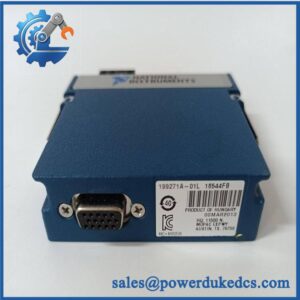
NI USB-6210
NI specifies the USB-6210 as a 16-bit, 250 kS/s multifunction DAQ device. The published specifications also establish the physical envelope, power requirements, environmental limits, and Measurement Category I rating.
Power deserves particular attention during troubleshooting. At the stated typical maximum-load current of 400 mA at 4.5 V, the device consumes approximately 1.8 W from the USB supply; this is not a substitute for the host computer’s USB power specification, particularly when additional USB devices share the same controller or hub.
The analog-input memory resources include a 4,095-sample input FIFO and 4,095-entry scan-list memory. These limits matter when determining whether a test application can sustain the intended acquisition pattern without relying excessively on host-side buffering.
Global Compliance & Industry Certifications
The current NI Declaration of Conformity identifies the specifically as a bus-powered USB multifunction I/O device and documents conformity with the applicable RoHS and EMC requirements. The cited EMC standards include EN 61326-1:2013 / IEC 61326-1:2012 Class A, EN 55011 Group 1 Class A, and associated immunity requirements.
For asset records, check the following categories against the exact unit and applicable certificate:
- CE Mark: Supported by the NI Declaration of Conformity for the applicable product configuration.
- RoHS: The current NI declaration identifies RoHS conformity under EU Directive 2011/65/EU as amended by EU 2015/863.
- UL/cUL: Verify the actual product label and NI certification record before declaring a specific North American safety listing.
- IEC/EN/UL 61010: The specifications identify IEC/EN 61010-1, UL 61010-1, and CSA C22.2 No. 61010-1 as applicable safety standards.
- ATEX/IECEx: Do not assume hazardous-area approval for this model. NI’s certification database distinguishes hazardous-location-certified product families from ordinary measurement hardware.
- Marine approvals: DNV/DNV GL, ABS, or other marine approval should be confirmed separately; it is not established merely by the designation.
The Measurement Category I limitation is a safety-critical installation constraint. The ‘s published channel-to-earth rating is 11 V, so connecting it directly to higher-energy distribution circuits can exceed its intended measurement environment and create an electrical safety hazard.
Verify specific lot certifications with OEM.
Long-Term Storage & Asset Preservation Guide
Keep the in its original ESD-protective packaging. The Combicon terminals, USB connector, and exposed electronic interfaces should remain protected from conductive dust, mechanical impact, and uncontrolled electrostatic discharge during warehouse storage.
Control humidity and temperature excursions. NI specifies −20 to 70 °C storage temperature and 10–90% RH, noncondensing. For multi-year MRO storage, a cleaner and substantially drier environment is preferable to operating near the upper humidity limit—particularly where the warehouse experiences large day/night temperature swings.
Preserve calibration traceability. NI specifies a one-year calibration interval and a 15-minute warm-up period. Record the serial number, last calibration date, calibration certificate, and test status in the asset register; a stored DAQ device without calibration history should not automatically be treated as measurement-ready.
Physical Installation Prerequisites
- Use the indoors within its specified 0–45 °C operating range.
- Provide adequate airflow around the enclosure; do not wrap the device in insulating packaging while energized.
- Connect it only to a suitable USB 2.0 host interface capable of supplying the required bus power.
- Use the specified Series B USB connection and appropriate signal cabling.
- The screw terminals accept 16–28 AWG wiring.
- Tighten the screw terminals to 0.22–0.25 N·m (2.0–2.2 lb·in.).
- Provide strain relief at the field wiring and USB connection so connector bodies are not carrying cable weight.
- Maintain the specified 11 V channel-to-earth limit and Measurement Category I rating.
- Use ESD precautions whenever the enclosure or connectors are handled.
- No DIN-rail or PXI backplane installation should be assumed; this is a standalone USB DAQ enclosure, not a PXI module.
- For long-term installed use, secure the lightweight 206 g enclosure mechanically rather than allowing the USB cable to support it.
Buyer’s FAQ
Q: Which HS tariff code should be used for international shipment?
A: The is a multifunction data-acquisition device, so classification should be based on its principal measurement/data-acquisition function and the destination country’s tariff schedule. Do not assign an HS code solely from the USB interface. Have the customs broker validate the final classification before export.
Q: Does NI’s U.S. corporate identity establish the COO?
A: No. Country of Origin is a manufacturing-origin determination, not a brand-origin determination. Record the COO from the physical marking, manufacturer documentation, or supplier declaration for the actual serial-numbered unit.
Q: Should I insure a 206 g during shipment?
A: Consider the replacement cost and calibration value, not the physical weight. This model is now listed by NI as no longer available for purchase, although support, repair, and calibration remain available, so a verified spare may have materially greater operational value than its mass suggests.
Q: Does a stored necessarily have the latest firmware?
A: No. Do not mark warehouse stock as “latest firmware” without verification. Record the hardware revision, serial number, driver/software baseline, and any available firmware information during incoming inspection. NI currently identifies the as a legacy product and lists a recommended replacement, making revision control particularly important when integrating old stock into an existing test system.



 Start Chat